Can You Start a DPC Part Time and Keep Your Day Job?
Yes, many physicians open a direct primary care or concierge practice part time while keeping their W-2 job, and it is one of the lower-risk ways to start. The catch is that your employment contract decides how much room you have, so the first step is reading its outside activity (moonlighting) clause, the non-compete and the non-solicitation clause, then getting any approval it requires in writing. After that, you need malpractice coverage you have confirmed covers the DPC, a clear Medicare decision, a smaller panel than a full-time practice would carry, and an honest after-hours plan for members.

Most DPC founders come from employed medicine. In the AAFP and DPC Alliance 2026 DPC data brief, 63% of physicians practicing in DPC said they opened an independent practice after leaving a health system or group, and 8% started right after residency. A part-time start is one way to make that move gradually, testing demand and building a panel while a paycheck still covers the mortgage.
This guide covers the questions that decide whether a part-time start works for you, in roughly the order you will face them. If you are still choosing between models, read DPC vs concierge medicine first, and for the full launch checklist see how to start a DPC practice.
What Does Your Employment Contract Say About Outside Practice?
Your contract is the document that answers this question, and three clauses matter most. Read them together, because each one can allow a part-time DPC on its own and still block it in combination.
- Outside activity or moonlighting clause. Many physician contracts require the employer's written approval for any outside clinical work, and some ban it outright or limit it to locum shifts. Others say you must devote your full professional time to the employer, which can be read as barring a side practice.
- Non-compete. Most non-competes restrict where you can practice after the job ends, usually a radius around your clinic or any of the employer's sites, for a set period. A few also restrict competing work during employment.
- Non-solicitation. This limits you from recruiting the employer's patients or staff. It often applies both during employment and for a period after, and it shapes how you can announce a new practice.
Also look for a conflict of interest or disclosure policy (common at academic centers and large systems), any rule about using the employer's name, equipment, EHR or staff, and an intellectual property clause. Keep the two practices fully separate. Patients from your day job should hear about the DPC only in ways your contract and state law allow, and your DPC charting, scheduling and messaging should never run through the employer's systems.
If the contract requires approval, ask for it in writing and describe the practice plainly, including where it is, the hours, the services and whether you will see Medicare patients. A written yes from the medical director or legal department is worth far more than a hallway conversation.
The non-compete trap that catches part-time founders
Here is the timing problem. Most non-competes do not stop you from running a small practice while employed (if the outside activity clause allows it), but they switch on the day you leave. If your part-time DPC sits inside the radius, the practice you spent two years building could become the one place you are barred from working once you resign.
There is no federal rescue. The FTC finalized a nationwide non-compete ban in 2024, but a federal court set it aside, and in September 2025 the Commission voted 3-1 to dismiss its appeals and accede to the vacatur. Your state's law and your contract's exact wording now decide almost every case. A growing number of states void or cap physician non-competes, and our guide to leaving employed medicine for DPC keeps a state-by-state table with its sources, plus notes on non-solicits, notice periods and tail coverage.
Practical options include opening outside the radius from the start, asking the employer for a written carve-out for the DPC before you open, or negotiating the release when your contract comes up for renewal. A local employment attorney who reads physician contracts can usually tell you in one meeting which of these is realistic.
Does Your Employer's Malpractice Policy Cover a Part-Time DPC?
It may not. Many employer policies are written around the work you do for that employer, on its behalf and at its sites, so whether care for your own members is covered depends on your policy's wording. Ask the employer's risk office for the wording in writing rather than assuming either way.
When you shop for a DPC policy, tell the carrier exactly what the practice will do. Telemedicine, in-office dispensing, point-of-care labs, procedures and care across state lines all need to be on the policy. Ask whether the carrier offers a part-time rate based on your hours or sessions per week and what happens to the premium when you go full time.
Also check how the two policies end. If your employer's coverage is claims-made, ask who pays for tail coverage when you leave, because that is often negotiated in the contract. If your DPC policy is claims-made too, think through the date you will switch. Our guide to insurance for a new DPC practice covers malpractice, claims-made versus occurrence, cyber coverage and the rest of the policies a small practice carries.
Do You Need to Opt Out of Medicare, and How Does That Affect Your Day Job?
This is the decision most likely to collide with a W-2 job, so make it early. Under 42 CFR 405.425, a physician who opts out cannot be paid by Medicare or any Medicare Advantage plan during the opt-out period, directly or through any entity they reassign payment to, and can see Medicare beneficiaries only under private contracts (except for emergency or urgent care).
Opt-out applies to you as a physician, not to one practice. If your employer bills Medicare or Medicare Advantage for your visits, opting out to see Medicare members in your DPC would stop the employer from being paid for your work there. For most employed physicians who see older patients, that is a deal breaker until the day job ends.
Part-time founders usually take one of a few paths. Some keep their Medicare enrollment and build the DPC around patients who aren't on Medicare, checking each patient's coverage rather than age, until they leave the W-2 job. Some structure a concierge or hybrid model that stays enrolled in Medicare, which has its own rules about what a membership fee can cover. Others wait to opt out until their resignation date. Our guide to Medicare opt-out and moonlighting walks through each path, and hybrid DPC explains the mixed model.
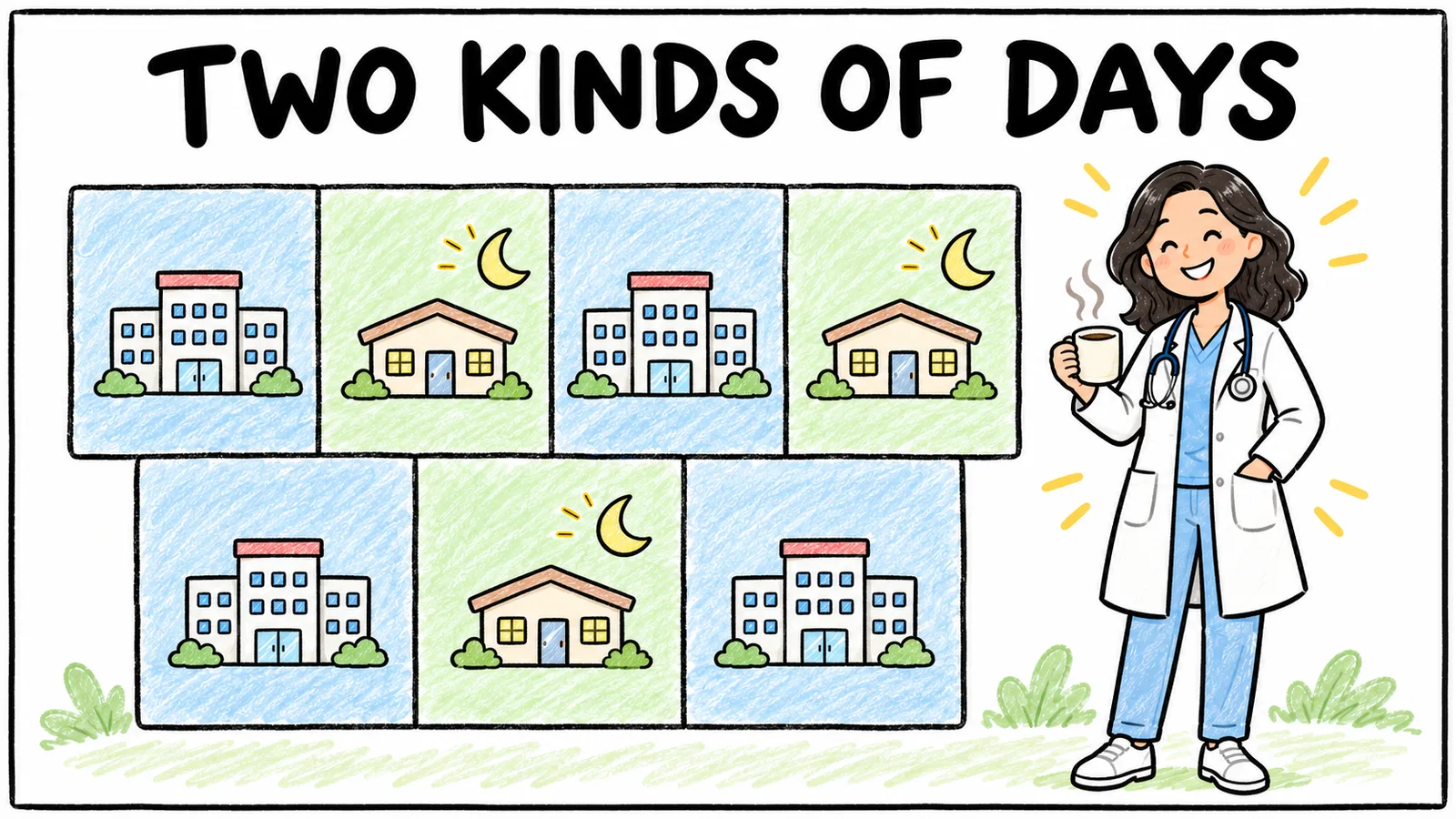
How Big Should a Part-Time DPC Panel Be?
Smaller than a full-time practice, and capped on purpose. The AAFP 2026 DPC data brief reports an average panel of 504 patients in 2025 across its survey respondents, up from 402 in 2024, with physicians averaging a 42.3 hour workweek. A part-time practice running one or two days plus a few evening blocks is working with a fraction of those hours, so it can only promise DPC-level access to a fraction of that panel.
The best way to set your cap is to work backward from the hours you can reliably protect. Count your clinic sessions, the time you will spend on messages, refills and results (which in DPC can rival visit time), and the time you need for billing and admin. The same AAFP brief lists nonvisit care burden as a major challenge for 33% of physicians practicing in DPC, which is a good reminder that a small panel still generates a steady stream of work between visits.
| Question | Full-time DPC | Part-time DPC while employed |
|---|---|---|
| Panel size | Grows toward the physician's long-term cap | A firm cap set by the hours you can protect |
| Visit hours | Weekday clinic days | Evenings, weekends or a fixed day off |
| Messages | Answered through the day | Answered in set blocks around the day job |
| After hours | Covered by the physician or a partner | Must be planned around your other shifts |
| Medicare | Often opted out | Often still enrolled for the day job |
| Malpractice | One DPC policy | Employer policy plus your own DPC policy |
| Income | Membership revenue only | Salary plus a growing membership line |
Write the cap into your plan and your website. Members feel the difference between "we are full for now, join the waitlist" and a doctor who quietly stops answering on time. Our guide to DPC break-even panel size shows how to model the members you need to cover rent, software and staff, which is the number a part-time practice should reach before anything else.
Expect growth to take time. In the AAFP brief, 40% of physicians practicing in DPC named panel growth as a major challenge, and why new DPC practices grow slowly explains what usually drives the pace. A part-time start gives you room for that slow first year without the pressure of replacing a salary right away. Before you choose a location, check our DPC Finder, which lists 5,093 DPC and concierge listings, to see who already serves your area, and read is there room for another DPC near me.
Signing members before you open
Many part-time founders build a founding member list while still employed, so the practice opens with members instead of an empty schedule. If your contract's non-solicitation clause applies, make sure your outreach does not target the employer's patients. Our guide to founding member presales covers waitlists, deposits and how to handle refunds if your opening date slips.
How Do You Handle After-Hours Messages While You Are at Your Day Job?
This is where part-time DPC practices most often struggle, because the membership promise is access and your day job takes most of your weekday hours. The fix is to make the promise match the hours you actually have, and to put it in writing before the first member signs.
A workable part-time policy usually includes:
- Set response times that you can keep on your busiest day job week, such as a reply by the end of the next business day for routine messages.
- One channel for urgent issues, usually a phone line, with clear guidance that emergencies go to 911.
- Named coverage for times you cannot respond, such as a covering DPC colleague, a nurse or a telehealth service, written into the patient agreement.
- Message blocks at fixed times, such as before your shift and in the evening, so messages do not leak into the day job.
Your employer will expect your full attention during your shifts, and your members will expect what your agreement promises. Writing both down protects you from either side feeling shortchanged. Our DPC patient messaging policy guide has sample response times, agreement language and the HIPAA basics for choosing a channel, and DPC physician schedule and burnout covers protecting your time as the panel grows.
Should a Part-Time DPC Be an LLC or a PLLC, and How Is It Taxed?
Many founders form a professional entity before seeing their first member, even part time, so the practice has its own contracts, bank account and records. Which type you form (PLLC, PC or LLC) depends on your state's corporate practice of medicine rules, and our guide to DPC business entities covers the state differences, taxes and why an entity does not shield you from your own malpractice.
On taxes, profit from a DPC you run as a sole proprietor, a single-member LLC or a partnership is self-employment income on top of your salary. The IRS says people in business for themselves generally need to make estimated tax payments, and that wage earners can instead ask their employer to withhold more by filing a new Form W-4. For a physician with a W-2 job, raising withholding is often the simpler route in the first year. A CPA who works with physicians can help you choose, and can tell you when an S corporation election starts to make sense.
When Should You Leave Your Job and Go Full Time?
There is no single right number, but most physicians watch the same signals. The practice is ready when demand outruns your hours, and you are ready when the numbers and the contract line up.
- Demand. You have a waitlist, the cap is full, and messages no longer fit your set blocks.
- Revenue. Membership revenue covers the practice's costs and a meaningful share of what the day job pays. Our DPC physician salary guide shows what DPC owners report earning.
- Benefits. You have priced what you will lose, including health insurance, retirement matching, disability coverage, CME funds and employer-paid malpractice and tail.
- Contract timing. You know your notice period, any non-compete radius and dates, and when the contract renews, so you can resign on a date that does not trigger a clause you could have avoided.
- Medicare. If you plan to opt out once you leave, you know when the opt-out would start.
The financial side deserves honesty. In the AAFP brief, 47% of physicians practicing in DPC reported lower earnings than before and 30% reported higher earnings, even as most reported better care quality and work-life balance. A part-time start lets you see your own version of that trade before you commit, which is one of its biggest advantages. If you are weighing the models side by side, DPC or an insurance-based practice compares them, and our guide to leaving employed medicine for DPC covers notice, telling patients, records and tail coverage when the day comes.
Keeping Two Practices Running Without Dropping Anything
Running a small practice around a full-time job means the work between visits has to happen in short windows, often from a phone. Refill requests, lab results, membership billing questions and follow-ups pile up across the EHR, the billing tool and the messaging app, and a part-time founder has less slack to catch what slips between them.
That is the problem Tabflows works on. It is a dedicated tech team that connects the tools a clinic already uses (EHR, billing and messaging) so follow-ups, tasks and patient context live in one place, which matters most when your practice hours are limited. Whatever tools you choose, set them up so that a message answered at 9 pm is still easy to find the next evening.
The Bottom Line
Starting a DPC or concierge practice part time is a sensible path for many employed physicians, and most of the risk sits in the paperwork rather than the medicine. Read the outside activity clause, the non-compete and the non-solicit before you do anything else, get approval in writing, buy your own malpractice policy, decide on Medicare with your day job in mind, cap the panel to the hours you can protect, and write an after-hours policy you can keep. Then let the practice tell you when it is ready for you full time.
FAQs
Can I start a DPC practice while still working as an employed physician?
Often yes, as long as your employment contract allows it. Many physicians open a direct primary care or concierge practice on evenings, weekends or a day off while keeping a W-2 job, then grow it until it can support them. Before you sign a lease or a single member, read the contract's outside activity or moonlighting clause, the non-compete and the non-solicitation clause, get any approval the contract requires in writing, and buy your own malpractice policy for the new practice.
Does my employer's malpractice insurance cover my part-time DPC?
It may not, so check. Many employer policies are written around the work you do for that employer, at its sites and on its schedule, so whether care for your own DPC members is covered depends on your policy's wording. Ask your employer's risk office for the policy wording in writing, and if it doesn't clearly cover the DPC, buy a separate policy that names the services you offer, such as telemedicine, dispensing or in-office labs.
Do I have to opt out of Medicare to run a part-time DPC?
Not always, and the choice affects your day job. Under the Medicare regulation, a physician who opts out cannot be paid by Medicare or a Medicare Advantage plan, directly or through anyone they reassign payment to, during the opt-out period. Opt-out applies to you as a physician, not to one location, so if your employer bills Medicare for your services, opting out for the DPC can collide with your W-2 job. Talk to your employer and a health care attorney before you file anything.
Is my non-compete a problem if I open a DPC while still employed?
It can be, in two ways. Some contracts limit outside practice during employment, and most non-competes apply after you leave, which means a part-time DPC inside the radius could become the practice you are barred from running once you resign. There is no federal ban, because the FTC's non-compete rule was set aside by a court and the FTC moved to dismiss its appeals in September 2025, so your state's law and your contract's wording decide it.
How many patients should a part-time DPC take?
Fewer than a full-time practice, and the right number depends on the hours you can reliably cover. The AAFP's 2026 DPC data brief reports an average panel of 504 patients in 2025 across its survey respondents, who averaged a 42.3 hour workweek. Many part-time founders set a firm cap well below that, write it into their plan, and raise it only when they add hours or staff.
When should I leave my job and go full time in DPC?
When the practice can carry you and you can no longer give members the access you promised in the hours you have. Common signs are a waitlist, messages that no longer fit your set blocks, membership revenue that covers your practice costs and a meaningful share of what the day job pays, and a contract notice date you can plan around. Count the benefits you will lose, such as health coverage, retirement matching and employer-paid malpractice, before you set the date.
Do I need an LLC or PLLC for a part-time DPC?
Many physicians form a professional entity before seeing their first member, even part time, because it separates the practice's contracts, bank account and liabilities from your own. Which type you form depends on your state's corporate practice of medicine rules. The entity does not replace malpractice insurance, since you stay personally responsible for your own care.