The alternative is not silence. It is better follow-through.
Most clinics do not look for a medical answering service because they love outsourcing phone calls. They look because the phone keeps breaking the day.
The doctor is in a visit. The front desk is already doing three things. A patient calls about a lab result. Another calls about a refill. Someone wants to reschedule. Someone has a billing question. Someone wants to know whether a form is ready. Each call is reasonable on its own, but together they turn the clinic into a switchboard.
An answering service can help with coverage. The question is whether coverage solves the right problem.
If most calls become tasks, follow-ups, chart checks, scheduling decisions, or provider review, the clinic may not just need more answering. It may need a cleaner place for the work behind the call to go.
What answering services are good at
Answering services are good at catching calls when the clinic cannot. They can take messages, route urgent issues, cover after-hours, reduce voicemail buildup, and make sure patients hear a person instead of a dead end.
Those are useful jobs.
The limitation is that the answering service usually operates outside the full clinical workflow. It may not know the full patient context, the membership status, the provider's preferences, the refill policy, the open task, the recent lab, the upcoming appointment, or the follow-up that already exists.
So the clinic still has to interpret the message later. That interpretation is where the time goes.
The better question: why did the call happen?
Some calls are unavoidable. Patients need people. Independent care should feel reachable.
But some calls happen because the work is hard to see. A patient calls because they do not know whether a follow-up is moving. A team member calls back because the task was not visible. A provider gets interrupted because nobody can tell whether a message was handled. A refill call turns into a chart hunt because context lives in three places.
That is not a phone-volume problem alone. It is an operating-system problem.
Before adding an answering service, it is worth asking how many calls would feel lighter if the team had one shared view of the patient, the task, the owner, and the next step.
What a workflow-first alternative looks like
A workflow-first alternative does not pretend phones disappear. It makes phone work easier to finish.
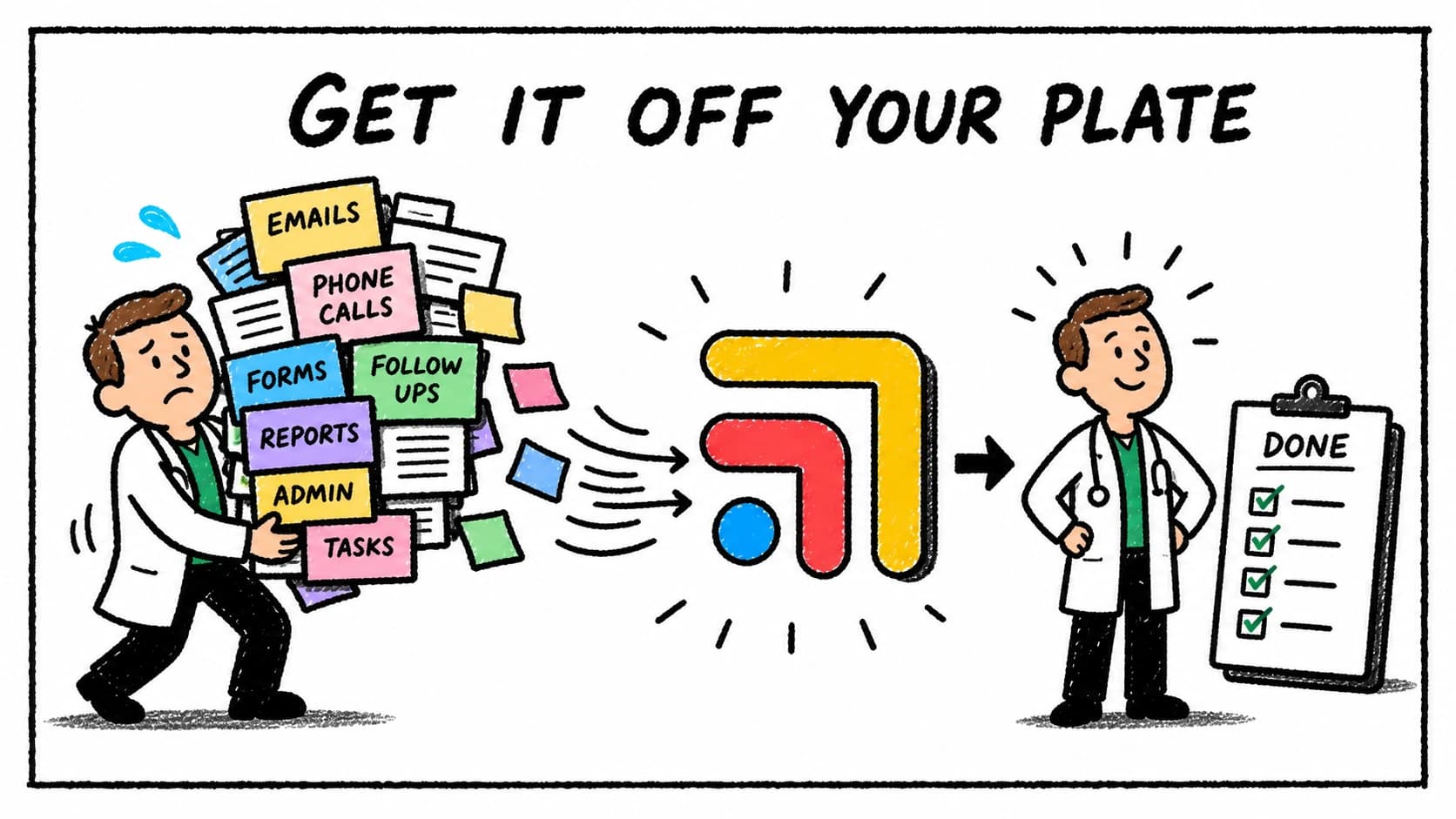
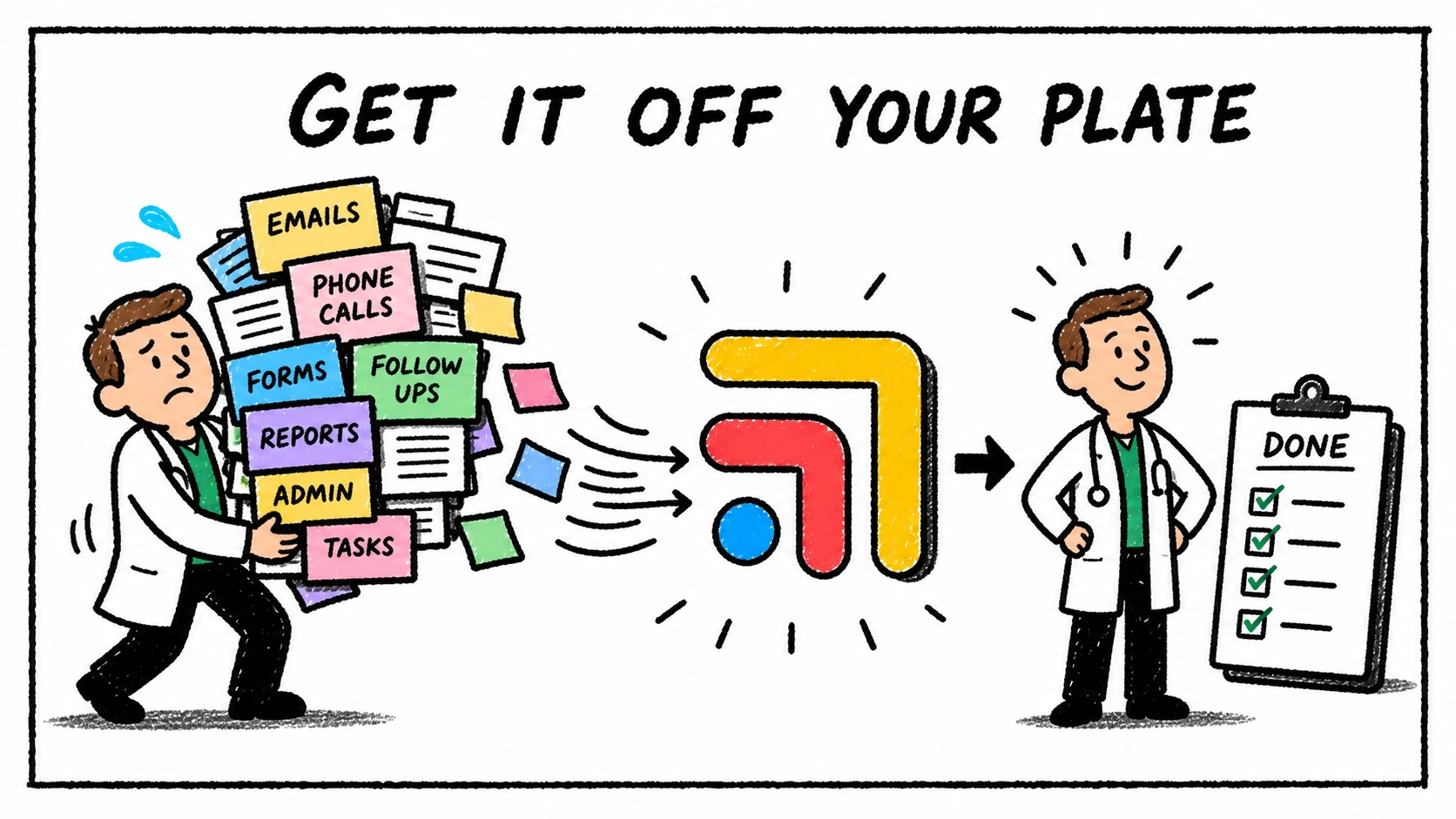
When a patient calls, the message should become a clear item of work. It should be tied to the patient. It should show the relevant context. It should have an owner. It should have a status. It should make provider review obvious when needed. It should not live as a sticky note, a forwarded voicemail, a vague message thread, or a memory test.
That is what clinics often need before they need more labor.
Once the workflow is visible, the clinic can make a better staffing decision. Maybe an answering service still makes sense. Maybe a VA makes sense. Maybe the current team can absorb more because the friction is lower. Either way, the next person is not being hired into a maze.
Where Tabflows fits
Tabflows is the shared workflow layer around the tools your clinic already uses.
It helps the team connect patient calls, inbox messages, tasks, chart context, scheduling work, refills, forms, and follow-ups without making every call become a manual reconstruction project. The EHR stays the record. The phone stays the phone. Tabflows gives the operational work one place to land.
That makes it a strong first step before buying a medical answering service, and a useful companion if you already use one.
For the broader capacity angle, read How to Grow a DPC Clinic Without Hiring More Staff. For staffing-specific planning, read Before You Hire a Medical VA, Fix the Work They Would Be Chasing.
FAQ
What is an alternative to a medical answering service?
For many clinics, the first alternative is not another call center. It is a workflow layer that makes patient context, tasks, ownership, and follow-up visible so fewer calls turn into manual chasing.
Can software replace a medical answering service?
Software should not replace every human phone interaction, but it can reduce the amount of repetitive follow-up work, message routing, and context hunting that makes clinics feel like they need more phone coverage.
How does Tabflows reduce answering-service load?
Tabflows gives call-related work one place to land, connecting patient context, tasks, owners, follow-ups, and AI-assisted drafts around the clinic's existing tools.
Try Tabflows free and see whether the phone problem is really a workflow problem.
FAQs
What is an alternative to a medical answering service?
For many clinics, the first alternative is not another call center. It is a workflow layer that makes patient context, tasks, ownership, and follow-up visible so fewer calls turn into manual chasing.
Can software replace a medical answering service?
Software should not replace every human phone interaction, but it can reduce the amount of repetitive follow-up work, message routing, and context hunting that makes clinics feel like they need more phone coverage.
How does Tabflows reduce answering-service load?
Tabflows gives call-related work one place to land, connecting patient context, tasks, owners, follow-ups, and AI-assisted drafts around the clinic's existing tools.