To start a direct primary care practice in Florida, get licensed in Florida, form a professional association or PLLC, write a membership agreement that meets Florida Statutes section 624.27, confirm your practice is exempt from clinic licensure under section 400.9905, and decide how you will handle Medicare patients. Florida has had a DPC law since 2018, so a membership that follows the statute is not treated as insurance, and you can sell it without an insurance license. The rest of this guide walks through each step in order, with the Florida statute behind it and a note on where to confirm it before you sign anything.
This is a general guide, not legal advice. Florida's rules change, and a Florida health care attorney who knows DPC is worth an hour before you launch.

Florida DPC at a glance
- DPC law. Yes, Fla. Stat. 624.27, enacted in 2018 and amended several times since, most recently in 2025.
- Who can offer an agreement. Providers licensed under chapters 458 (MDs), 459 (DOs), 460, 461, 464 (nursing, including APRNs), 466, 490 and 491, or a health care group practice.
- Who can sign it. The patient, the patient's legal representative or the patient's employer.
- Clinic license. Not needed for most practitioner-owned practices, under the exemptions in 400.9905(4).
- Entity. A professional association (P.A.) or a PLLC under chapter 621.
- Dispensing. Allowed with registration as a dispensing practitioner under 465.0276, except for most Schedule II and III controlled substances.
- Local market. See Florida's state guide for how many Florida practices are on the DPC Finder and what they charge.
Step 1. Get your Florida license in order
If you already practice in Florida, this step is a check that your license, DEA registration and any board registrations are current. If you are moving to Florida, it is the longest lead item, so start it first.
The Florida Board of Medicine licenses MDs either by examination (section 458.311) or by endorsement (section 458.313). Every applicant for an initial license has to submit fingerprints through an FDLE-approved Livescan provider for a Florida and national background check, and the board's page warns that using the wrong agency identifier (ORI) means the board never receives your results. DOs apply through the Board of Osteopathic Medicine under chapter 459, and APRNs through the Board of Nursing.
Florida also lets out-of-state clinicians register as telehealth providers under section 456.47 instead of holding a full Florida license, with conditions. That route can help a practice that sees some members by video, but it is not a way to run an in-person Florida practice. Our DPC credentialing and licenses checklist covers the federal pieces, such as your NPI and DEA registration.
Step 2. Form a professional association or PLLC
Florida lets physicians practice through a professional association or a professional limited liability company under the Professional Service Corporation and Limited Liability Company Act, chapter 621. Section 621.09 limits ownership to people (or professional entities) licensed to render the same professional service, and section 621.12 requires the name to carry a designator, such as "P.A." for a professional association or "PLLC" for a professional LLC.
The entity protects you from the practice's business debts, but section 621.07 keeps you personally liable for your own care and for the people you directly supervise, which is why malpractice coverage still matters. Ownership also shapes Step 4, since the clinic licensure exemptions turn on who owns the practice.
Step 3. Write a membership agreement that meets 624.27
This is the step that makes a Florida DPC a DPC in the eyes of the law. Section 624.27 says a direct health care agreement is not insurance and is not subject to the Florida Insurance Code, and that you or your agent do not need a certificate of authority or an insurance license to market, sell or offer one. That protection only applies to an agreement that does not indemnify for services provided by a third party, under the definition in subsection (1), and that meets subsection (4), which lists eight requirements. The agreement must:
- Be in writing.
- Be signed by you or your agent and by the patient, the patient's legal representative or the patient's employer.
- Let either party end it with at least 30 days' advance written notice. It may allow immediate termination for a violation of the physician-patient relationship or a breach of its terms.
- Describe the scope of health care services the monthly fee covers.
- Specify the monthly fee and any fees for services the monthly fee does not cover.
- Specify how long the agreement lasts and any automatic renewal terms.
- Offer a refund of monthly fees paid in advance if you stop offering health care services for any reason.
- Print, on the signature page, in contrasting color and in at least 12-point type, the statute's notice that the agreement is not health insurance, that you will not file claims against the patient's insurance for the covered services, that it is not minimum essential coverage under the Affordable Care Act, and that it is not workers' compensation insurance.
Two of those trip people up. The refund requirement matters most if you plan to sell annual memberships or a founding-member presale, because fees paid in advance have to be refundable if the practice closes. The signature page notice has to be the statute's own wording, so copy it from the statute rather than paraphrasing it. Because employers can sign too, the same law covers an employer contract for a group of employees, which is useful if you plan to sell DPC to local employers.
Members who are uninsured, or who have coverage but don't file a claim with it, count as self-pay under the federal good faith estimate rules, so those rules most likely apply to your memberships (CMS excludes people enrolled in Medicare, Medicaid or TRICARE), and a single estimate can cover up to 12 months of recurring membership services.
Step 4. Confirm you are exempt from clinic licensure
Florida's Health Care Clinic Act, administered by the Agency for Health Care Administration (AHCA), requires many health care businesses to hold a clinic license. Section 400.9905(4) defines a clinic as an entity that provides health care services and "tenders charges for reimbursement for such services," and then lists who is not a clinic for licensure purposes.
Two of those exemptions cover most DPC practices.
- Paragraph (f). A sole proprietorship, group practice, partnership or corporation that provides care through physicians, is directly supervised by one or more of them, and is wholly owned by those physicians (or a physician and their spouse, parent, child or sibling).
- Paragraph (g). A practice that provides care through practitioners licensed under the chapters it lists, including APRNs under section 464.012, and is wholly owned by licensed health care practitioners, or by them and a close family member, as long as a licensed owner supervises the business and is legally responsible for its compliance.
If a physician or a group of physicians owns your PA or PLLC outright, you most likely fall under paragraph (f). If an investor, a management company or anyone else outside those exemptions will own part of the practice, read the full section and talk to AHCA and a health care attorney before you open, because the exemptions depend on ownership.
Step 5. Decide how you will handle Medicare
If you want to see Medicare patients under a membership, many DPC physicians formally opt out of Medicare and sign private contracts with those patients. As CMS explains, once you opt out, neither you nor your Medicare patients can bill Medicare for your services. The opt-out runs in two-year periods that renew automatically, and the decision shapes who can join your panel, so make it before you set prices. Our main start-a-DPC guide covers the opt-out in more detail.
Step 6. Set your price and check the 2027 HSA cap
Florida's statute does not set or cap your fee, but federal tax rules now matter to many members. Since January 1, 2026, a qualifying direct primary care arrangement no longer stops someone from contributing to a health savings account, as long as the fee stays within the federal cap. IRS Revenue Procedure 2026-24 keeps the 2027 cap at 150 dollars a month for an individual and 300 dollars a month for an arrangement that covers more than one person. Read DPC and HSA rules for 2027 for what counts as a qualifying arrangement.
For what Florida practices actually charge, the Florida state guide shows prices from Florida practices on the DPC Finder, and how much to charge for a DPC membership walks through setting your own.
Step 7. Set up dispensing, labs and prescribing the Florida way
Dispensing. Many DPC practices sell common medications at cost. Under Fla. Stat. 465.0276, a practitioner who dispenses medicinal drugs for a fee must register with their licensing board as a dispensing practitioner, follow the laws and rules that apply to pharmacies, and give the patient a written prescription with notice that it can be filled at any pharmacy. The statute caps the registration fee at 100 dollars and bars registered dispensing practitioners from dispensing Schedule II and III controlled substances, apart from narrow exceptions such as buprenorphine for opioid addiction treatment, so those stay off the shelf.
E-prescribing. Florida requires prescribers who keep an electronic health record system to send prescriptions electronically under section 456.42, with narrow exceptions. Our EPCS requirements for 2027 guide covers the federal side.
Telehealth. Section 456.47 holds telehealth care to the same standard as in-person care in Florida and limits telehealth prescribing of Schedule II controlled substances to psychiatric disorders, inpatient hospital care, hospice and nursing home residents.
Step 8. Market the practice without paying for patients
Florida's Patient Brokering Act, section 817.505, makes it unlawful for anyone, including a health care provider, to pay or receive a commission, bonus, rebate or kickback for referring patients, and section 458.331(1)(i) lists referral kickbacks and fee splitting as grounds for discipline. Both matter if you plan a member referral reward or pay a marketer per new member. Read DPC anti-kickback and Stark basics before you design either one.
A note for Florida nurse practitioners
Florida's DPC statute counts providers licensed under chapter 464 as health care providers who can offer direct health care agreements. Although Florida is often listed as a restricted practice state, section 464.0123 lets an APRN register for autonomous practice after at least 3,000 clinical practice hours under a physician's supervision within the 5 years before registering, with graduate coursework in differential diagnosis and pharmacology, no discipline in those 5 years and malpractice coverage or a letter of credit. Autonomous practice is limited to primary care, such as family medicine, general pediatrics and general internal medicine. That pathway, together with the APRN exemption in 400.9905(4)(g), is what lets an NP own and run a primary care DPC in Florida without a supervising physician. See can nurse practitioners open a DPC for the full picture.
A Florida launch checklist
- 6 months out. Confirm your Florida license, or start the Board of Medicine application and Livescan screening. Pick a health care attorney.
- 5 months out. Form your PA or PLLC under chapter 621, get an EIN and open a business bank account. Confirm which 400.9905 exemption you fall under.
- 4 months out. Draft the 624.27 membership agreement with the signature page notice, decide on Medicare and file the opt-out if you are opting out, and apply for malpractice coverage.
- 3 months out. Choose your EHR, membership billing and patient messaging, and register as a dispensing practitioner if you will dispense.
- 2 months out. Set prices against the 2027 HSA cap, write your good faith estimate template and start a founding-member list.
- Opening month. Sign members, test every workflow with a few real patients and fix what breaks before you grow.
Where Tabflows fits
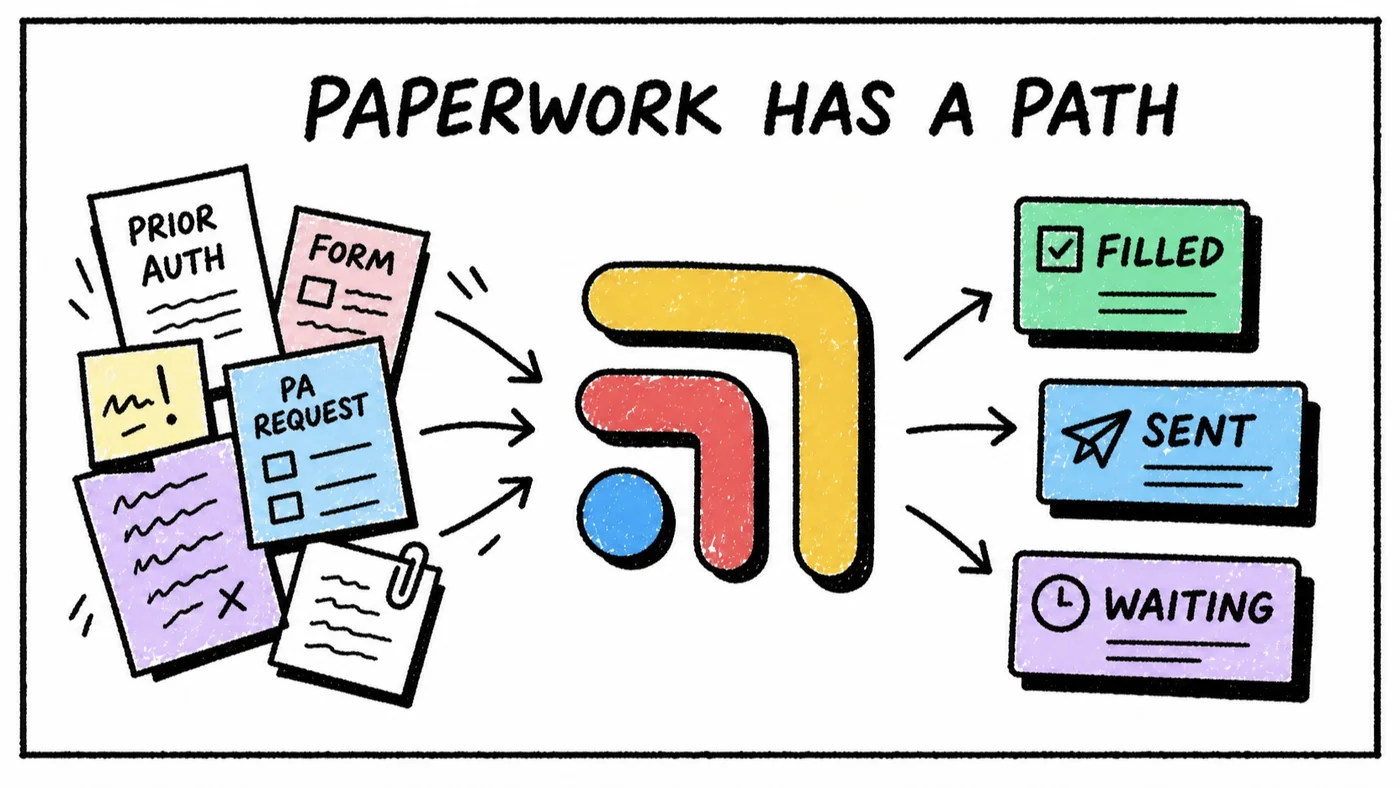
Most of the launch paperwork is done once you open, but the daily work between your tools is not. A refill request that came in by text, a lab result that needs a call back and a new member who still needs onboarding each live in a different app. Tabflows is a dedicated tech team that connects the tools you already use, such as your EHR, billing and messaging, so follow-ups, tasks and patient context live in one place. It is not an EHR, a billing system or a law firm, and it works with whatever stack you choose. If you want to plan for that from day one, Tabflows for new practices shows how it works.
FAQs
Is direct primary care legal in Florida?
Yes. Florida Statutes section 624.27, first passed in 2018, says a direct health care agreement is not insurance and is not subject to the Florida Insurance Code, and that a provider does not need a certificate of authority or an insurance license to market or sell one. The agreement has to meet the requirements in subsection (4) of that section, and must not indemnify for services provided by a third party, to get that treatment.
What does a Florida direct health care agreement have to include?
Under Fla. Stat. 624.27(4), it must be in writing and signed by the provider (or the provider's agent) and the patient, the patient's legal representative or the patient's employer. It must let either side end it with at least 30 days' written notice, describe the services the monthly fee covers, list the monthly fee and any fees for services outside it, state the term and any automatic renewal, offer a refund of fees paid in advance if the provider stops offering care, and print the statute's notice that the agreement is not health insurance on the signature page, in contrasting color and at least 12-point type.
Does a Florida DPC need a health care clinic license from AHCA?
Usually not, if licensed practitioners own it. Florida's Health Care Clinic Act defines a clinic in Fla. Stat. 400.9905(4) and exempts, among others, practices wholly owned by the physicians who provide the care (paragraph f) and practices wholly owned by certain licensed health care practitioners, including APRNs under 464.012 (paragraph g). A practice with outside, non-licensed owners should check the licensure rules with AHCA and a Florida health care attorney before it opens.
Can a nurse practitioner start a DPC in Florida?
Florida's DPC statute counts providers licensed under chapter 464, the nursing chapter, as health care providers who can offer direct health care agreements. Florida Statutes 464.0123 lets an APRN register for autonomous practice after at least 3,000 clinical practice hours under physician supervision within the 5 years before registering, plus graduate coursework in differential diagnosis and pharmacology and malpractice coverage, and that autonomous practice is limited to primary care such as family medicine, general pediatrics and general internal medicine.
Can a Florida DPC physician dispense medications?
Yes, with registration. Under Fla. Stat. 465.0276, a practitioner who dispenses medicinal drugs for a fee must register with their licensing board as a dispensing practitioner, follow the laws and rules that apply to pharmacies, and give the patient a written prescription with notice that it can be filled anywhere. The statute caps the registration fee at 100 dollars and bars dispensing Schedule II and III controlled substances, apart from narrow exceptions.
How long does it take to start a DPC practice in Florida?
Most physicians plan on about six months from the decision to the first patient visit, and some take up to a year. A physician who already holds a Florida license can move faster. One who still needs a Florida license should add the Board of Medicine's application and fingerprint background screening to the front of the timeline.