
What Is the Best EHR for Concierge Medicine?
The best EHR for concierge medicine depends on whether your practice still bills insurance. If you stay in-network and charge a membership on top, Elation is the strongest fit in this guide, because it builds claims billing into the EHR and also supports memberships for hybrid practices. If your concierge practice is fully cash-pay, a membership-first platform such as Hint's Whole Platform, Atlas.md or Cerbo can run charting, scheduling and membership billing in one place, and Akute is worth a demo if you want concierge features like membership tiers and priority messaging. Nearly every concierge practice also adds a phone and text tool like Spruce, so the real stack is usually three or four systems. Concierge medicine workflow software is the layer that keeps the work moving between those systems, and that is where Tabflows fits, as a dedicated tech team that connects the EHR, billing and messaging tools you already use rather than replacing any of them.
This guide walks through the jobs a concierge practice actually needs software for, which vendors say on their own sites that they serve concierge or membership practices, and what each one publishes about price. Every vendor fact below comes from the vendor's own website, and the Sources line at the end says when each priced page was last checked. Plans change often, so confirm on a demo call before you sign anything.
Why Concierge Software Is Different From DPC Software
Concierge medicine and direct primary care both run on memberships, but they handle insurance very differently. A direct primary care practice usually stops billing insurance for primary care, so one membership platform can carry the whole business. Many concierge practices keep billing Medicare and commercial plans for covered visits and charge a separate annual or monthly fee for extended access, longer visits and services insurance does not pay for. We cover the model differences, including the Medicare rules, in DPC vs concierge medicine.
That hybrid setup is where most concierge software headaches start. The claims side wants CPT codes, eligibility checks and remittances, while the membership side wants recurring card charges, renewal dates and tier rules. When those live in two systems that never talk to each other, a front desk ends up reconciling them by hand, and the risk of charging a patient twice or missing a renewal goes up.
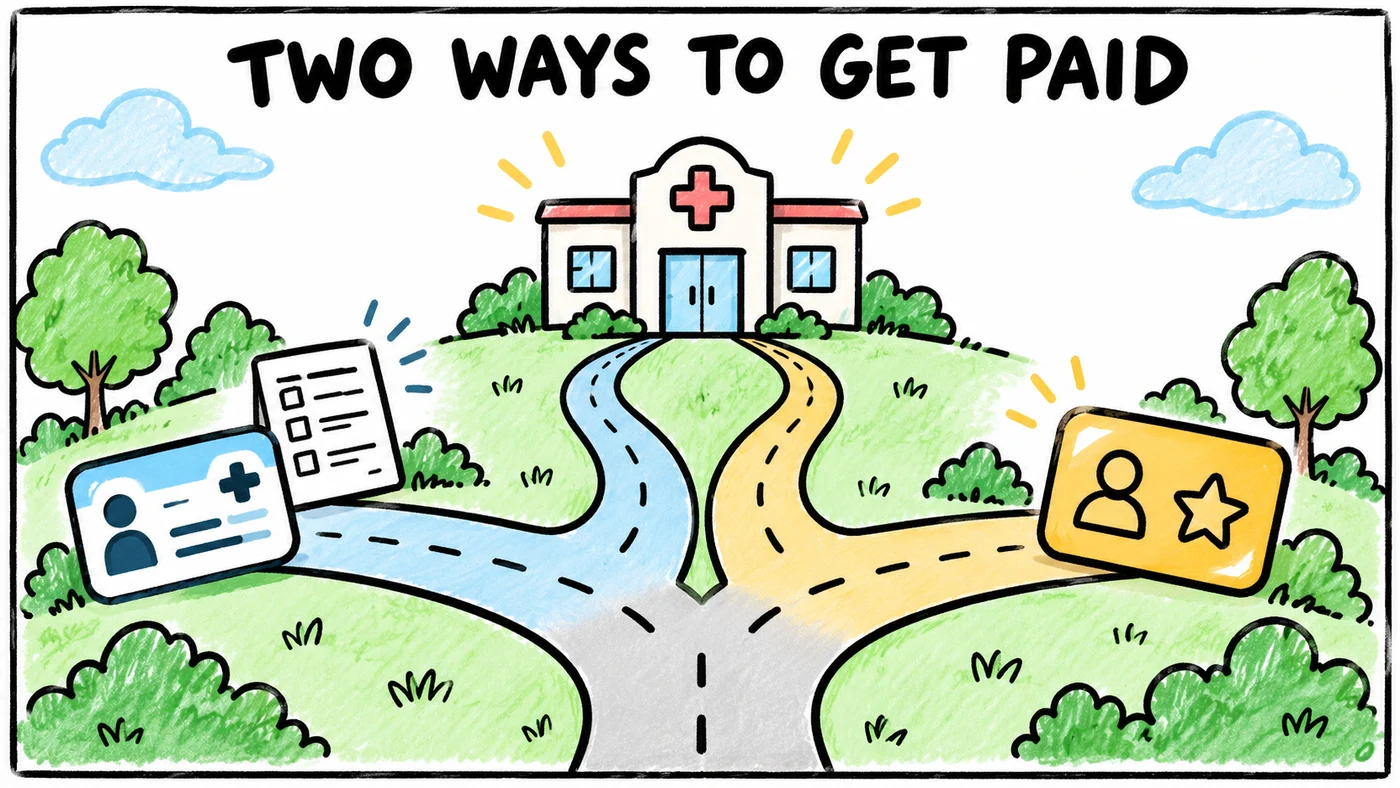
So the first decision is not which brand to buy. It is whether you need claims and memberships in one place or whether you are fully cash-pay and can run on a membership-first platform. Everything else follows from that.
The Jobs Concierge Practice Software Has to Cover
Here is the whole stack at a glance:
- EHR and charting. Primary care charting, e-prescribing, labs, referrals and long preventive visits. Elation, Akute, Charm, Cerbo, Hint Whole Platform and Atlas.md cover it, and Elation also quotes by practice.
- Membership billing. Annual or monthly fees, tiers, family plans, renewals, card and ACH. Hint, Elation, Cerbo and Atlas.md cover it, and Akute Pay lists recurring payments as coming soon.
- Insurance claims. Claims, eligibility checks and patient payments for covered visits. Elation, Charm, or the practice's existing insurance EHR.
- Messaging and phone. A direct line to the doctor, texting, after-hours calls and fax. Spruce, OhMD, or the EHR's portal messaging.
- Scheduling. Long annual exams, same-day slots, online booking and reminders, built into Elation, Akute, Cerbo, Atlas.md and Hint Whole Platform.
- Annual exam workflow. Pre-visit labs and forms, a set agenda and a written plan after, from EHR templates and forms, plus tasks that follow the visit.
- Patient portal or app. Secure messages, forms, bills and appointment requests: the Cerbo portal, Atlas.md's Patient Hub and mobile app, Hint, Akute and Elation.
Prices, only where the vendor publishes them:
| Elation | Akute | Charm | |
|---|---|---|---|
| Plan | $375 per DPC provider per month | $300 per month with 1 clinician and 100 patients | $200 per provider per month |
| Higher plan | $550 per month with 2 clinicians and 300 patients | ||
| Plan on some visits | Shown on some visits: $100 per month on Launch, with the first 50 patients | ||
| Encounter plan | $0.50 per encounter, up to 2,000 a month | ||
| Encounter plan minimum | $25 per month at least | ||
| Works with Tabflows | Elation integration | Akute integration | Charm integration |
| Checked | elationhealth.com/ehr-product-guide, November 4, 2026 | akutehealth.com/pricing, November 4, 2026 | charmhealth.com/ehr/ehr-pricing-us.html, November 4, 2026 |
| Hint | Spruce | OhMD | |
|---|---|---|---|
| Starting price | $290 per month with 1 clinician and unlimited members | $24 per user per month | $300 per month, as Core's starting price |
| Higher plan | $49 per user per month | $500 per month, as Automate's starting price | |
| Works with Tabflows | Hint integration | Spruce integration | |
| Checked | hint.com/pricing, November 4, 2026 | sprucehealth.com/plans, November 4, 2026 | ohmd.com/pricing, November 4, 2026 |
The sections below explain each job and what to look for.
Best EHR for Concierge Medicine If You Still Bill Insurance
If your concierge practice stays in-network, the EHR has to be good at insurance billing first, because that is still a meaningful share of revenue, and then handle memberships without a workaround.
Elation is built for primary care and says on its billing page that claims, eligibility and patient payments live in the same platform as the EHR. Its membership management resources describe recurring payments and patient enrollment for direct primary care and hybrid practice models, which is the concierge use case in plain terms. Elation lists per-provider prices in its EHR product guide and also quotes by practice. Its pricing page says its native AI tools are now included free, while the product guide lists Note Assist, Elation's AI scribe, as a paid add-on per provider. It is best for practices that want strong primary care charting and claims in one system.
On November 4, 2026, the product guide listed a Standard DPC Provider at $375 per provider per month, Developer Platform Core at $150 per provider per month and Elation AI (Note Assist) at $199 per provider per month.
Akute has a dedicated concierge page that lists patient groups and membership tiers, priority messaging and scheduling, private note fields, VIP workflow rules and integrated billing with concierge pricing structures. Its pricing page is public, which makes budgeting easier. Its Akute Pay overview, updated August 2, 2026, lists recurring and membership payments as coming soon, so ask on a demo whether memberships can run inside Akute yet and, if you bill insurance, how claims fit alongside those membership tiers, since the concierge page focuses on the membership side.
Akute's plans run from $300 to $550 a month, with a $100 plan also shown on some visits (checked November 4, 2026). Essentials adds $0.75 per additional patient.
Charm is a general ambulatory EHR with medical billing and a clearly published price list, which suits a small practice that wants a low fixed cost while it figures out its membership model. It is best for budget-conscious practices that are comfortable setting up their own membership workflows.
Charm's pricing page lists a free plan limited to 50 encounters a month, an encounter plan at $0.50 per encounter (with a $25 monthly minimum) and a provider plan at $200 per provider per month.
Does Elation Do Billing, or Do I Need a Separate Billing System Alongside It?
Elation does insurance billing inside the EHR, so most practices that bill insurance do not need a separate claims system next to it. Its billing page says billing starts in the chart, where your signed note becomes a coded claim, each claim is checked against eligibility, coding edits and payer rules before it goes out, clean claims queue for your team to send, and clean payments post on their own while exceptions come to you with a reason. For memberships, Elation's membership management resources describe recurring payments and enrollment for direct primary care and hybrid models. A concierge practice adds a separate membership billing tool such as Hint mainly when it wants employer billing or membership features beyond what Elation shows on a demo.
The other common path is to keep the insurance EHR you already have and add a membership billing tool next to it. That avoids a chart migration during the busiest year of a conversion, which we cover in how to start a concierge medicine practice and, for the records side, in switching EHRs without losing patient data.
Best Concierge Software If Your Practice Is Cash-Pay
If your concierge practice does not bill insurance, you have more freedom, and the membership-first platforms built for direct primary care fit well.
Hint has a concierge page that describes member enrollment, custom coverage plans, billing and invoicing, employer direct contracting and API access. It offers two shapes, a Whole Platform that adds charting, scheduling and patient communications, and a Billing Only option for practices that want to keep their current EHR. That second option is why Hint shows up in so many hybrid concierge stacks.
Hint's Launch plan starts at $290 per month plus $290 per month per additional clinician, and card fees are listed at 3% + $0.30 per card payment, with ACH at 1% + $0.25 per ACH payment, capped at $5.
Atlas.md describes itself on its homepage as an EMR and practice management system built by and for primary care physicians running insurance-free clinics. It includes online self-scheduling, a Patient Hub where patients book, pay and message, and mobile apps for both doctors and patients. It is best for fully cash-pay concierge practices that want one system for most of the day.
Cerbo says on its cash-based practices page that it supports recurring subscriptions, prepaid packages and payment plans by card or ACH, with a patient portal for messages, forms, encounter summaries, appointment requests and payments. It is best for practices that sell packages alongside memberships, such as concierge practices with a functional medicine or wellness side.
Is Hint Health a Good Fit for Direct-Pay Practices?
Yes, Hint Health is a strong fit for most direct-pay practices, because membership billing for direct care is what it was built around. Its billing page describes recurring, one-time, patient and employer invoices, card and ACH payments tied to the right invoice, failed charges that retry and notify you, and automated dunning for overdue balances. The same page names direct primary care, specialty membership programs, employer-sponsored care and hybrid care models as the practices it serves, and lists prepaid packages among the billing models it supports.
Hint fits best when the membership is the center of your business and you want employer contracts, family plans and ancillary charges on the same bill. It is a weaker fit as your only system if a large share of revenue still comes from insurance claims, because Hint's billing page is about memberships, invoices and employer billing rather than claims filing, so hybrid practices usually keep an insurance EHR for that side. If you choose Hint for billing, our Hint Core integration page shows how Tabflows keeps membership status in view while your team works in the chart and inbox.
Is Hint's All-in-One (Hint Clinical Plus Hint Core) a Good Way to Stop Juggling Hint, Spruce and a Separate EHR?
It can be, if your team is ready to move charting and patient messaging into Hint. Hint's announcement of its unified platform says the clinical and business sides of the practice now live in one place, with one login, one platform and one bill, and it adds Hint Chat for secure messaging between the care team and patients plus an iOS app for clinicians, with the patient app listed as coming soon. Its concierge page lists patient onboarding, email, text and phone communication, integrated fax, ePrescribe and bidirectional labs in the Whole Platform.
The trade-off is the move itself. Consolidating means migrating charts out of your current EHR, retraining the team, and checking on a demo that Hint's messaging covers everything you rely on Spruce for today, such as shared phone lines and after-hours calls. Hint also says you can turn off its EMR features and run only the business side, so keeping a separate EHR stays an option. If you would rather keep Hint, Spruce and your EHR, the juggling usually comes from tools that were never built to talk to each other, and Tabflows works across Hint Clinical, Hint Core and Spruce so follow-ups land in one shared task list instead of three inboxes.
Which EHR Supports Prepaid Packages, Memberships and Deposits?
Among the tools in this guide, Cerbo and Hint are the clearest on prepaid packages and memberships together. Cerbo's cash-based practices page lists recurring subscriptions, prepaid packages and payment plans, and Hint's billing page lists prepaid packages alongside memberships, one-time charges and employer billing. Deposits are rarer in primary care software, and the clearest example we found is outside it, in Aesthetic Record's Patient Wallet, which tracks package and membership pre-payments and service deposits as a balance on the patient's profile.
Practice management tools aimed at wellness and allied health also sell packages. Jane's packages and memberships hub says packages and memberships come with its Thrive plan and its legacy Base and Insurance plans. If deposits matter to your concierge model, for example holding a fee when a new member books an annual exam, ask each vendor to show the deposit, the refund and how both appear on the patient's bill during the demo.
For a deeper side-by-side of the membership-first EHRs, see the 2027 DPC EHR comparison and best DPC software for 2027. If billing is the piece you are choosing first, DPC membership billing software for 2027 goes further on renewals, tiers and declined cards.
Patient Messaging and Phone for Concierge Practices
Direct access is the heart of what concierge patients pay for, so the phone and text setup matters more here than in almost any other kind of practice. Patients expect to reach the doctor or a named team member quickly, and the practice needs that access to stay HIPAA compliant and shared, so it does not all land on one personal cell phone.
Spruce combines phone, secure texting, fax and video in a shared inbox and is a common add-on in membership practices. Its pricing page lists two plans.
Spruce Basic is $24 per user per month and Communicator is $49 per user per month.
OhMD focuses on patient texting, calling and routing, and lists a Business Associate Agreement on its pricing page. It suits practices that want texting layered on top of an existing insurance EHR.
OhMD lists a Core plan starting at $300 per month and a higher tier starting at $500 per month that adds workflow, routing, scheduling and integrations.
Portal messaging inside the EHR is fine for non-urgent questions, and many practices use both, the portal for clinical threads and a phone and text tool for calls and quick replies. Our guides on HIPAA-compliant texting and the Spruce messaging workflow walk through how to set that up so nothing gets lost between channels.
Scheduling and the Annual Exam Workflow
The annual comprehensive exam is the signature visit in most concierge practices, and it touches more tools than any other appointment. Labs are drawn ahead of time, intake forms and questionnaires go out, the visit itself runs long, and afterward the patient gets a written plan with follow-ups that can stretch for weeks.
Software can help with each step if it is set up for it. Look for these capabilities when you compare tools:
- Appointment types with long durations and buffers, so a 90-minute annual exam does not collide with same-day sick visits.
- Online self-scheduling that respects those rules (Atlas.md, Cerbo and Akute all describe patient-facing booking).
- Pre-visit forms and lab orders that can be sent automatically when the exam is booked.
- Visit templates for the exam itself, so the plan is consistent from patient to patient.
- Reminders and follow-up tasks after the visit, tied to the patient's chart.
The weak point is usually not any single tool. It is the handoff after the exam, when lab results, referrals, specialist notes and the patient's questions arrive in different places. Practices that track those follow-ups in one list catch far more of them, which is the idea behind medical records request tracking and getting outside records.
Patient Portal or App
Concierge patients notice the patient experience, and the portal or app is a big part of it. At minimum it should let patients message the team securely, fill out forms, see visit summaries, request appointments and manage their membership payment.
Among the tools above, Atlas.md offers patient and doctor mobile apps, Cerbo describes a full patient portal with payments and an embeddable booking widget, and Hint, Akute and Elation each include patient-facing portal features. If your practice bills insurance and memberships separately, check whether patients will see both kinds of charges in one place or will need two logins, because two logins are a common source of confused billing calls.
How to Choose Concierge Practice Management Software for 2027
- Pick Elation if you put charting first and want a primary care EHR with memberships built in. Where it wins: a chart and billing platform built for primary care; some AI tools included, with Elation AI as a paid add-on.
- Pick Hint if you sell to employers, take eligibility files from a TPA, or want to keep your EHR and run only memberships and billing. Where it wins: employer billing and eligibility feeds; billing sold on its own, beside another EHR.
- Pick Atlas.md if you run a solo or small self-pay practice and want charting, billing, labs and an in-house pharmacy in one system at one per-provider price. Where it wins: one per-provider price with unlimited patients; an in-house pharmacy with unlimited inventory.
- Pick Akute if you want automation inside the EHR and a price set by patient count. Where it wins: automation built into the EHR; e-prescribing, labs and a patient portal on its plans.
- Pick Cerbo if you run a cash-based, functional or integrative practice and want one EHR set up around it. Where it wins: a do-it-all EHR for practices of many kinds; memberships through an integrated merchant partner.
- Pick Charm if budget comes first, or you still bill some insurance, since it has a free plan and claims tools. Where it wins: a free plan to start; electronic claims through an add-on.
- Pick Spruce if you want texts, calls, faxes and video with patients in one shared inbox. Where it wins: calls, texts and faxes in one place; one per-user plan for the whole team.
- Pick OhMD if you want your existing office line text-enabled, with routing and scheduling automation as you grow. Where it wins: texting with voice and video calling on its base plan; AI voice and text on its automation plan.
- Pick Jane if you run a practice that sells packages and memberships to clients. Where it wins: scheduling, charting and billing in one system.
- What Tabflows does not do: chart visits or prescribe; bill memberships or charge cards; replace your patient messaging.
A simple way to narrow the field is to answer four questions before you book any demos:
- Do you bill insurance for covered visits? If yes, put claims capability at the top of your EHR list.
- Are you converting an existing practice? If yes, consider keeping your EHR for year one and adding membership billing next to it.
- How do patients reach you after hours? If the answer is a personal cell phone, a shared phone and text tool should be one of your first purchases.
- Who on your team will own renewals, declined cards and follow-ups? The answer tells you how much automation you need.
For pricing the membership itself, see how much to charge for a membership, and for growing into the stack in stages, the DPC software stack by stage applies to concierge practices too.
Concierge Medicine Workflow Software
Concierge medicine workflow software is what connects the EHR, membership billing and messaging tools so the work between them gets done, rather than another system to chart or bill in. A typical concierge day has handoffs like a declined membership card that needs a call, a lab result that needs a follow-up visit, and a patient text that needs the doctor's answer before tomorrow's annual exam. Most EHRs include tasks and scheduling, but those tasks stay inside one tool, while the follow-ups start in all of them. Tabflows sets up those handoffs as tracked tasks and workflow automations across Elation, Hint, Spruce, Atlas.md, Akute, Cerbo and Google Workspace, each with an owner and a due date.
Where Tabflows Fits
Even with good tools in every slot, a concierge practice still has a lot of work that lives between them. A membership renewal fails in the billing tool, a patient texts about it in the phone app, and the doctor needs to know before tomorrow's annual exam. Tabflows is a dedicated tech team that connects the EHR, billing and messaging tools a practice already uses, so follow-ups, tasks and patient context sit in one shared place instead of in three inboxes. It does not replace any of the tools above. It makes the handoffs between them reliable, which is the part of the stack no single vendor owns. You can read more about that approach in membership billing decline follow-up.
The Bottom Line
The best concierge medicine software for 2027 is the stack that matches how your practice gets paid. If you bill insurance and charge a membership, choose an EHR that handles claims well, such as Elation, or pair your current EHR with Hint's billing-only option. If you are fully cash-pay, a membership-first platform like Hint, Atlas.md or Cerbo covers most of the day. In either case, add a shared phone and text tool like Spruce or OhMD, and plan the annual exam workflow before you buy, because that is where concierge practices feel the gaps between tools the most.
Sources
Checked on November 5, 2026: akutehealth.com, elationhealth.com, cer.bo, jane.app/guide/packages-memberships-hub and jane.app. Checked on November 4, 2026: elationhealth.com/ehr-product-guide, akutehealth.com/pricing, charmhealth.com/ehr/ehr-pricing-us.html, hint.com/pricing, sprucehealth.com/plans, ohmd.com/pricing, help.elationhealth.com/articles/Introduction-to-Membership-Management-with-Elation, elationhealth.com/contact-us/pricing, hint.com/core/find-your-price, atlas.md/pricing, atlas.md/help/view/additional-atlasmd-fees, cer.bo/pricing and charmhealth.com/resources/billing/recurring-payments.html. Spot a wrong fact? Email a correction.
FAQs
What is the best EHR for concierge medicine?
It depends on whether your concierge practice still bills insurance. If you stay in-network and charge a membership on top, you need an EHR that files claims and also runs recurring memberships, which is why Elation (claims billing plus membership management) is worth a close look, along with pairing an insurance EHR with Hint's billing-only option. Akute markets directly to concierge practices with membership tiers and priority messaging. If your practice is fully cash-pay, a membership-first platform such as Hint or Atlas.md covers more of the day in one place.
What software does a concierge medicine practice need?
Most concierge practices need six jobs covered: an EHR for charting and orders, membership billing for the annual or monthly fee, insurance claims if the practice stays in-network, patient messaging and phone, scheduling with long annual exam visits, and a patient portal or app. Some platforms cover several of these at once, and most practices add a dedicated phone and text tool.
How is concierge practice software different from DPC software?
The biggest difference is insurance. Direct primary care practices usually do not bill insurance for primary care, so a membership-only platform can run the whole practice. Many concierge practices still bill insurance for covered visits and charge a membership for extra access and services, so their stack needs claims billing and membership billing to live side by side without double-charging anyone.
How much does concierge medicine software cost?
It depends on which tools you combine. Most of the vendors in this guide publish monthly list prices that grow with clinicians, users or patients, Elation lists per-provider prices in its product guide and also quotes by practice, and card and ACH processing fees are usually extra. Published list prices on vendor sites include Hint's Launch plan from $290 per month, Akute's plans from $300 to $550 a month, with a $100 plan also shown on some visits (checked November 4, 2026), Charm's provider plan at $200 per provider per month, Spruce at $24 or $49 per user per month, and OhMD from $300 per month. Elation's product guide lists $375 per DPC provider per month.
Can Hint be used by a concierge practice that keeps its current EHR?
Yes. Hint's concierge page lists a Billing Only option next to its full platform, so a practice can run memberships and billing in Hint while keeping its existing EHR. That is a common setup for practices that converted from traditional insurance-based care and do not want to migrate charts.
Is Hint Health a good fit for direct-pay practices?
Yes, for most of them. Hint's billing page describes recurring, one-time, patient and employer invoices, card and ACH payments, automatic retries and dunning for failed charges, and support for direct primary care, specialty membership, employer-sponsored and hybrid models. Practices that still bill a lot of insurance usually keep an insurance EHR for claims alongside it.
Does Elation do billing, or do I need a separate billing system alongside it?
Elation does insurance billing inside the EHR. Its billing page says your signed note becomes a coded claim that is checked against payer rules before your team sends it, and clean payments post on their own. Practices add a separate membership billing tool such as Hint mainly when they want employer billing or membership features beyond what Elation offers.
Which EHR supports prepaid packages, memberships and deposits?
Cerbo lists recurring subscriptions, prepaid packages and payment plans for cash-based practices, and Hint's billing page lists prepaid packages next to memberships. Deposits are less common in primary care software. Aesthetic Record's Patient Wallet tracks package and membership pre-payments and service deposits, and Jane includes packages and memberships on its Thrive plan, so ask any vendor to demo the deposit and refund flow before you sign.
Is Tabflows a concierge medicine EHR?
No. Tabflows is not an EHR, a billing system or a messaging app. It is a dedicated tech team that connects the tools a concierge practice already uses so follow-ups, tasks and patient context live in one place.