Can a DPC Practice Run a Member Referral Program?
Yes, but the safest DPC referral programs ask for introductions without paying for them. If any of your members are covered by Medicare, Medicaid or another federally funded program, rewards for referrals can raise questions under the federal Anti-Kickback Statute and the beneficiary inducement law, and state patient-brokering and fee-splitting laws, such as Florida's, add their own rules. A clear, consistent ask and a sincere thank-you need no reward at all, and any small non-cash gift should be one a health care attorney has approved.
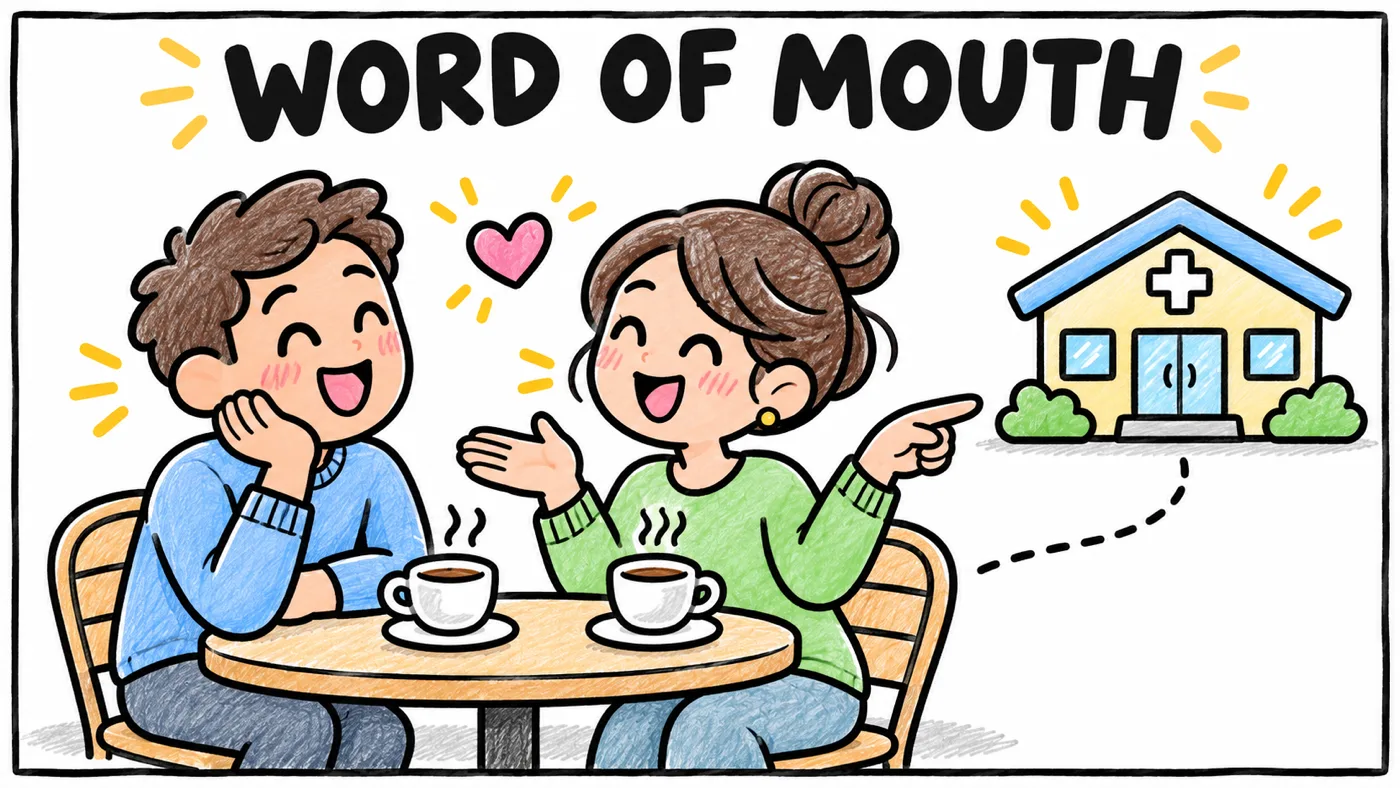
Word of mouth starts with members who would recommend you. Hint Health's patient experience survey of 12 DPC clinics reported a Net Promoter Score of 85, as Medical Economics summarized in February 2026. The work is making it easy for those members to tell someone, without building a reward that a statute or a state board would read as paying for patients.
This guide links every rule to the statute or agency document it comes from. It is general information, not legal advice. These laws turn on the exact facts, and states differ a great deal, so have a health care attorney in your state review any referral program before you launch it. For the wider picture of kickback and self-referral rules in a DPC, read our DPC anti-kickback and Stark basics.
Which Laws Apply to a DPC Referral Program?
Three kinds of law come up whenever a practice offers something of value in return for a new patient. Here is how each one touches a member referral program:
| Law | What it covers | Who it reaches | What it means for a referral thank-you |
|---|---|---|---|
| Anti-Kickback Statute, 42 U.S.C. 1320a-7b(b) | Knowingly and willfully offering or paying remuneration to induce someone to refer an individual for items or services a Federal health care program pays for | Anyone, on both sides of the deal | A reward for sending you a Medicare or Medicaid patient can count, even if the reward is small |
| Beneficiary inducement law, 42 U.S.C. 1320a-7a(a)(5) | Offering remuneration to a Medicare or state health care program beneficiary that is likely to influence their choice of provider | Medicare and Medicaid beneficiaries | Gifts and free services to members on those programs need to stay within OIG's nominal value limit or fit an exception |
| State patient-brokering and fee-splitting laws, such as Florida 817.505 | Paying or offering a benefit, in cash or in kind, to induce a patient referral | Florida's names no payer, and exempts payment practices the federal Anti-Kickback Statute does not prohibit | Ask your attorney whether your state's law reaches a cash-pay, opted-out practice |
The Anti-Kickback Statute
Subsection (b)(2) of the Anti-Kickback Statute makes it a felony to knowingly and willfully offer or pay "any remuneration (including any kickback, bribe, or rebate)" to induce a person to refer an individual for an item or service paid for by a Federal health care program. Subsection (f) defines those programs as plans funded in whole or in part by the U.S. government, plus state health care programs such as Medicaid, and leaves out the federal employees' health benefits program.
A DPC membership paid in cash is not billed to Medicare. That does not settle the question, though, because the members a referral brings in may still have labs, imaging, specialist visits and prescriptions paid by Medicare or Medicaid, often ordered by you. Our guide on how to opt out of Medicare for DPC explains how ordering and referring works after you opt out.
The beneficiary inducement law
The civil monetary penalty provision at 42 U.S.C. 1320a-7a(a)(5) covers anyone who offers or transfers remuneration to a Medicare or state health care program beneficiary that they know or should know "is likely to influence such individual to order or receive from a particular provider" items or services those programs pay for. Subsection (i)(6) defines remuneration to include "transfers of items or services for free or for other than fair market value," which is exactly what a free month or a gift is.
OIG's 2002 Special Advisory Bulletin on gifts to beneficiaries adds two points that matter for referral programs. It says the "should know" standard is met by deliberate ignorance or reckless disregard, with no proof of specific intent needed. It also says OIG considers free goods or services given to existing customers who have an ongoing relationship with a provider likely to influence those customers' future purchases. In other words, a thank-you to a current member who is on Medicare is still a gift to a beneficiary.
The statute lists exceptions in (i)(6), including one for remuneration that "promotes access to care and poses a low risk of harm to patients." The regulation at 42 CFR 1003.110 describes that as items or services that improve a beneficiary's ability to obtain Medicare or Medicaid payable care, without skewing clinical decisions, raising costs or creating safety concerns. A thank-you for sending a friend is hard to describe that way, so do not assume it fits without an attorney's opinion.
OIG's nominal value limit
Congress said when it passed the law that inexpensive gifts of nominal value should be permitted, and OIG set out what that means in its December 7, 2016 policy statement. Gifts at or under the limit do not need to fit an exception to the beneficiary inducement law, and OIG says the items may not be cash or cash equivalents.
OIG interprets nominal value as a retail value of no more than $15 per item or $75 in total per patient per year, up from $10 and $50 in its earlier guidance.
Two cautions come with that limit. The total is per patient per year, so a member who receives a birthday card gift, a holiday item and a referral thank-you has used part of the same allowance three times. And the policy statement speaks only to the beneficiary inducement law, so a gift given because someone sent you a patient still deserves a separate look under the Anti-Kickback Statute.
State patient-brokering and fee-splitting laws
State law needs its own look. Florida's Patient Brokering Act, section 817.505, makes it unlawful for "any person, including any health care provider or health care facility," to "offer or pay a commission, benefit, bonus, rebate, kickback, or bribe, directly or indirectly, in cash or in kind, or engage in any split-fee arrangement, in any form whatsoever, to induce the referral of a patient or patronage to or from a health care provider or health care facility." It carries felony penalties that rise with the number of patients involved.
The same section lists payment practices it "shall not apply to." The first is "any discount, payment, waiver of payment, or payment practice not prohibited by 42 U.S.C. s. 1320a-7b(b) or regulations promulgated thereunder," which is the federal Anti-Kickback Statute above. How that exception applies to a referral thank-you at your practice is a question for your attorney.
Other states may have their own versions, and a state's medical practice act may treat fee splitting or paying for referrals as grounds for discipline. Our guide to DPC laws by state and the state pages at /start-a-dpc are a good starting point, and your attorney will know which statutes in your state reach a member referral reward.
What Referral Rewards Are Lower Risk for a DPC?
The safest thank-yous are small, non-cash, given the same way to everyone and not tied to whether the friend actually joins. The riskier ones look like a price paid per new patient. This table sorts common ideas by how much legal review they usually need, but it is a starting point for the conversation with your attorney, not a substitute for it:
| Thank-you idea | Why it is lower or higher risk | Before you start |
|---|---|---|
| A handwritten thank-you note | Nothing of monetary value changes hands | Nothing to clear, just keep it personal |
| A public thank-you, such as a shout-out in your newsletter | No money or goods, but it uses the member's name | Get written permission first, and never mention their health |
| A small practice-branded item, like a mug or water bottle | Non-cash and can stay well under the nominal value limit | Track each member's yearly total, and have your attorney confirm state law |
| A general-purpose gift card | Works much like cash, which OIG's nominal value interpretation excludes | Treat as high risk and get legal advice first |
| Cash or a check for each referral | Remuneration per referral is the core of what kickback and brokering laws prohibit | Avoid |
| A free month or a membership credit | A free service, usually worth more than the nominal value limit, and tied to new business | Attorney review in your state before offering it |
| A credit for the new member, like a waived enrollment fee | A discount to the new patient rather than a payment to the referrer, but still remuneration | Attorney review, and offer it the same way to everyone who joins |
If you already waive or discount fees for new members in general, keep that offer separate from referrals so it reads as your normal price, not a bounty. Our guide to DPC enrollment fees covers how practices set and waive them.
How to Build a DPC Referral Program Without Paying for Referrals
The program below asks for referrals without any reward at all, so it doesn't wait on an attorney approving one, and it stays the same whether a member is on Medicare, Medicaid, an employer plan or no plan.
Thank the introduction, not the enrollment
When a member mentions you to a friend, thank them for the introduction itself, whether or not the friend ever joins. That keeps your thank-you from looking like payment for a new patient, and it is also simply kinder, because the member did you a favor the moment they spoke up.
Treat every member the same
Give the same thank-you to everyone, whatever their coverage. If your attorney approves a small gift, a single rule for all members avoids building one program for members on federal programs and another for everyone else, which is harder to run and harder to explain. If you do decide to offer something more valuable, have your attorney help design it, including whether to leave out members covered by federal programs and how your state's brokering law treats it.
Keep employer and broker referrals separate
Referrals from businesses work differently from referrals from members. A broker or consultant paid a fee for each member or employer group they bring in is the pattern patient-brokering laws are written to catch, while flat fees at fair market value for real services are easier to defend. Our guide to selling DPC to employers explains how brokers usually fit in.
Write it down and keep a simple log
Put your referral approach in a one-page policy, have your attorney review it, and keep a log of any gifts given, by member and date. That log is what lets you show you stayed inside the nominal value limit, and it gives you a clean record if anyone ever asks.
How Do You Ask DPC Members for Referrals?
The ask matters more than the reward. A member who feels well cared for will often send a friend without being asked, and a short, well-timed invitation turns that goodwill into an actual introduction.
Pick the right moment
Ask when the member has just felt the difference DPC makes, such as after a same-day visit, a quick answer to a late message, a lab result explained in plain words or a problem that finally got solved. Those moments are when "you should see my doctor" comes naturally. Asking every member the same way, at the same kind of moment, also keeps the habit steady once the panel fills up.
Make it easy to pass along
Give members something they can share in a few seconds, such as a small card with your website, a short link to your pricing page or a text they can forward. Send friends straight to a page that shows your prices in plain text. Our guide to DPC family and child pricing tiers helps when the friend is a whole household.
A simple, warm script works well, for example, "We're so glad you're here. If you know anyone who's been looking for a doctor they can actually reach, we'd love to meet them, and this card has everything they need."
Invite people to meet you in person
Many referrals start as "come with me." A free community talk, an open house or a Q&A night gives members an easy way to bring a friend without any pressure. Our guide to DPC community marketing events covers formats that work.
Keep reviews separate from referrals
Reviews are a different ask with their own rules, and incentives for reviews are restricted by Google's policies and the FTC. Keep any referral thank-you completely separate from review requests. Our guide on how DPC practices get more reviews covers how to ask, and our Google Business Profile guide covers where those reviews show up.
Never share a member's story without permission
A member who sent you three friends might make a lovely testimonial, and that still needs their written permission. If HIPAA applies to your practice, using a patient's story or photo in marketing generally requires a signed authorization, and our guide on how DPC practices get more reviews covers testimonials and that rule in more detail.
A Referral Program Checklist for 2027
Use this list before you launch, and again any time you change the program:
- Decide what you will offer. Start with no reward at all, then consider a small non-cash thank-you only if your attorney approves it.
- Check your patient mix. Know how many members are on Medicare, Medicaid or other federally funded programs, and whether you have opted out of Medicare.
- Check your state. Look up your state's patient-brokering, fee-splitting and anti-kickback laws, starting with our state law guide.
- Write a one-page policy. Describe what you ask, when, what you give, and that it is the same for every member.
- Have a health care attorney review it. Bring the policy, your membership agreement and any marketing copy that mentions the program.
- Track gifts by member and year. Keep each member under OIG's nominal value total, whatever their coverage.
- Keep reviews, referrals and new-member discounts separate. Each has its own rules.
- Review the program once a year. Check that it still matches your state's law, OIG's guidance and how your panel has changed.
Good referrals also depend on keeping the members you have. Our guide to DPC patient retention and churn covers the other half of steady growth.
Keeping Referrals Going Once You're Busy
A referral habit is simple to start and easy to lose, because the steps live in different places. The thank-you note is a task in one tool, the "how did you hear about us" answer sits in your enrollment form, the gift log is a spreadsheet and the follow-up to the friend who asked a question is buried in your messages.
That is the kind of work Tabflows takes on. We are a dedicated tech team that connects the tools a DPC clinic already uses, like the EHR, membership billing and messaging, so thank-yous get sent, follow-ups land with the right person and the context about each member sits in one place. Your members do the referring, and the follow-through keeps happening even on your busiest weeks.
FAQs
Can a direct primary care practice reward members for referrals?
Sometimes, and only after a health care attorney has looked at the exact program. If any of your members are covered by Medicare, Medicaid or another federally funded health program, a reward for bringing in patients can raise questions under the federal Anti-Kickback Statute (42 U.S.C. 1320a-7b(b)) and the beneficiary inducement law (42 U.S.C. 1320a-7a(a)(5)). State laws have their own rules. Florida Statutes 817.505, for example, makes it unlawful to offer or pay a benefit "in cash or in kind" to induce a patient referral, and says it does not apply to any payment practice "not prohibited by 42 U.S.C. s. 1320a-7b(b)", so ask your attorney how your state's law applies to your practice. A sincere thank-you with no reward attached carries the least risk.
What is the OIG nominal value limit for patient gifts?
In its December 7, 2016 policy statement, the HHS Office of Inspector General set a nominal value limit for gifts to patients, and said the items may not be cash or cash equivalents. Gifts at or under that limit do not need to fit an exception to the beneficiary inducement law, but the statement speaks only to that law, so a gift tied to a referral still deserves a look under the Anti-Kickback Statute. OIG interprets nominal value as a retail value of no more than $15 per item or $75 in total per patient per year.
Is a free month of membership for a referral legal for a DPC?
It depends on your state, your patients and how the offer is built, so ask a health care attorney before offering one. A free month is a transfer of services for free, which the beneficiary inducement law counts as remuneration, and it is usually worth more than OIG's nominal value limit. State patient-brokering laws such as Florida's 817.505 prohibit offering a benefit or rebate in cash or in kind to induce a patient referral, with an exception for payment practices the federal Anti-Kickback Statute does not prohibit.
Do anti-kickback rules apply if my DPC has opted out of Medicare?
They can. Opting out ends your own Medicare billing, but you still order labs, imaging, specialist visits and prescriptions that Medicare and Medicaid pay for when your members are covered by those programs. The beneficiary inducement law covers remuneration likely to influence a beneficiary to order or receive Medicare or Medicaid payable items from a particular provider. State law is a separate question. Florida's patient-brokering law, for example, bars paying "in cash or in kind" to induce "the referral of a patient" without naming a payer, and exempts any payment practice the federal Anti-Kickback Statute does not prohibit, so ask your attorney how your state's law applies.
Can I give members a gift card for referring a friend?
Treat it as risky. OIG's nominal value interpretation excludes cash and cash equivalents, and a general-purpose gift card works much like cash. Florida's patient-brokering law also prohibits benefits paid in cash or in kind to induce a referral, apart from payment practices the federal Anti-Kickback Statute does not prohibit. If you want to thank members, a handwritten note or a small practice-branded item given the same way to everyone is a safer starting point, and a health care attorney should review any program first.
How should a DPC ask members for referrals?
Ask at a moment when the member has just felt the value of the practice, such as after a same-day visit, a quick reply to a message or a resolved problem. Keep the ask short and specific, give them something easy to pass along, like a card with your website or a short link to your pricing page, and ask every member the same way rather than only the happiest ones.