
Whether Elation charges a practice to set up API access for a third-party tool depends on who built the integration. If the third-party tool's vendor already built its Elation integration, as Fullscript and Hint have, Elation says the practice does not need its Core Developer add-on, because the vendor's own partner agreement with Elation governs that access. If your practice, or a consultant you hire, builds a custom integration that your practice owns, Elation requires Core Developer before it issues production API credentials, and that is a paid add-on priced per provider plus a one-time implementation fee, with no per-call charges. Elation's EHR product guide lists a starting price per provider, Elation quotes the final amount based on your provider count, and the sandbox for testing is free. Tabflows is a dedicated tech team that works inside your staff's own signed-in sessions across Elation and your other tools, so using it doesn't require your practice to buy Core Developer.
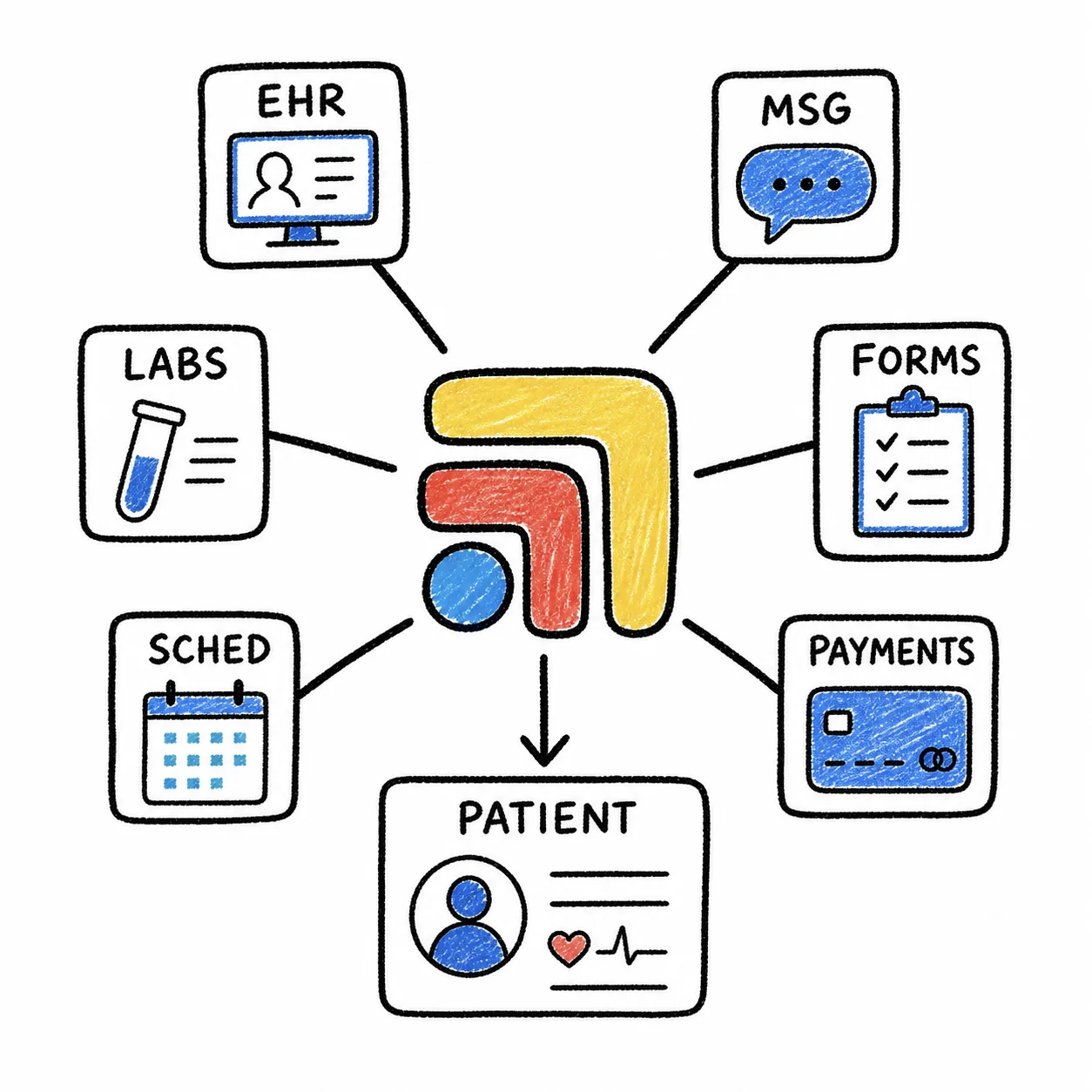
This guide is for physician owners deciding which tools to add around Elation. Every Elation fact below comes from Elation's own help center and website, and the integration examples come from Fullscript's and Hint's own help articles, all read on November 2, 2026. Elation's prices and terms change, so confirm with your Customer Success Manager before you sign anything.
The Short Answer by Situation
Most of the confusion comes from three different kinds of "API access" that sound alike. This table sorts them by who builds the connection and who deals with Elation.
| Situation | Example | Elation fee to the practice | What you do |
|---|---|---|---|
| Vendor already built it | Fullscript, Hint | No Core Developer needed | Authorize the vendor |
| Practice builds its own | Custom sync or report | Core Developer, per provider plus setup fee | Request a quote |
| Developer tests ideas | Any build in progress | Sandbox is free | Fill in the sandbox form |
| Standardized FHIR app | Patient-access apps | Elation says fees may apply to integrators | Give written consent |
| Works in staff sessions | Tabflows | No Core Developer needed | Sign up with Tabflows |
When the Vendor Already Built the Integration
Elation's Core Developer FAQ draws the line plainly. If you are adopting an integration a vendor already built, you do not need Core Developer, the vendor's partner agreement with Elation governs access, and the vendor's credentials can't be reused for a custom build of your own. Elation suggests checking whether it already integrates with the partner you have in mind before you scope anything.
Two common examples show what the practice actually does in this case.
Fullscript. Fullscript's help center describes the setup from inside a practitioner's Fullscript account. You open Settings, then Integrations, select Elation, click Get Started Now and sign an Authorization and Consent form. Fullscript acknowledges the form, tells Elation to authorize the application on your Elation account and emails you when the interface is live, which Fullscript says takes 3 to 5 business days. You also sign a business associate agreement with Fullscript if one isn't already on file. The guide describes no Elation fee for the practice.
Hint. Hint's article on its Elation integration says the first step is to reach out to Elation Health, whose team enables the integration, and then link your Hint providers to Elation. From there patients sync both ways, Hint membership details appear in Elation as tags and insurance details flow from Elation to Hint.
In both cases the practice's job is authorization, not engineering. Ask each vendor directly whether it passes any Elation-related cost on to you, because what a vendor pays Elation under its partner agreement isn't published.
When Your Practice Builds Its Own Integration
Core Developer is Elation's package for practices that want to build on Elation rather than only work inside it. Elation's overview says it is a paid add-on to a Standard or Premium EHR subscription, and it bundles four things.
- REST API 2.0 with create, read, update and delete across the chart, documents, orders, messaging, scheduling, insurance, billing and practice configuration.
- FHIR R4 API, read-only and ONC certified, for standards-based access and bulk export.
- Webhooks for every event type across 39 data models, with retries for up to 24 hours.
- Hosted Database, a private Snowflake copy of your practice's data, with Elation Analyst for plain-language reports at no extra charge while it is in beta.
Elation also says that building an integration requires someone comfortable writing code against an API, such as your own engineers, a consulting partner or an AI coding assistant. That person's time is a real part of the cost, separate from what Elation charges.
How Elation prices Core Developer
Elation's help-center pricing page and FAQ describe the structure without a dollar amount. Elation's EHR product guide lists the same bundle of APIs, webhooks and Hosted Database as Developer Platform Core, so treat its price as the starting point and your quote as what you pay.
The product guide lists Developer Platform Core at $150 per provider per month. It does not list the implementation fee.
| Cost item | What Elation says |
|---|---|
| Subscription | Priced per provider |
| Who counts | Every provider with an active EHR seat |
| Part-time providers | Same rate as full-time |
| Staff accounts | Exempt |
| Setup | One-time implementation fee, paid in advance |
| Per API call | No charge |
| Per record returned | No charge |
| Data egress | No charge |
| Overages | None |
| Partial seats | Not offered |
| API-only option | Not offered |
To get a number, Elation asks you to raise a request at app.elationemr.com/support, or contact your Customer Success Manager, with your provider count. It says most practices are live within a single billing cycle.
Add-ons that cost extra
Some capabilities sit outside the base package. Elation lists the Document Signing API, which requires a signed BAA, the Premium Patient Insurance API, which requires Elation's separately priced Real-time Eligibility product unless you are on Elation Billing, the Care Gaps API, which needs a custom statement of work, additional daily Hosted Database refreshes priced per practice, and Professional Services under a custom statement of work. Each is requested through Support and priced up front rather than metered.
Limits that replace usage fees
Instead of metering calls, Elation's API License and Usage Agreement limits each credential to fewer than 3 calls per second and fewer than 150,000 calls per 24 hours, and Elation says it may adjust those limits. For most small practices that is plenty, but a large historical backfill should be planned around it.
The Free Sandbox and the Steps to Production
Elation's getting-started guide says sandbox access is free and doesn't require a Core Developer subscription, so a developer can prove out a use case before you commit. Current customers and organizations looking to partner with Elation request it through Elation's developer sandbox form. The sandbox is a blank copy of Elation EHR with its own test users and charts, and it is designated PHI-free, so only sample data belongs there. Nothing in it can be copied to production, and production credentials are issued fresh.
In production, practice admins can manage API keys under Settings > API Access once self-service is enabled on request, and Elation recommends a separate key for each integration or vendor so one can be revoked without breaking the rest.
What About Elation's FHIR API?
Elation's FHIR API is certified to the ONC standardized API criterion for patient and population services, and it's what many patient-access and interoperability apps use. Elation's guide says developers register their interest, sign Elation's API terms of service and build in the sandbox, and that the practice, as the data-sharing entity, gives written consent before an integration gets production access. On fees, the guide says additional monthly fees may apply to integrators and points to Elation's certification page. That page says API usage requires a Developer Platform subscription, and that complex implementations or interfaces may carry one-time or monthly costs based on their complexity. In practice, ask the app vendor whether those fees fall on them or on you.
Where Tabflows Fits
Tabflows is a dedicated tech team and smart admin infrastructure for DPC, concierge and private clinics, and it is not an EHR, a billing system or a messaging replacement. It works across the tools you already use, including Elation, Hint and Spruce, and turns the work between them into tracked tasks and automations.
The way it reaches those tools matters for this question. Tabflows workflows are started by an authorized member of your team and run in that person's own browser session, Tabflows does not store Elation or other EHR login credentials, and every action is tied back to the named user who started it. Because it isn't a custom integration your practice builds on Elation's API, you don't need to add Core Developer to use it. Our page on user-initiated EHR workflow automation lays out these product facts for anyone reviewing an EHR contract, and it's worth sharing with your counsel if your Elation agreement has questions about outside tools.
There are still good reasons to buy Core Developer, such as feeding a data warehouse, running your own reporting in the Hosted Database or building a patient-facing app. If your goal is to stop work slipping between Elation and your other tools, though, a team that sets up and runs those workflows for you is usually the faster path, and our price is on /pricing.
Questions to Ask Before You Sign
A few questions on your next demo call will settle the cost before it surprises you.
- For any third-party tool, does it already have an Elation integration, and does the vendor pass any Elation cost on to the practice?
- For a custom build, what is the Core Developer quote for our provider count, and what is the one-time implementation fee?
- For any build, which add-ons would this use, such as Document Signing or Premium Patient Insurance, and what do they cost?
- For every vendor, will you sign a business associate agreement before any patient data moves?
- For the long term, who maintains the integration when Elation changes its API, and how will we hear about it?
If you're weighing a custom Elation build mainly to connect your billing, messaging and labs, we're glad to look at the workflow with you first. Tell us how your clinic runs and we'll show you what we'd set up across the tools you already have.
Sources
Checked on November 4, 2026: elationhealth.com/ehr-product-guide. Spot a wrong fact? Email a correction.
FAQs
Do I need Elation Core Developer to use a third-party app with Elation?
Not if the app's vendor already built its Elation integration. Elation's Core Developer FAQ says that when you adopt an integration a vendor already built, you do not need Core Developer, because the vendor's partner agreement with Elation governs access. You need Core Developer when your practice, or a consultant you hire, builds a custom integration that your practice owns.
How much does Elation Core Developer cost?
Core Developer is a paid add-on to a Standard or Premium EHR subscription, priced per provider and billed on the same terms as your current contract, plus a one-time implementation fee paid in advance. Elation's help-center pricing page gives no dollar figure, but its EHR product guide lists the same bundle of APIs, webhooks and Hosted Database as Developer Platform Core, with a monthly price per provider. Every provider with an active EHR seat counts, part-time providers count the same, and staff accounts are exempt. Your quote is what you pay, and you get one by raising a request at app.elationemr.com/support or through your Customer Success Manager with your provider count. The product guide lists Developer Platform Core at $150 per provider per month. It does not list the implementation fee.
Does Elation charge per API call?
No. Elation's Core Developer pricing page says there is no charge per API call, per record returned, for Hosted Database queries on a Reader Account or for data egress, and no overage invoices. Provider count is what drives the cost. Usage is limited instead, to fewer than 3 calls per second and fewer than 150,000 calls per 24 hours per credential under Elation's API license.
Can I buy only Elation's API without the Hosted Database?
No. Elation says Core Developer is sold as one package, with no API-only or Hosted-Database-only option. The package includes REST API 2.0 read and write access, the read-only FHIR R4 API, webhooks and the Hosted Database, and Elation Analyst is included at no extra charge while it is in beta.
Is the Elation API sandbox free?
Yes. Elation's getting-started guide says sandbox access is free and does not require a Core Developer subscription, so you can test a use case before you commit. The sandbox is a blank, PHI-free copy of Elation EHR, and nothing in it can be copied to production.
Does Tabflows need Elation API access?
Tabflows works inside an authorized staff member's own signed-in browser session, started by that person, and it does not store Elation or other EHR login credentials. It is not a custom integration your practice builds on Elation's API, so you don't add Core Developer to use it. As with any tool, review your own Elation agreement with counsel if you have questions about its terms.