A virtual receptionist needs more than a phone script
A virtual medical receptionist can be a very practical hire for an independent clinic. They can answer calls, help with scheduling, take messages, route forms, and protect the in-office team from constant interruption.
The job sounds simple until the receptionist has to work inside a real clinic day.
The caller is not just a name and phone number. They are a patient with a chart, membership status, upcoming appointment, open task, message history, refill request, lab result, or follow-up. If the virtual receptionist cannot see the right context, they either ask the patient to repeat themselves, create a vague note, or pass the problem back to the clinic.
That is not the receptionist's fault. It is a workflow design issue.
The workflow should decide what happens next
Virtual receptionist work is much safer and more useful when the clinic defines the path before the call comes in.
A scheduling question needs one route. A billing question needs another. A refill request needs boundaries. A new patient inquiry needs a process. A symptom question needs escalation. A form request needs documentation. A lab question likely needs provider review.
Without those routes, the receptionist has to make too many judgment calls from too little context. With the routes, they can become a helpful extension of the clinic instead of a polite message taker.
The clinic needs shared memory
The biggest problem with remote front-desk help is not location. It is shared memory.
In a small clinic, a lot of operations live in the heads of the best people. They know which patient always needs an extra reminder. They know which provider wants refill requests handled a certain way. They know which forms are waiting. They know when a message sounds routine but probably needs a second look.
A virtual receptionist cannot inherit that invisible operating system unless the clinic turns it into visible work.
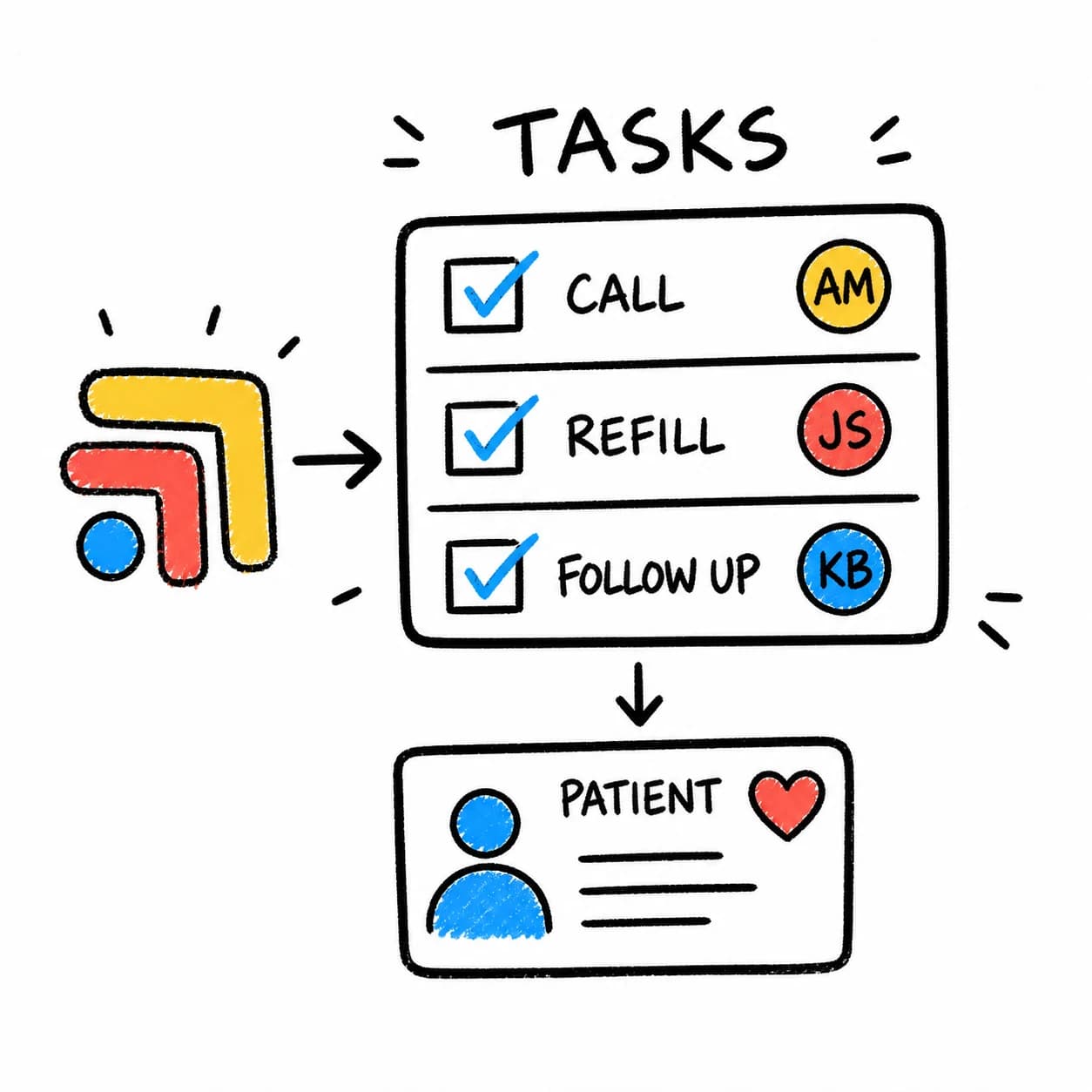
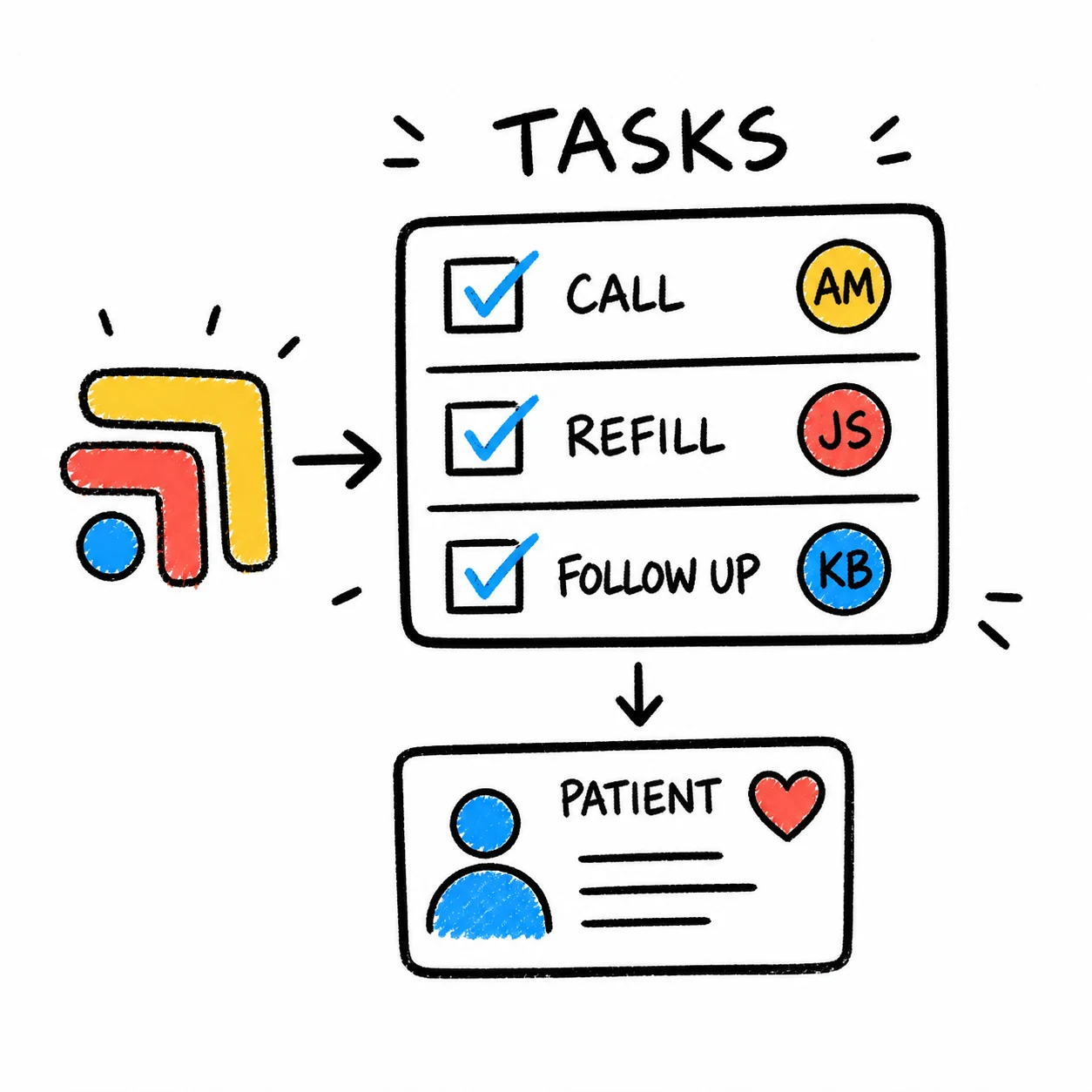
That means patient-linked tasks, clear owners, due dates, notes that travel with the work, and review paths that do not depend on somebody remembering to check back later.
Where Tabflows fits
Tabflows gives virtual receptionist work one place to land.
It helps the clinic connect calls, patient messages, chart context, tasks, scheduling work, follow-ups, and provider review without forcing the receptionist or in-office team to stitch the day together by hand.
The receptionist can see what they own. The clinic can see what is waiting. The provider can review what needs a clinical eye. The follow-up does not disappear into a voicemail summary, side channel, or personal notebook.
That is what makes remote help feel like part of the team instead of a separate call center.
For a broader staffing guide, read Virtual Assistant for Direct Primary Care: What to Fix Before Hiring. For phone-specific coverage, read Before You Hire a Medical Answering Service, Fix the Work Behind the Call.
FAQ
What does a virtual medical receptionist do?
A virtual medical receptionist can help answer calls, schedule appointments, take messages, collect information, route requests, and support follow-up when the clinic has clear workflows and access boundaries.
What makes virtual receptionist work hard for clinics?
The hard part is rarely answering the call. It is knowing where patient context lives, what needs provider review, who owns the task, and how the clinic knows the follow-up is done.
How does Tabflows help virtual receptionists?
Tabflows gives virtual receptionists and clinic teams one place to see patient-linked tasks, owners, due dates, status, and follow-up around the tools the clinic already uses.
Try Tabflows free and give virtual receptionist work a shared place to live.
FAQs
What does a virtual medical receptionist do?
A virtual medical receptionist can help answer calls, schedule appointments, take messages, collect information, route requests, and support follow-up when the clinic has clear workflows and access boundaries.
What makes virtual receptionist work hard for clinics?
The hard part is rarely answering the call. It is knowing where patient context lives, what needs provider review, who owns the task, and how the clinic knows the follow-up is done.
How does Tabflows help virtual receptionists?
Tabflows gives virtual receptionists and clinic teams one place to see patient-linked tasks, owners, due dates, status, and follow-up around the tools the clinic already uses.