A VA should not have to become the operating system
Direct primary care clinics often look for a virtual assistant when the practice starts to feel heavier than the panel size suggests. Messages pile up, forms need chasing, labs create follow-up work, new patient onboarding has too many small steps, and refills need chart context. A VA can help with that work, especially when the clinic has repeatable tasks and clear boundaries, but the risk is expecting the VA to become the clinic's operating system.
Direct primary care has a specific workflow problem
DPC clinics are usually lean on purpose. They choose tools that fit their model instead of accepting a bloated all-in-one system, and that freedom is part of the appeal. It also creates a coordination problem.
The chart may live in one tool, billing in another, messages somewhere else, labs in portals, and tasks in a board or a notebook. The provider and staff know how to make it work because they have lived inside the pattern for months or years, but a new VA has not. If the workflow is not written down and visible, onboarding becomes an oral tradition, and the VA learns by asking, watching, guessing, correcting, and asking again.
What to fix before hiring
Before you hire a virtual assistant for a direct primary care clinic, pick the five workflows that repeat most often.
For many clinics, those are patient messages, refill requests, lab follow-up, new patient onboarding, and end-of-day loose ends. For each one, define where the work starts, which patient context is needed, who can act, what needs provider review, what the VA can prepare, and where the final status should live.
That exercise makes the future VA more effective, and it also shows the clinic which work may not require another person once the system is cleaner.
Use software to remove chasing, not care
Software should not replace the human relationship that makes direct primary care work. The best use of software is to remove the low-value chasing that gets in the way of that relationship.
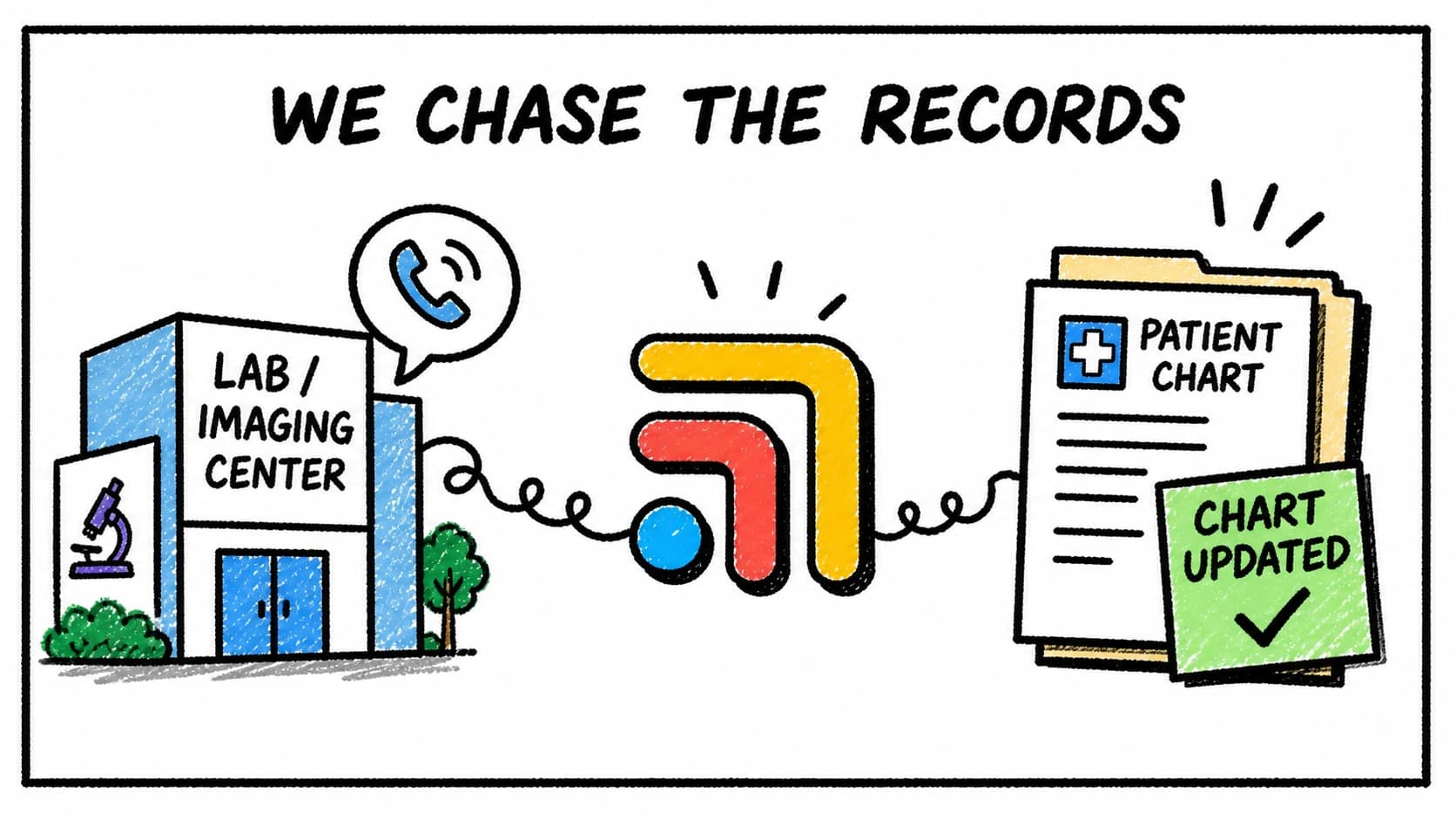
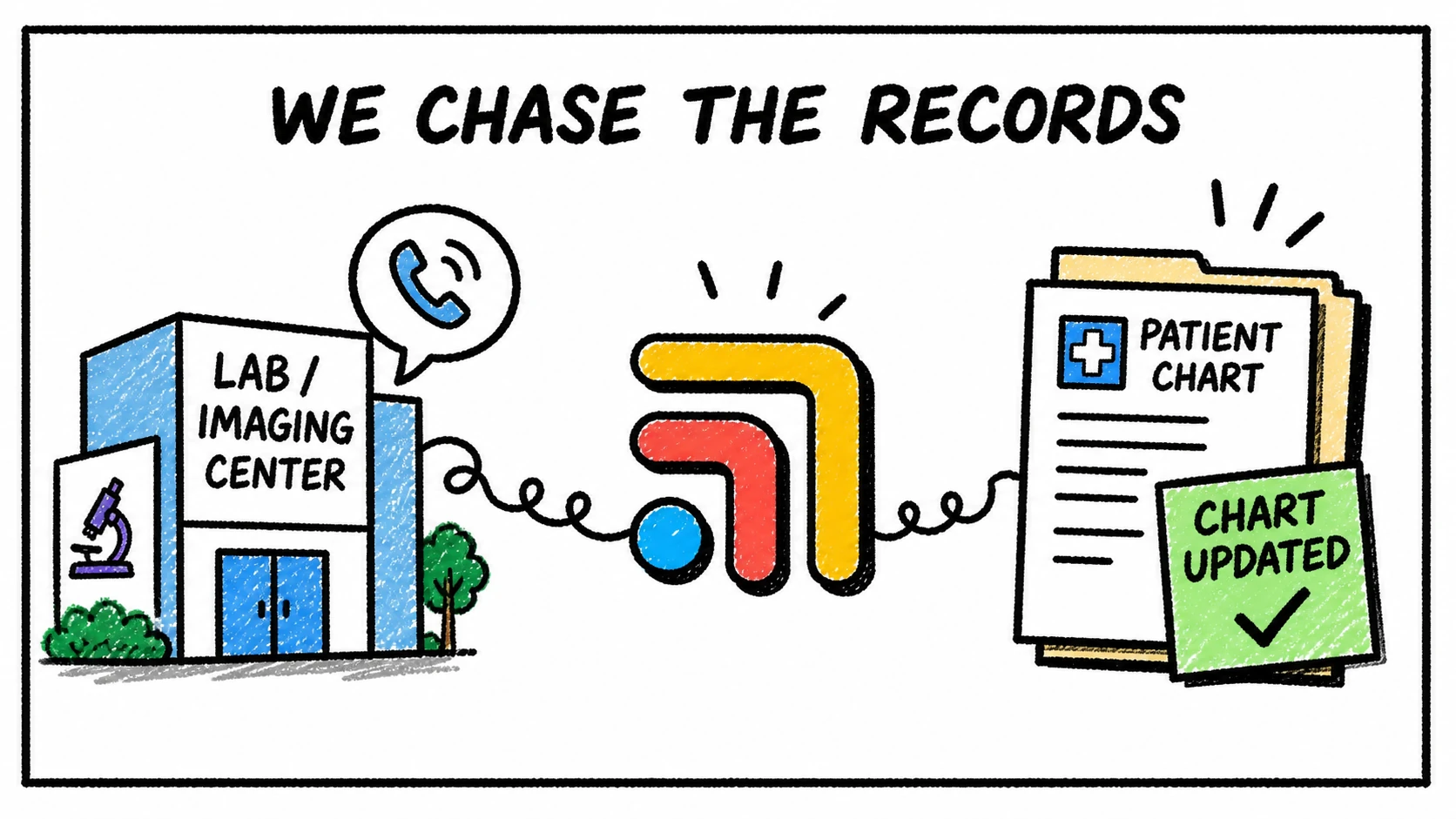
If a staff member or VA is spending the day re-finding the same patient in the EHR, inbox, calendar, billing tool, and lab portal, the clinic is losing time before the actual work begins.
Tabflows gives that work one place to land. It helps the team keep patient context, tasks, ownership, and follow-up status visible around the tools already in the clinic, which means a VA can spend less time asking "where is this?" and more time doing the work the clinic actually trusted them to do.
Hire from clarity
There is nothing wrong with hiring help. A strong VA can protect a provider's attention and make the clinic feel more responsive, but the clinic should hire from clarity. Know which workflows are ready to delegate, which decisions belong with the provider, where tasks live, and how the clinic reviews drafts, closes loops, and catches waiting items. Then the VA joins a system instead of becoming one.
For the workflow checklist, read Medical VA Onboarding Checklist for Clinic Workflows. For the software side, read What Software to Set Up Before Hiring a Medical VA.
FAQ
What can a virtual assistant do for a direct primary care clinic?
A virtual assistant can often help with scheduling, inbox triage, forms, administrative follow-up, reminders, lab coordination, and other non-clinical work when the clinic defines clear access and review boundaries.
What should a DPC clinic prepare before hiring a VA?
The clinic should prepare repeatable workflows, role boundaries, escalation rules, access rules, task ownership, and a shared place to track patient follow-up.
Can Tabflows help before or after hiring a VA?
Yes. Tabflows can help a clinic reduce avoidable workflow drag before hiring and can also give an existing VA a clearer system for patient-linked tasks and follow-ups.
Try Tabflows free and see what your clinic can clean up before adding headcount.
FAQs
What can a virtual assistant do for a direct primary care clinic?
A virtual assistant can often help with scheduling, inbox triage, forms, administrative follow-up, reminders, lab coordination, and other non-clinical work when the clinic defines clear access and review boundaries.
What should a DPC clinic prepare before hiring a VA?
The clinic should prepare repeatable workflows, role boundaries, escalation rules, access rules, task ownership, and a shared place to track patient follow-up.
Can Tabflows help before or after hiring a VA?
Yes. Tabflows can help a clinic reduce avoidable workflow drag before hiring and can also give an existing VA a clearer system for patient-linked tasks and follow-ups.