Hiring help should make the clinic lighter
A good medical VA can be a gift to an independent clinic. They can protect the provider's time, keep the inbox from turning into a second job, help with scheduling and reminders, and make sure small follow-ups do not quietly become big problems.
The mistake is hiring a VA before the work has a place to live. If every patient question sends the team into the chart, inbox, calendar, billing system, task list, and somebody's memory, a new person will not automatically solve the problem. They may simply become the person paid to jump between those same systems all day, which makes the real issue less visible without making it go away.
The work usually breaks between systems
Most DPC clinics do not suffer because they picked bad tools. They suffer because the tools do not share the whole patient story.
The EHR has the chart. Spruce or another inbox has the patient message. Hint or another billing tool has membership context. The calendar has the appointment. A lab portal has the result. The follow-up may be in a task list, a note, a thread, or one person's head.
That is the work a VA inherits. When a patient asks one simple question, the person helping them may need to confirm who the patient is, understand the clinical context, check whether a visit is scheduled, find the right message thread, route something back to the provider, create a task, and remember what should happen next. The VA can do that, but the clinic should not make them rebuild the workflow from scratch every time.
The time math gets annoying fast
The numbers do not have to be dramatic to matter.
If one patient question creates five small system checks, and each check costs about ten seconds of finding the tab, re-orienting, and confirming the patient, that is almost a minute of pure navigation before any useful work happens.
Now put that into a normal clinic week:
| Quiet leak | Conservative math | Weekly cost |
|---|---|---|
| Tab hopping and re-finding patients | 50 seconds x 40 moments a day x 5 days | Almost 3 hours per person |
| Same pattern across a small team | 3 people losing the same time | Nearly a full clinic day each week |
That is not meant to be a universal benchmark. It is a simple way to notice what everyone already feels: "just checking one thing" becomes real capacity when it happens all day, across the whole team.
Fix the workflow before you add the person
Before hiring a medical VA, the clinic should answer a few boring but important questions.
Where does patient work land when it is not purely charting? Who owns each follow-up? What information does the VA need before acting? What needs provider review before a patient sees it? What gets documented back into the clinical record? How does the team know something is done, blocked, or waiting? Those questions matter more than the job posting.
A VA can be excellent and still struggle if every handoff is vague. "Can you check on Sarah?" is not a workflow. "Patient needs a lab scheduling follow-up, draft the reply for provider review, route clinical questions back to Dr. Lee, and mark the follow-up complete when the appointment is booked" is much closer.
The better the system, the more useful the VA becomes.
Where Tabflows fits
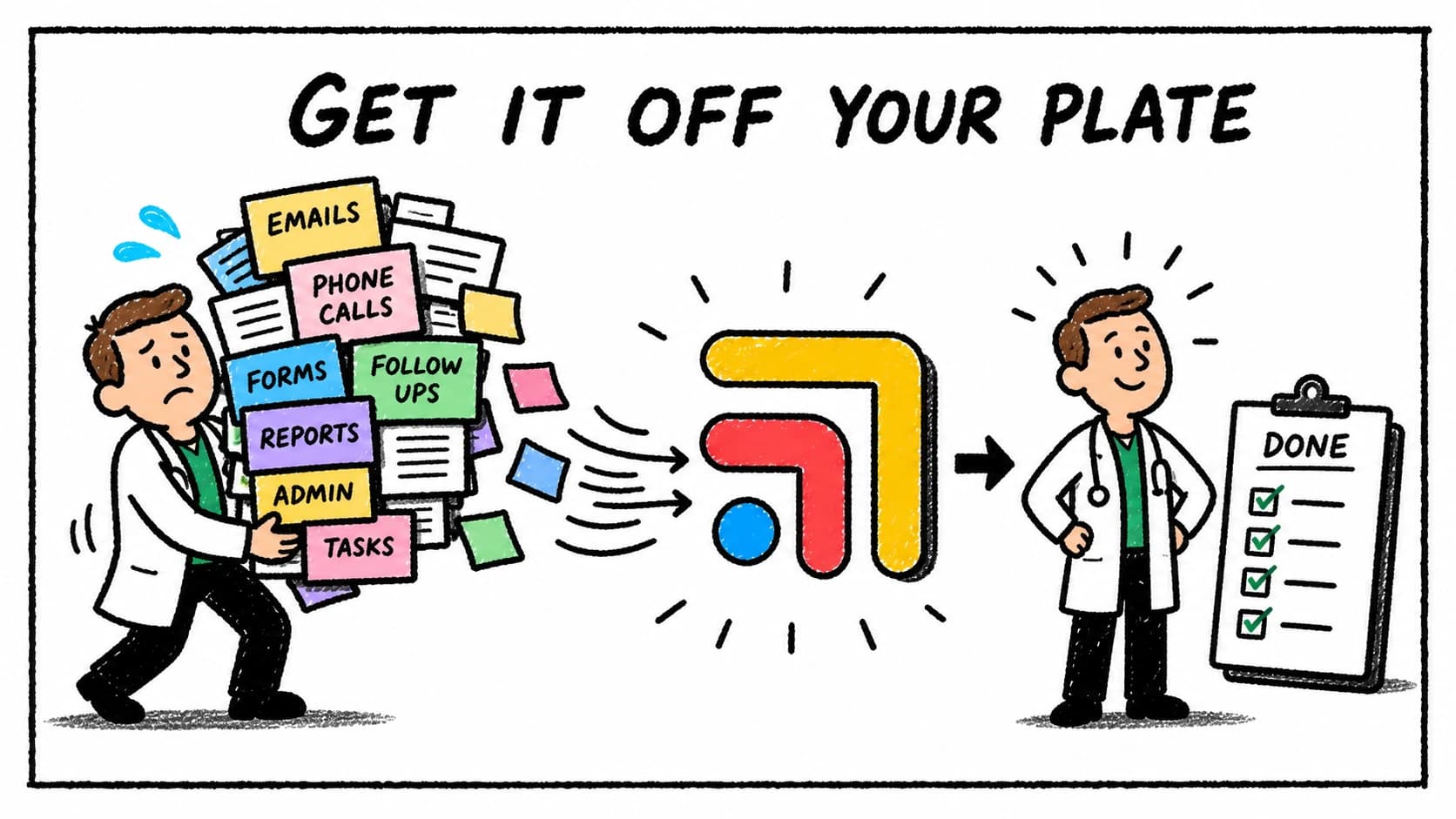
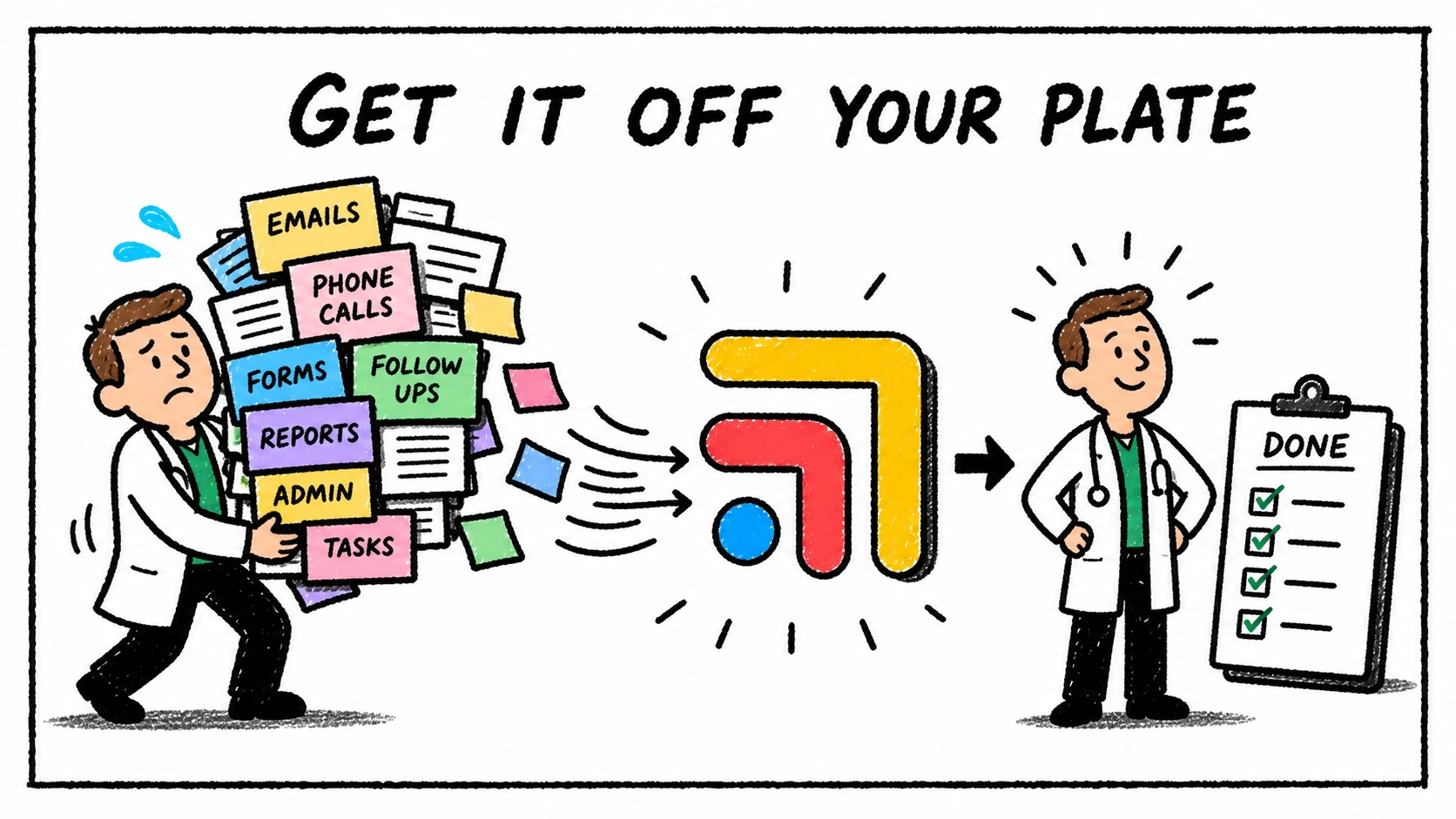
Tabflows gives the work one shared place to land around the tools your clinic already uses.
It is not trying to replace your EHR, your billing system, your patient messaging tool, or the VA you may still want to hire. It gives your team one layer for patient context, tasks, ownership, follow-ups, and AI-assisted draft work, so the person doing the work is not constantly stitching the day together by hand.
That means a VA can see what they own, understand what it is connected to, route items back for provider review, and keep follow-ups moving without scattering patient work across personal notes or side channels. If you are comparing software and staffing, start with the simplest sequence: fix the workflow first, then decide what still needs another human.
For the VA-side version of this problem, read Tools for Medical Virtual Assistants: Keep Patient Work Moving. For the broader clinic growth angle, read How to Grow a DPC Clinic Without Hiring More Staff.
FAQ
Should a DPC clinic hire a medical VA?
A medical VA can be a good fit when the clinic has repeatable admin work, clear access boundaries, and a clean way to hand off patient follow-up. If the work is scattered across tools, fix the workflow first so the VA is not being hired simply to chase context.
What should a clinic fix before hiring a medical VA?
Before hiring, define where patient work lives, how tasks are assigned, what needs provider review, which systems the VA can access, and how follow-ups are tracked until they are done.
How does Tabflows help with medical VA workflows?
Tabflows gives the clinic one shared workflow layer for patient context, tasks, owners, due dates, follow-ups, and AI-assisted draft work around the tools the team already uses.
Try Tabflows free and give patient work one place to land before you add more people to chase it.
FAQs
Should a DPC clinic hire a medical VA?
A medical VA can be a good fit when the clinic has repeatable admin work, clear access boundaries, and a clean way to hand off patient follow-up. If the work is scattered across tools, fix the workflow first so the VA is not being hired simply to chase context.
What should a clinic fix before hiring a medical VA?
Before hiring, define where patient work lives, how tasks are assigned, what needs provider review, which systems the VA can access, and how follow-ups are tracked until they are done.
How does Tabflows help with medical VA workflows?
Tabflows gives the clinic one shared workflow layer for patient context, tasks, owners, due dates, follow-ups, and AI-assisted draft work around the tools the team already uses.