The Short Version
A staff callout isn't just a scheduling gap. It's a set of in-progress work, tasks half-finished, follow-ups pending, refills being verified, that suddenly has no clear owner. Most clinics handle the scheduling part fine: someone else covers the shift. What often doesn't happen is a deliberate handoff of that person's actual open work, which means it just sits, waiting for them to come back, even if that's days away.
Why Callouts Are Different From Planned Absences
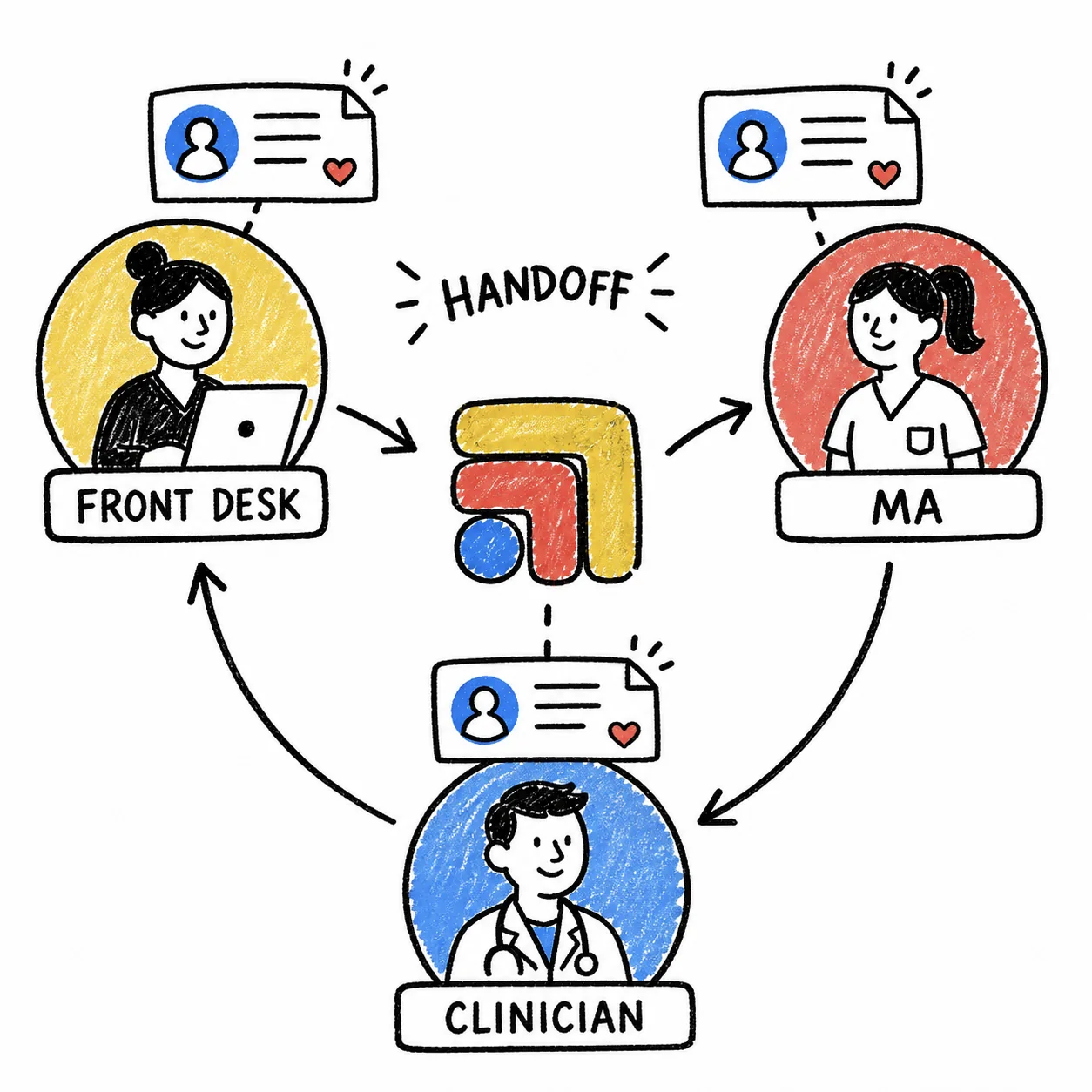
A planned vacation usually comes with some handoff, even an informal one: "here's what I'm in the middle of, can you keep an eye on it." A callout has none of that. The person is out with zero notice, and whatever they were working on when they left the day before, or whatever was sitting in their queue for that morning, has no natural transfer point.
If nobody actively goes looking for what that person's day would have included, it simply doesn't happen until they're back. For a one-day callout, that might be a manageable delay. For a multi-day absence, it can mean prior auths going stale, refills sitting unprocessed, and messages going unanswered, not because anyone decided to deprioritize them, but because nobody knew they existed.
What Makes This Hard to Solve With a Schedule Alone
Covering the shift and covering the work are two different problems. A replacement can show up and handle new tasks that come in during their coverage. What they usually can't do easily is reconstruct everything the absent person already had in flight, because that information typically lives in their memory, their own notes, or scattered across whatever system they were using individually.
Without a shared view of open tasks that doesn't depend on the original owner being present, covering a callout means either guessing at what might be pending, or waiting until something becomes urgent enough to surface on its own, a patient calling to ask about a refill, for instance.
What a Working Coverage Workflow Looks Like
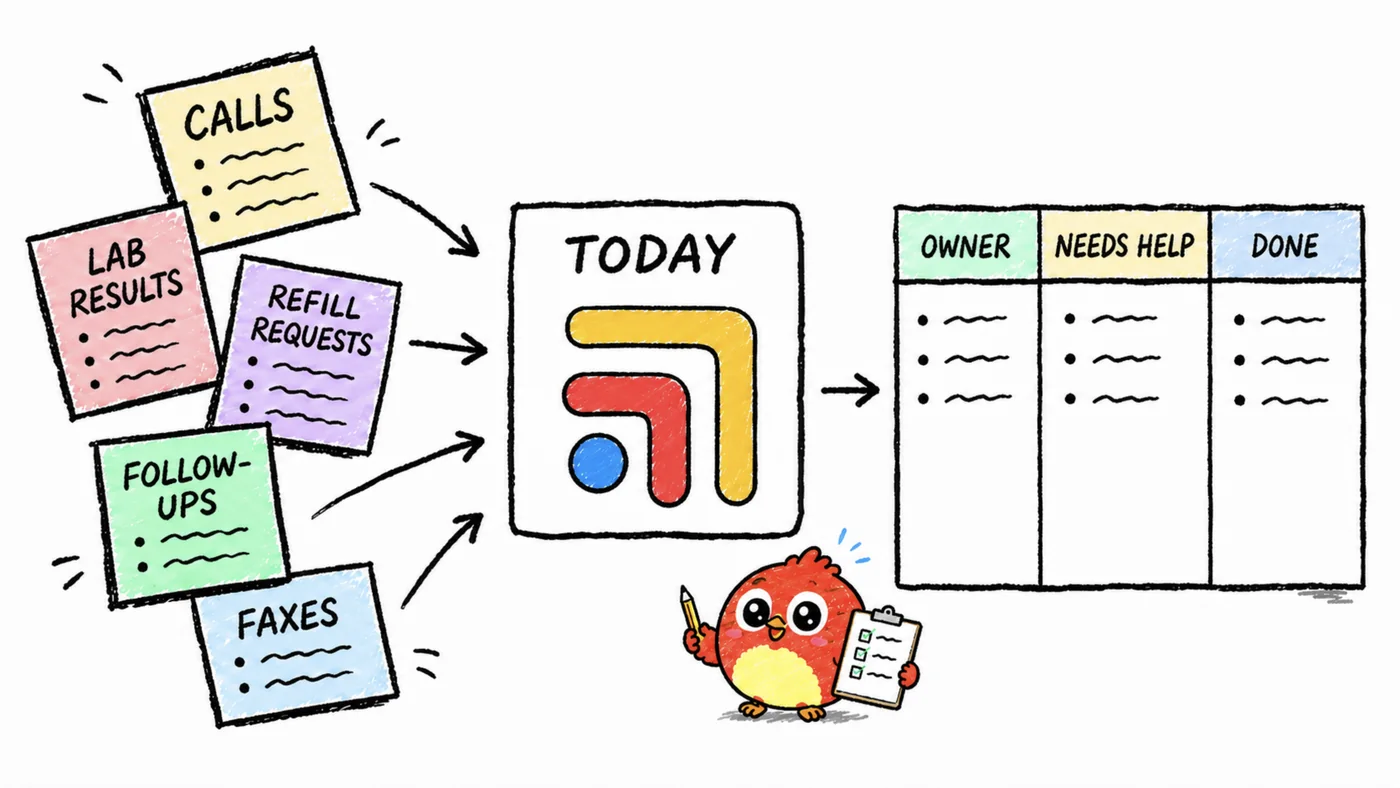
Every task has visible status independent of who's holding it in their head. If the only record of a prior auth's progress lives in the CMA's memory, a callout makes that progress invisible the moment she's out. If it's logged with a status anyone can see, coverage just means reading the current state and picking up from there.
A callout triggers an active review, not a passive wait. Someone, usually an office manager or lead, should look at the absent person's open work each morning of the absence and decide what needs same-day coverage versus what can reasonably wait a day.
Coverage assignment is explicit, not assumed. "Someone will probably handle it" is how tasks get missed during a callout even when there's technically enough staff on hand to cover them.
In-progress work gets priority over new work when triage is needed. A prior auth that was two days into a five-day follow-up window is often more urgent to pick up than a brand-new task that just came in, since it has less runway left before it goes stale.
The absent person can see what was covered when they return, so they're not duplicating work someone else already handled, or missing that something they thought they'd get back to was actually finished by a colleague.
Where This Actually Breaks
Most clinics don't lack the willingness to cover for an absent colleague. What's missing is visibility into exactly what that colleague's day would have included. Work that lives only in one person's head or one person's private notes is invisible to anyone covering for them, which means coverage becomes reactive, only catching what becomes loud enough to notice, rather than proactive.
This is where Tabflows fits into a callout workflow. Because tasks are already visible with status and ownership, covering for an absent staff member is a matter of reassigning their open work to someone else, not reconstructing it from scratch. Nothing sits invisible just because the person who normally owns it isn't at their desk.
A Simple Standard to Set
The moment a callout is known, someone should review that person's open tasks and explicitly reassign anything time-sensitive. That single step, done consistently, is the difference between a callout being a manageable disruption and a callout quietly creating a backlog that only becomes visible once it's already a problem.
FAQs
How should a small clinic handle a staff callout?
The most important step is making that person's pending tasks, refills in progress, follow-ups, unfinished prior auths, visible to whoever is covering, rather than leaving them to sit until the person returns. A callout should trigger task redistribution, not just a scheduling adjustment.
What tasks are most likely to get lost during a staff callout?
Work that was in progress but not finished: a prior auth partway through follow-up, a refill request being verified, a patient message someone was in the middle of responding to. Tasks that hadn't started yet are usually easier to catch than the ones someone was actively working on when they left.
Who should redistribute tasks when someone calls out?
A designated person, often the office manager or lead, should review the absent staff member's open tasks each morning of the callout and assign coverage, rather than leaving redistribution to happen informally or not at all.
How can a clinic reduce the impact of unplanned absences?
By keeping task ownership and status visible to the whole team on an ongoing basis, not just during a callout. If everyone's work is already visible day to day, covering for an absence is a matter of reassignment, not reconstruction from scratch.