The Short Version
A referral isn't done when you send it. It's done when the report comes back and someone reviews it. Most clinics track the first half well, they know a referral went out, and lose track of the second half entirely, because nothing forces a check-in when the report doesn't show up.
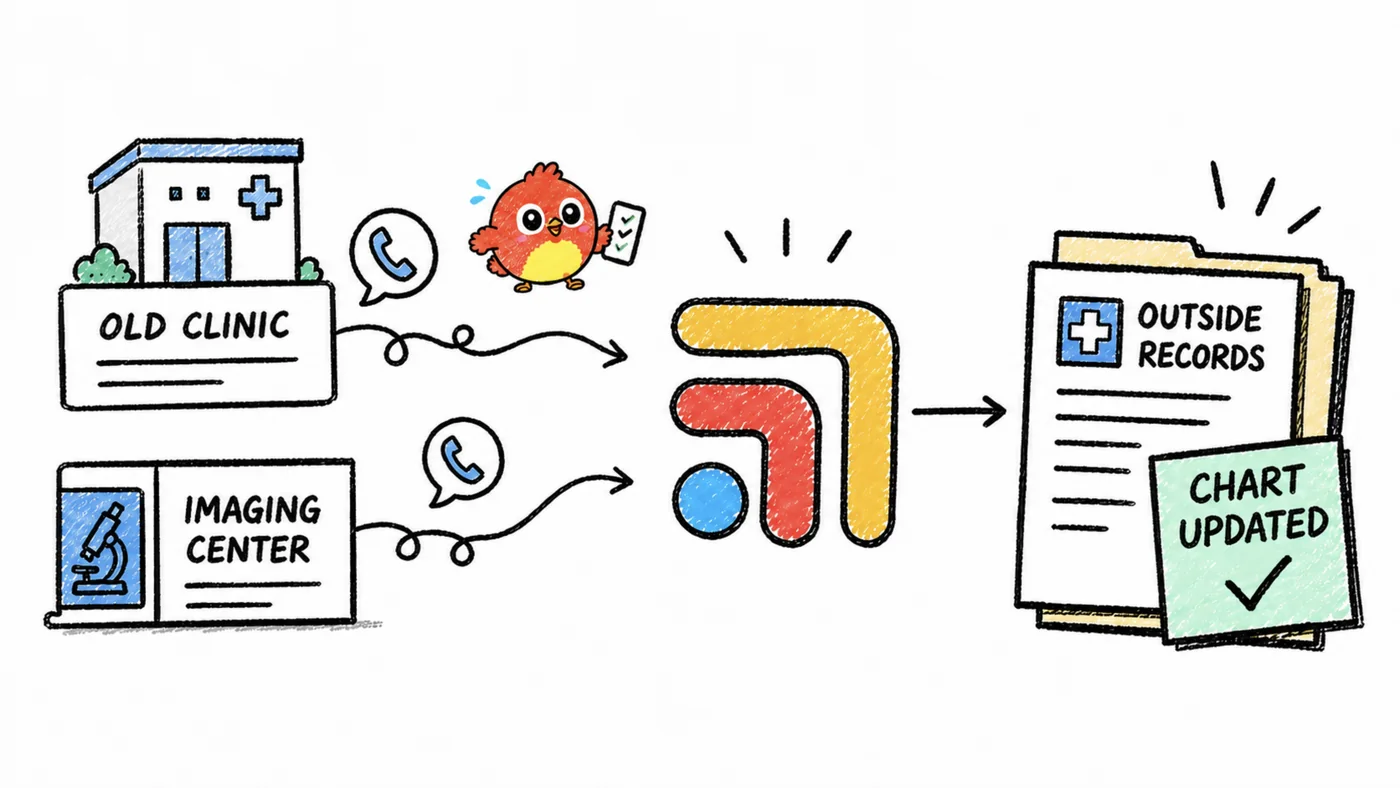
That gap is where patients fall through. Not because anyone dropped the ball on purpose, but because a sent referral looks identical to a completed one until someone goes looking for the report that never arrived.
The Referral Loop Has Three Parts, Not One
Referral tracking usually gets treated as a single event: send the referral, done. In practice it's three separate things, each of which can silently fail:
Sent. The referral goes out to the specialist's office, by fax, portal, or phone.
Scheduled. The patient books and attends the appointment. This part is often invisible to the referring clinic entirely, since the specialist's scheduling system has no reason to tell you anything.
Reported. The specialist sends back a note, and someone at the referring clinic actually reads it.
A referral can fail at any of these three points. The specialist's office never got the fax. The patient never called to book. The visit happened, but the report sat in a fax queue for three weeks before anyone opened it. From the referring clinic's side, all three failures look the same: silence.
Why "Sent" Feels Like "Done"
The moment a referral is sent, it drops out of the sender's field of view. The chart note says "referral to cardiology, sent," and unless something specifically pulls that patient back into view, there's no natural trigger to check on it again.
Compare this to a lab order, which usually returns a result that lands in an inbox, good or bad. A referral doesn't have that built-in return path. If the specialist's office is slow, disorganized, or the fax simply failed, nothing tells you. The next time anyone thinks about that referral is when the patient asks about it, and by then it might have been months.
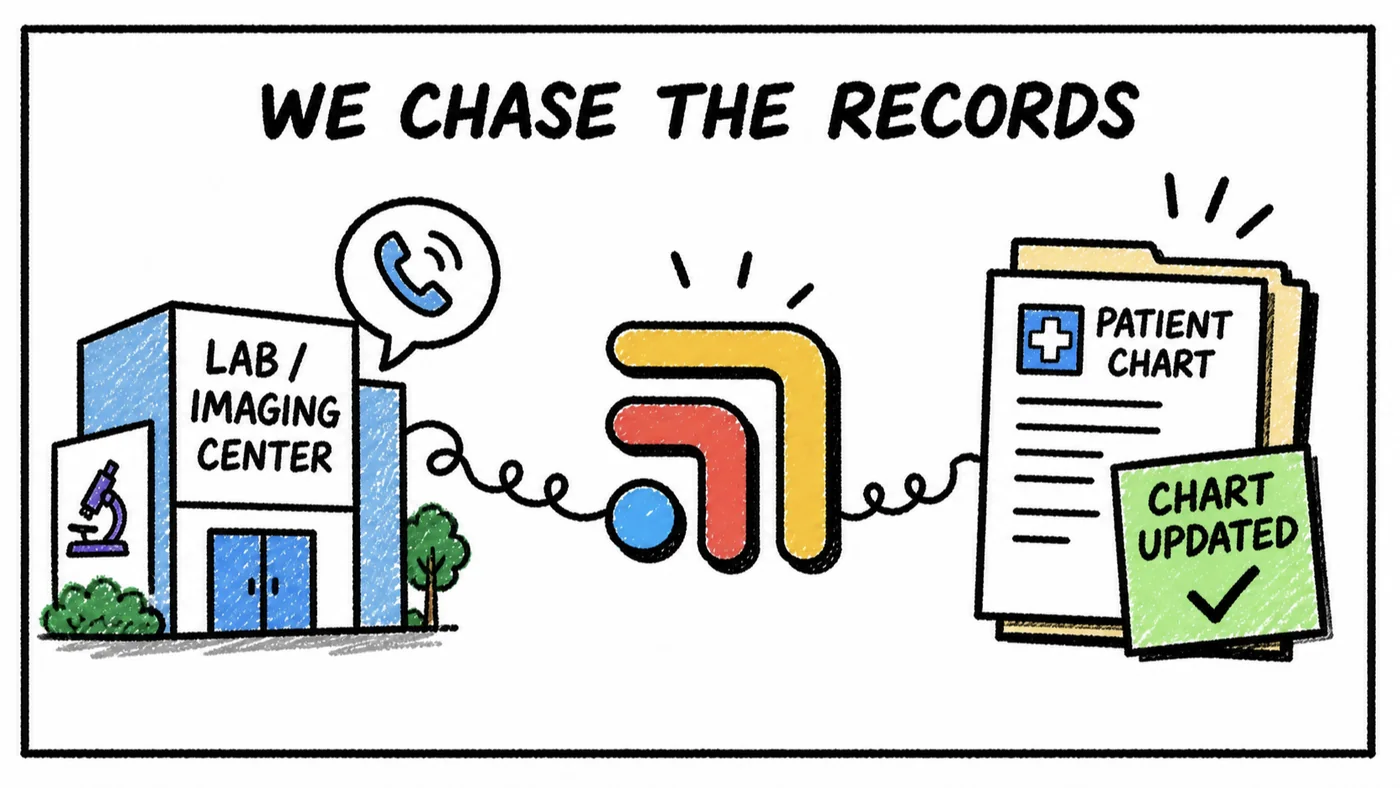
What a Working Referral Tracking System Needs
A due date at the moment of sending, not after the fact. If a referral typically takes three to four weeks to result in a report, that expected window should be set the day the referral goes out, not calculated later when someone remembers to check.
A visible list of open referrals, sorted by how overdue they are. This is the single highest-leverage piece. If the only way to know a referral is stalled is to individually check each patient's chart, nobody will do that consistently across a full patient panel.
A distinction between "no report yet" and "report needs review." These are different states requiring different actions. The first means someone should call the specialist's office. The second means a provider needs ten minutes to actually read what came back and note next steps.
Ownership that doesn't sit with the provider. The referring provider shouldn't be the one combing through a list of their own outstanding referrals. That's exactly the kind of task that competes with actual patient care and loses. A front desk or referral coordinator role should own the follow-up, escalating to the provider only when a report needs clinical review.
A hard stop for genuinely stuck referrals. If a referral has been open for two months with no scheduling confirmation and no report, that's not a "keep waiting" situation. It needs a phone call to the patient and, likely, a new referral to a different specialist.
The Failure Pattern
The clinics that lose referrals aren't skipping steps out of negligence. They're relying on memory and chart notes to do the job of a tracking system. A referral gets sent, a note gets written, and the assumption is that someone will notice if the report doesn't come back.
Nobody notices, because nothing is designed to be noticed. The chart note that says "referral sent" looks exactly the same three weeks later, whether the report arrived and was filed, or whether the fax never went through. Both states are silent. Only one of them is fine.
This is the same pattern that shows up with prior authorizations and lab result follow-up: real clinical work that has no natural trigger to resurface if it stalls, so it depends entirely on someone remembering to go check, across every patient, every week.
This is where Tabflows fits into a referral workflow. Each referral becomes a task attached to the right patient, with a due date and a visible status, so an overdue referral shows up on a shared list instead of requiring someone to individually recall and recheck it. When the report arrives, closing the task is the same motion as confirming the provider actually reviewed it, not just that a fax landed somewhere.
What This Actually Prevents
An unreturned referral isn't just an administrative loose end. It's a diagnosis sitting in limbo, a treatment plan that never got the specialist input it was supposed to have, a patient who assumes the referral system is handling something that stopped moving weeks ago.
The fix is not more diligence from any one person. It's making the second half of the referral, the part after it's sent, as visible as the first half. A referral that's overdue should be loud. Right now, in most clinics, it's silent until someone happens to ask.
FAQs
How do you track specialist referrals in a small practice?
Track each referral as an open task with three checkpoints: sent, scheduled, and report received. Close the loop only when the report has actually been reviewed by the ordering provider, not just when it arrives in the fax queue.
What happens if a referral report never comes back?
Without a tracking system, a missing report is usually discovered when the patient asks about it weeks later, or not at all. A working system flags referrals with no report after a set window, so staff can call the specialist's office before the gap becomes a patient safety issue.
Who should follow up on outstanding referrals?
One person, usually front desk or a referral coordinator, should own the outstanding-referral list and follow up on anything past its expected window. Providers shouldn't be the ones tracking whether their own referrals came back; they should only be alerted when a report needs review.
How long should you wait before following up on a referral?
A reasonable default is two to three weeks after the referral is sent, or one week after the patient's specialist appointment if you have that date. The exact window matters less than having one at all, since without it, follow-up only happens when someone happens to remember.