The Short Version
Chronic care management doesn't fail because staff forget that a patient has diabetes or hypertension. It fails because the monthly cadence, contact every eligible patient, update their care plan, log the time, spread across an entire panel is hard to hold in memory, and easy to quietly narrow down to "whoever called in this month" instead of everyone who's actually eligible.
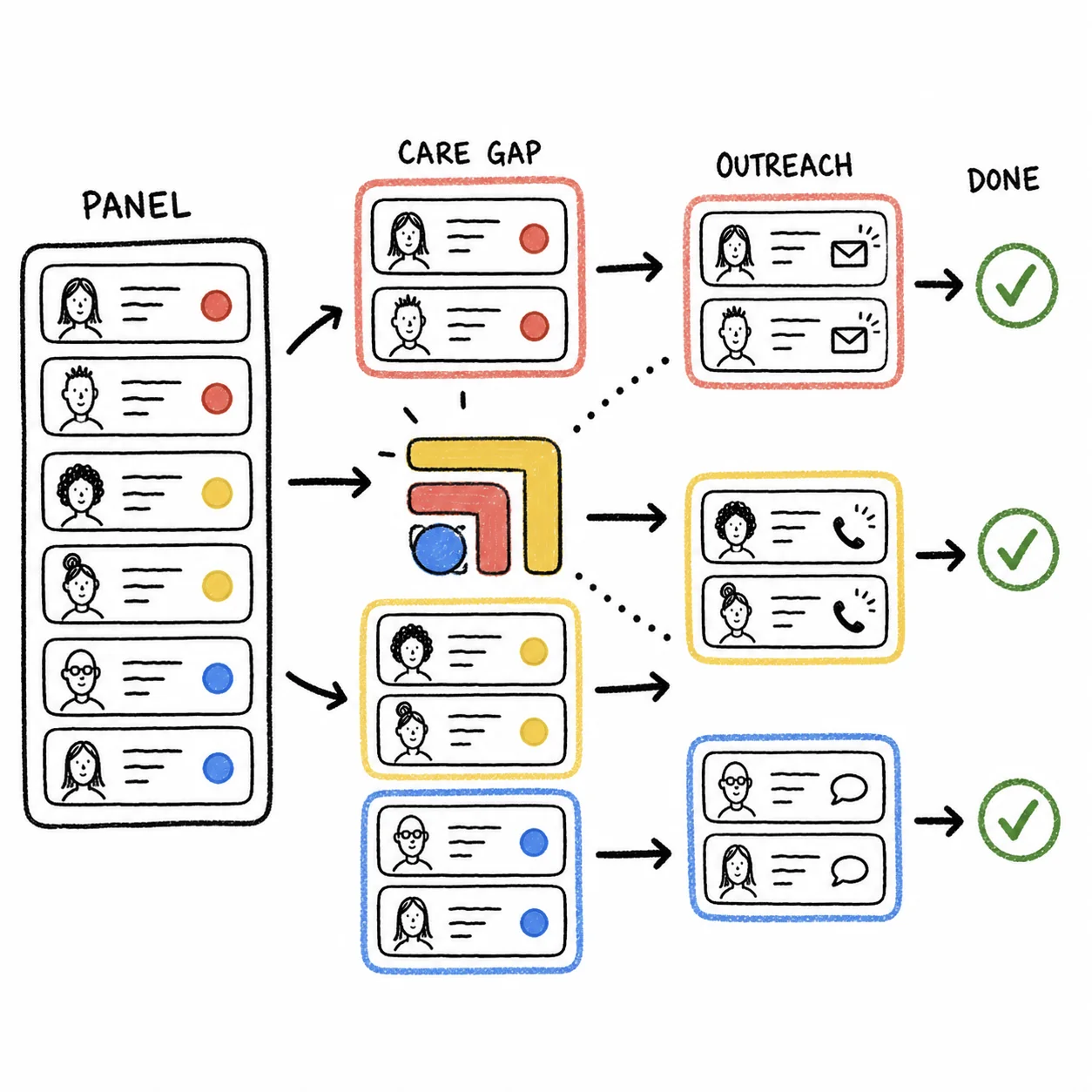
The fix is a list that doesn't reset itself, one that shows exactly who's been contacted this month and who hasn't, instead of relying on staff to remember where they left off.
Why CCM Slips Even When Staff Are Diligent
Most clinical workflows are triggered by something happening: a patient books a visit, a lab result comes in, a message arrives. CCM is different. It's a standing obligation across a whole list of patients, and nothing external prompts it. If a nurse doesn't proactively pull up the eligible patient list and check who's due for contact this month, nothing else in the day's workflow will surface that gap.
That makes CCM uniquely vulnerable to getting crowded out by same-day urgent work. A sick visit, a message triage, a same-day EKG all feel more pressing in the moment than "check whether patient forty of sixty on the CCM list has been contacted yet." By the time anyone looks at the full list again, it might be the last week of the month, with far more patients needing contact than there's time left to reach.
The Two Things That Actually Go Wrong
Inconsistent outreach across the panel. Some patients get monthly contact reliably because they're proactive callers or have a close relationship with staff. Others, often the ones with less social support, quietly stop getting the same consistency, not because anyone decided to deprioritize them, but because nothing forced an even distribution of attention across the full list.
Inconsistent time and encounter logging. Even when outreach happens, documenting it, what was discussed, what changed in the care plan, how much time it took, often happens unevenly. A rushed day means a shorter note. A busy week means logging gets batched and reconstructed from memory later, which is both less accurate and more error-prone.
Both problems have the same root cause: nothing in the workflow forces the full list to stay visible and current, so it depends entirely on someone holding the whole picture in their head.
What a Working CCM Workflow Looks Like
The eligible patient list resets and repopulates every month, showing at a glance who's been contacted and who hasn't. This should never require manually cross-referencing a spreadsheet against a call log to figure out.
Outreach gets distributed across the month, not crammed into the last week. If sixty patients need monthly contact, that's roughly two to three patients a day, not a scramble on the 28th. A visible, evenly paced list makes that distribution possible; an invisible one makes the end-of-month scramble almost inevitable.
Each contact gets logged at the time it happens, not reconstructed later. The gap between "I talked to the patient" and "I wrote down what we discussed and how long it took" should be minutes, not end of shift.
Care plan updates are tracked as their own step, distinct from the contact itself. A monthly check-in that doesn't result in any care plan review isn't fully doing the job CCM is meant to do.
Patients who consistently don't get reached get flagged, not silently dropped. If someone hasn't had a successful contact in two months, that's worth a different kind of outreach attempt, not just another attempt identical to the ones that already didn't work.
Where This Actually Breaks
The clinics that struggle with CCM aren't struggling with the clinical judgment involved. They're struggling with the logistics of an ongoing, panel-wide obligation that has no natural trigger and easily loses to whatever's loudest that day. The list exists somewhere, in an EHR report or a spreadsheet, but it's not living in front of whoever's doing the outreach as an active, current, working list.
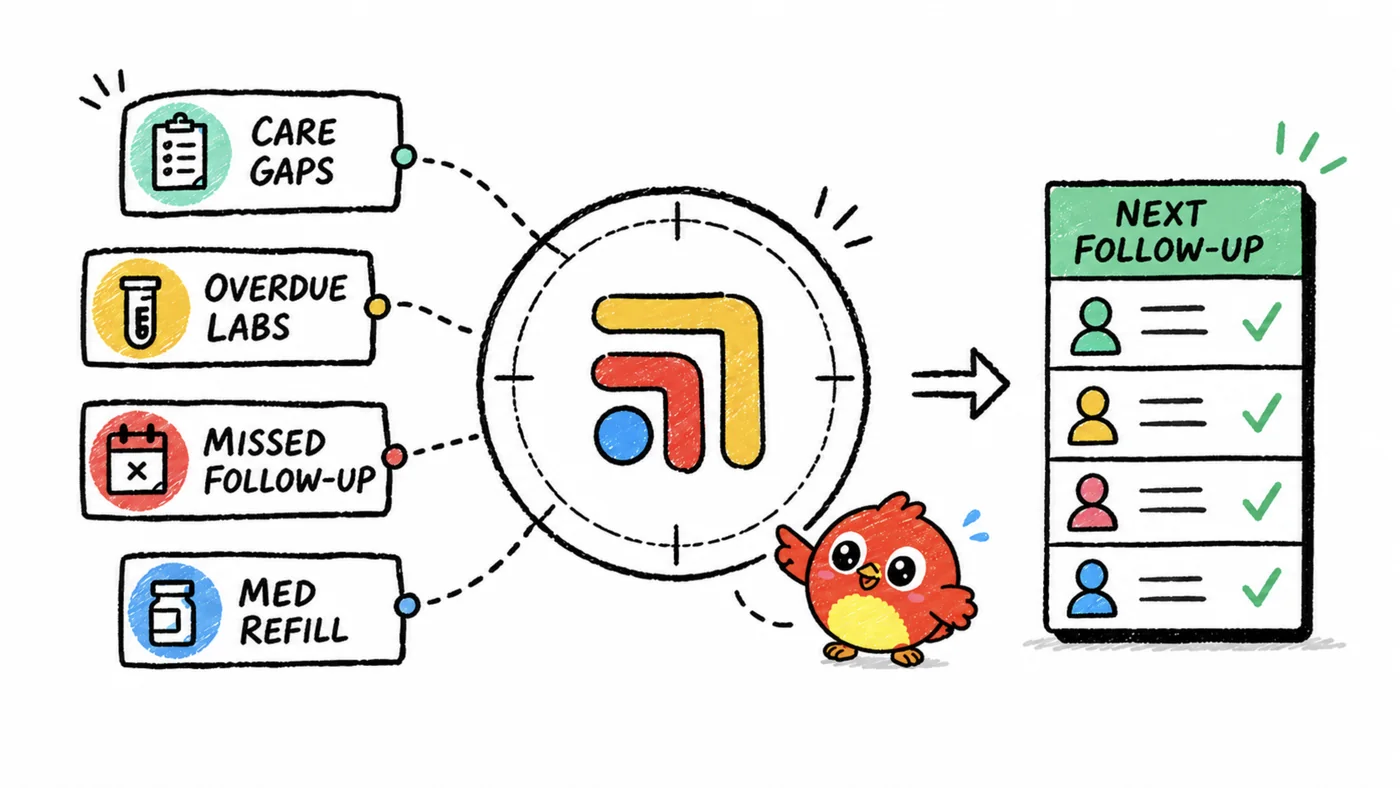
This is where Tabflows fits into a CCM workflow. The monthly eligible list becomes a set of recurring tasks, one per patient, visible and distributed across the month instead of sitting as a static report someone has to remember to pull. Logging happens attached to the task itself, at the moment of contact, so documentation doesn't drift into a reconstructed, end-of-week summary.
A Simple Standard to Hold
Pull the full eligible list at the start of each month, distribute outreach evenly across the weeks, and log each contact the same day it happens. That standard, held consistently, is what keeps CCM from becoming either a compliance risk or a program that quietly only serves the most proactive patients on the panel.
FAQs
What is chronic care management task tracking?
It's the workflow a practice uses to manage the recurring monthly work CCM requires: outreach to eligible patients, care plan updates, medication reconciliation, and accurate time logging, all tracked consistently enough to support both patient care and, where applicable, billing documentation.
Why is CCM easy to fall behind on?
Because it's a monthly recurring obligation across an entire eligible patient list, not a single visit-triggered task. Without a system tracking which patients still need contact this month, it's easy for outreach to happen for whoever calls in and quietly not happen for everyone else.
Who should own CCM outreach in a small clinic?
Often a nurse or care coordinator role, but the key is having one person accountable for tracking the full eligible patient list each month, not just handling outreach reactively as patients happen to reach out.
What needs to be logged for each CCM encounter?
Time spent, what was discussed or updated, and any changes to the care plan, logged consistently enough to reconstruct later if needed. Inconsistent logging is one of the most common gaps in CCM programs, even when the actual patient outreach is happening reliably.