The Short Version
A shift handoff happens at the worst possible moment for careful communication: one person is rushing to leave, the other is just arriving and getting oriented. A verbal, informal handoff under those conditions loses details constantly, not because anyone's careless, but because that's simply a bad moment for anyone to absorb and retain a list of open items.
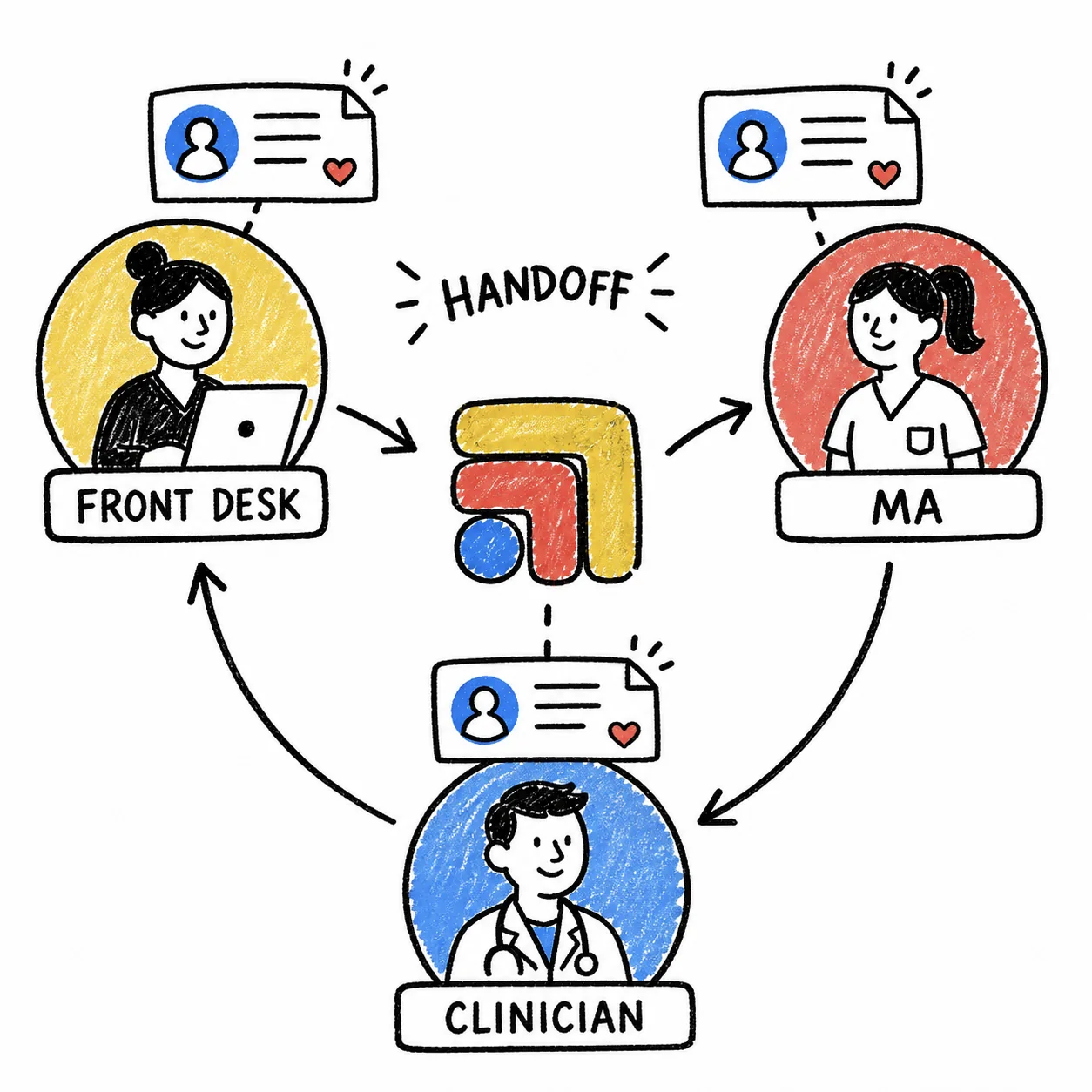
A brief written log, done consistently, holds up far better than relying on a hallway conversation to transfer everything that matters.
Why Verbal Handoffs Lose Information
Think about what a verbal handoff actually requires: the outgoing person has to remember everything still open, prioritize what's worth mentioning, and communicate it clearly, all while trying to leave on time. The incoming person has to absorb all of that while also getting oriented to a shift that's just starting for them. Neither person is in a great position to fully process a list of details in that exchange.
What usually gets through is whatever feels most urgent in the moment. What tends to get lost is anything lower-priority but still time-sensitive, a task due later in the day, a message that needs a follow-up, a patient situation worth keeping an eye on. None of it was intentionally dropped. It just didn't survive a rushed, verbal-only transfer.
What a Working Handoff Looks Like
A brief written log, not a full report. This doesn't need to be exhaustive. A handful of bullet points covering what's open, what's time-sensitive, and any relevant context takes a couple of minutes and holds up far better than memory alone.
The same format every time, so incoming staff know what to expect and where to look, rather than each handoff looking different depending on who's writing it.
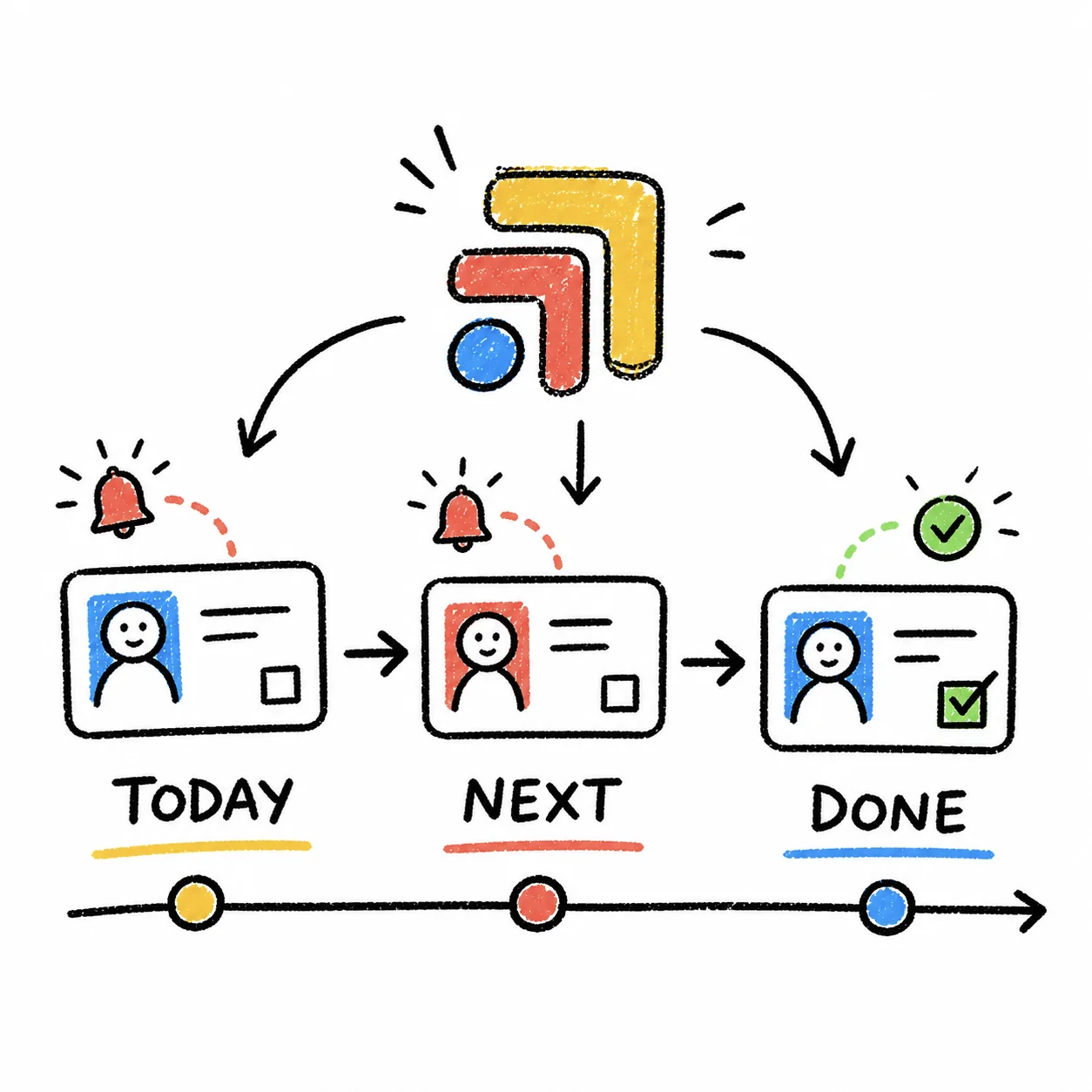
Open tasks stay attached to their actual status, not summarized from scratch each shift. If a task was already tracked with an owner and a due date, the handoff just needs to flag it, not restate the whole history.
Time-sensitive items get flagged specifically. A general list treats everything the same. A handoff that calls out "this one's due by 3pm" versus "this one can wait until tomorrow" gives incoming staff an immediate sense of what needs attention first.
The handoff happens at a consistent point, not squeezed in as an afterthought right as someone's walking out the door. Even five minutes set aside specifically for it produces a better transfer than trying to fit it into the last thirty seconds of a shift.
Where This Actually Breaks
The common failure isn't a lack of effort from either shift. It's that the handoff depends entirely on a real-time verbal exchange, at a moment that's structurally bad for careful communication, with no written record either person can reference afterward. A detail mentioned once, quickly, competes with everything else going on in that transition and often loses.
This is where Tabflows fits into shift handoffs. Open tasks already carry their status, owner, and due date, so the handoff itself becomes pointing to what's already tracked rather than reconstructing it verbally from memory. Incoming staff can see the full picture directly instead of relying entirely on what they were told in a rushed exchange.
The Standard Worth Setting
A brief written handoff, in the same format every time, covering what's open and what's time-sensitive. That small habit, held consistently, is what keeps context from evaporating in exactly the transition moment it's most likely to.
FAQs
What should a shift handoff in a small clinic include?
A quick rundown of open tasks in progress, anything time-sensitive due later in the day, and any heads-up context the incoming staff needs, logged somewhere both shifts can see rather than relayed only verbally in passing.
Why do shift handoffs often lose information?
Because they usually happen informally, a quick hallway conversation between whoever's leaving and whoever's arriving, timed right as one person is rushing out and the other is just getting settled. That's exactly the moment details are most likely to get dropped.
Should shift handoffs be written down or just verbal?
A brief written log, even a few bullet points, holds up better than a purely verbal handoff, since it doesn't depend on either person's memory later in the day and gives incoming staff something to reference instead of relying entirely on what they were told in a thirty-second conversation.
Who's responsible for a good shift handoff?
Both the outgoing and incoming staff share responsibility, but it works best when there's a consistent, expected format everyone uses, rather than handoff quality depending on which two specific people happen to be working that transition.