The Short Version
Preventive care gaps tend to get found two ways: by accident, when a patient happens to come in for something else and someone notices their mammogram is two years overdue, or all at once, when a quarterly or annual report surfaces dozens of gaps simultaneously and the team scrambles to work through the backlog before it affects a quality metric.
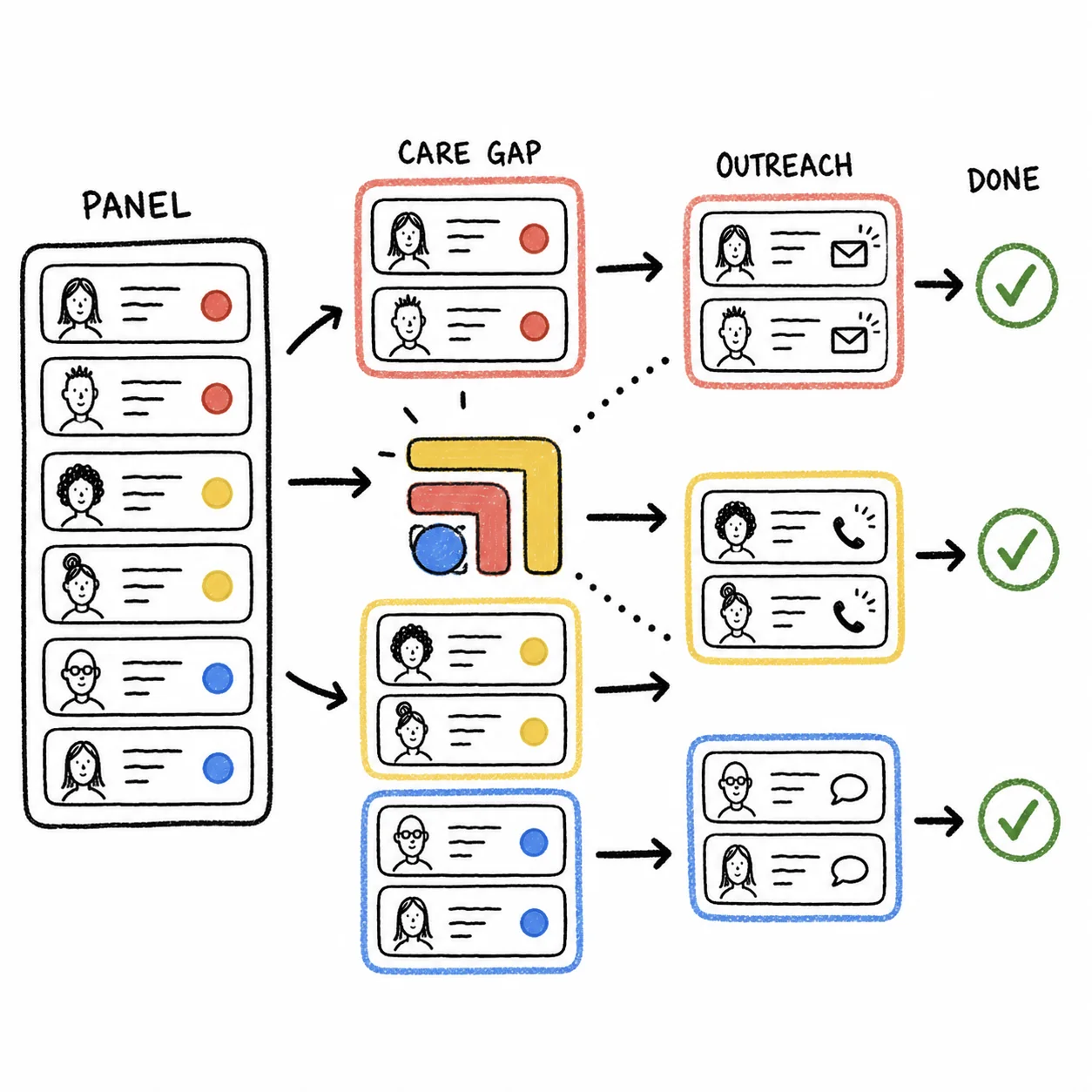
Neither approach is proactive. A working system surfaces gaps continuously, in small numbers, so outreach happens steadily instead of in bursts driven by a report deadline.
Why Opportunistic Catching Isn't Enough
Catching a care gap during an unrelated visit is better than not catching it at all, but it only works for patients who are actually coming in. The patients most likely to have real preventive care gaps are often the ones least likely to be scheduling visits regularly, which means the opportunistic method systematically misses the people who need it most.
A patient who comes in every few months for various concerns will have their gaps caught fairly reliably along the way. A patient who hasn't been seen in fourteen months has no such safety net, because there's no visit for anyone to notice the gap during.
Why Quarterly Reports Create Their Own Problem
The alternative, a periodic report run once a quarter or once a year, solves the visibility problem but creates a workload problem. Dozens or hundreds of gaps surface at once, and the team is suddenly trying to do months of outreach in the days before a reporting deadline. That crunch tends to produce rushed, low-quality outreach: a single generic message sent to everyone on the list, with little follow-up for patients who don't respond the first time.
Both failure modes point to the same fix: gaps need to be visible continuously, in manageable numbers, not discovered in bulk under time pressure.
What a Working Care Gap Workflow Looks Like
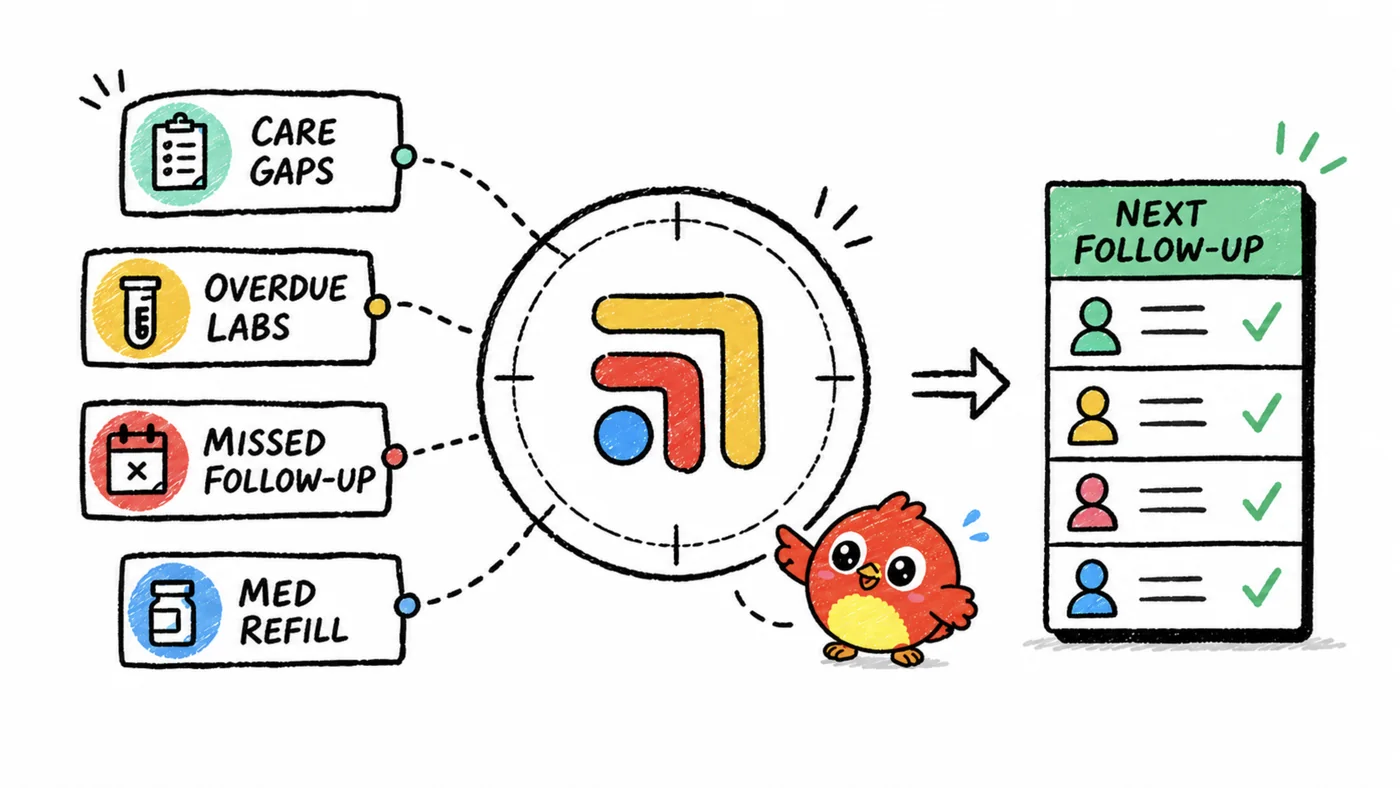
Gaps get identified on a rolling basis, not just at reporting intervals. As patients cross into overdue status for a given screening or vaccine, they should surface onto an active outreach list immediately, not wait for the next quarterly pull.
Outreach gets distributed evenly across the list, a handful of patients contacted every day or every week, rather than a periodic push to clear a backlog. This is the same distribution problem that shows up in chronic care management: steady, ongoing work beats a once-a-quarter scramble every time.
One person owns the active gap list, checking it as part of a regular routine, not as a special project that happens when someone remembers or when a deadline approaches.
Non-responders get a different follow-up, not just a repeat of the same message. A patient who didn't respond to the first outreach attempt about an overdue mammogram needs a phone call or a different channel, not the same portal message sent again a month later.
Closing a gap gets confirmed, not assumed. A gap marked closed because outreach happened isn't actually closed until the screening or vaccine is confirmed completed. Outreach is a step toward closing the gap, not the same thing as closing it.
The Real Failure Pattern
The underlying issue is the same one behind CCM outreach and no-show follow-up: a task that applies across an entire patient panel, with no single visit or event to trigger it, competing against same-day urgent work that always feels more pressing in the moment. Without something actively surfacing the list in manageable pieces, it either gets ignored until a deadline forces a scramble, or it only gets partially covered by whichever patients happen to walk through the door.
This is where Tabflows fits into a preventive care workflow. As patients become overdue for a screening or vaccine, that becomes a task on an active list, distributed for outreach in manageable batches instead of surfacing as a once-a-quarter report. Non-responders stay visible instead of disappearing back into the full patient list until the next reporting cycle finds them again.
What This Actually Protects
Preventive care gaps aren't just a number on a quality dashboard. Each one represents a real chance to catch something early, a cancer screening that finds something treatable, a vaccine that prevents an illness, a wellness visit that surfaces a risk factor before it becomes acute. Closing them steadily, patient by patient, all year, does more for actual outcomes than closing them in a rush right before a report is due.
FAQs
What is a preventive care gap?
A preventive care gap is any recommended screening, vaccine, or wellness visit a patient is due or overdue for, like an annual physical, a mammogram, a colonoscopy, or an annual flu shot, that hasn't happened within the recommended window.
How do clinics usually find preventive care gaps?
Most rely on catching gaps opportunistically during unrelated visits, or on a periodic report pulled once a quarter or once a year. Both approaches miss patients who don't come in often, since a gap can't be caught opportunistically for someone who isn't scheduling visits.
Who should own closing preventive care gaps?
A named person, often a nurse, MA, or care coordinator, should own regular outreach to patients with open gaps, working from a current list rather than waiting for gaps to surface during an unrelated visit or an end-of-year report.
Why do preventive care gaps matter beyond quality metrics?
Beyond any quality reporting requirements, closing these gaps is genuinely preventive: catching a treatable condition early, keeping vaccines current, and catching risk factors before they become acute problems. The metric is a proxy for the outcome, not the point itself.