The Short Version
An active patient generates constant visibility: appointments, messages, tasks. A patient who's leaving generates almost none, which is exactly why their offboarding is so easy to leave half-finished. Records that should have been sent sit unsent. A membership that should have stopped keeps billing. A pending referral or lab follow-up that was in progress when the patient left just sits there, attached to a chart nobody's actively looking at anymore.
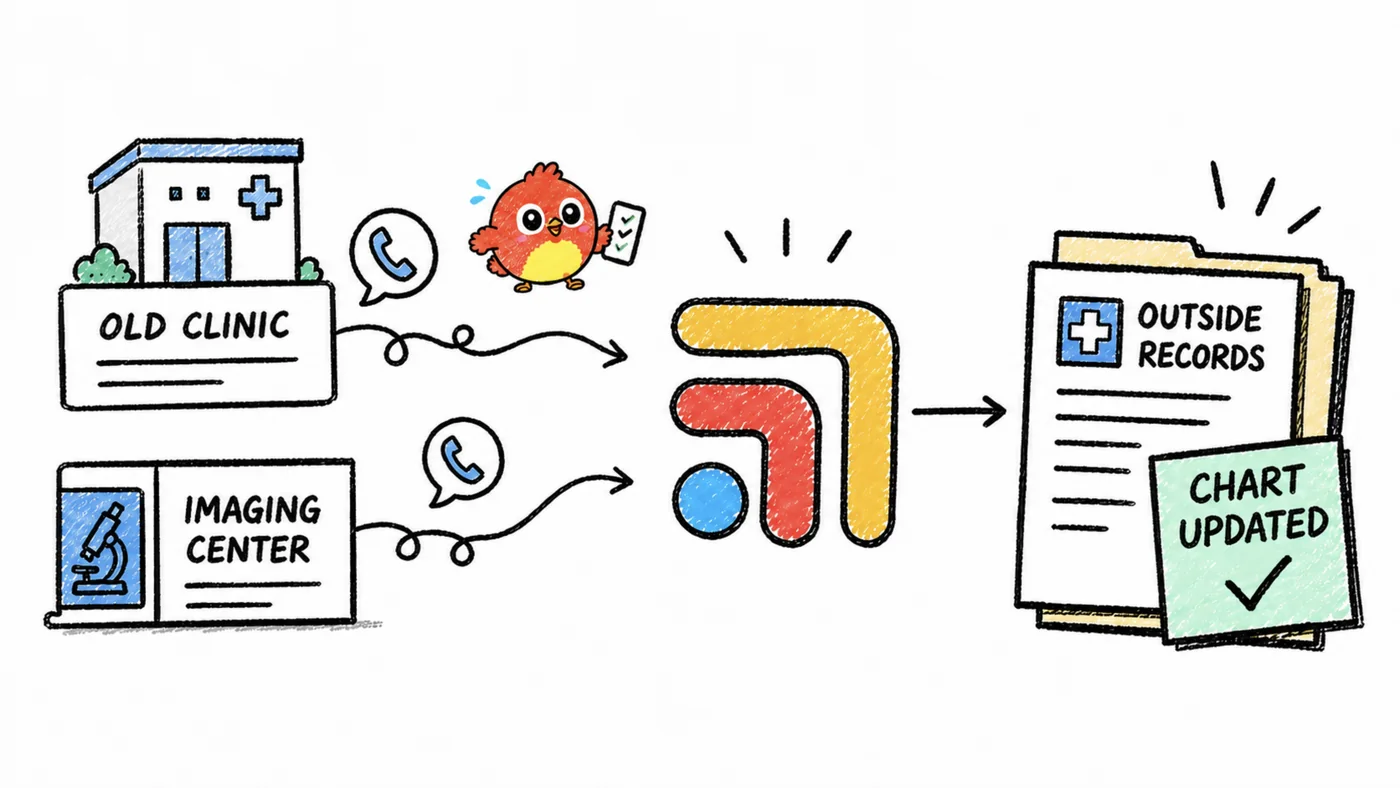
Offboarding needs its own explicit workflow, precisely because nothing about a departing patient naturally prompts anyone to finish the job.
Why Departure Is a Visibility Cliff
The moment a patient decides to leave, whether they're moving, switching providers, or simply discontinuing the relationship, they typically stop generating the day-to-day signals that keep their chart in anyone's active attention: no more booked visits, no more messages, no more reason for staff to open their record. Whatever was in progress at that moment, an open referral, a lab result pending review, a prior auth mid-process, effectively goes dark along with the rest of their activity.
Nobody decided to abandon that work. It just stopped being visible the moment the patient stopped being an active presence in the day-to-day workflow.
What Gets Missed in a Typical Departure
Unsent or delayed records. A transfer-of-care records request is a records request like any other, with the same legal deadlines, but it's easy to deprioritize when it feels less urgent than requests from a family member or attorney actively following up.
Unresolved clinical loops. A referral that was pending, a lab result awaiting review, a prior auth in progress, none of that clinical work automatically closes just because the patient is leaving. Someone still needs to either complete it, hand it to the new provider with context, or make an explicit decision that it's being closed out.
Continued billing. For membership-based practices, a patient who verbally said they're leaving but whose membership was never formally cancelled can end up billed for another cycle, creating an unpleasant surprise and a trust problem right as the relationship is ending.
No formal close-out record. Without logging that the transfer happened, what was sent, and what was resolved, there's no clean record if a question comes up later, from the patient, the new provider, or in the event of any dispute about what was or wasn't handled.
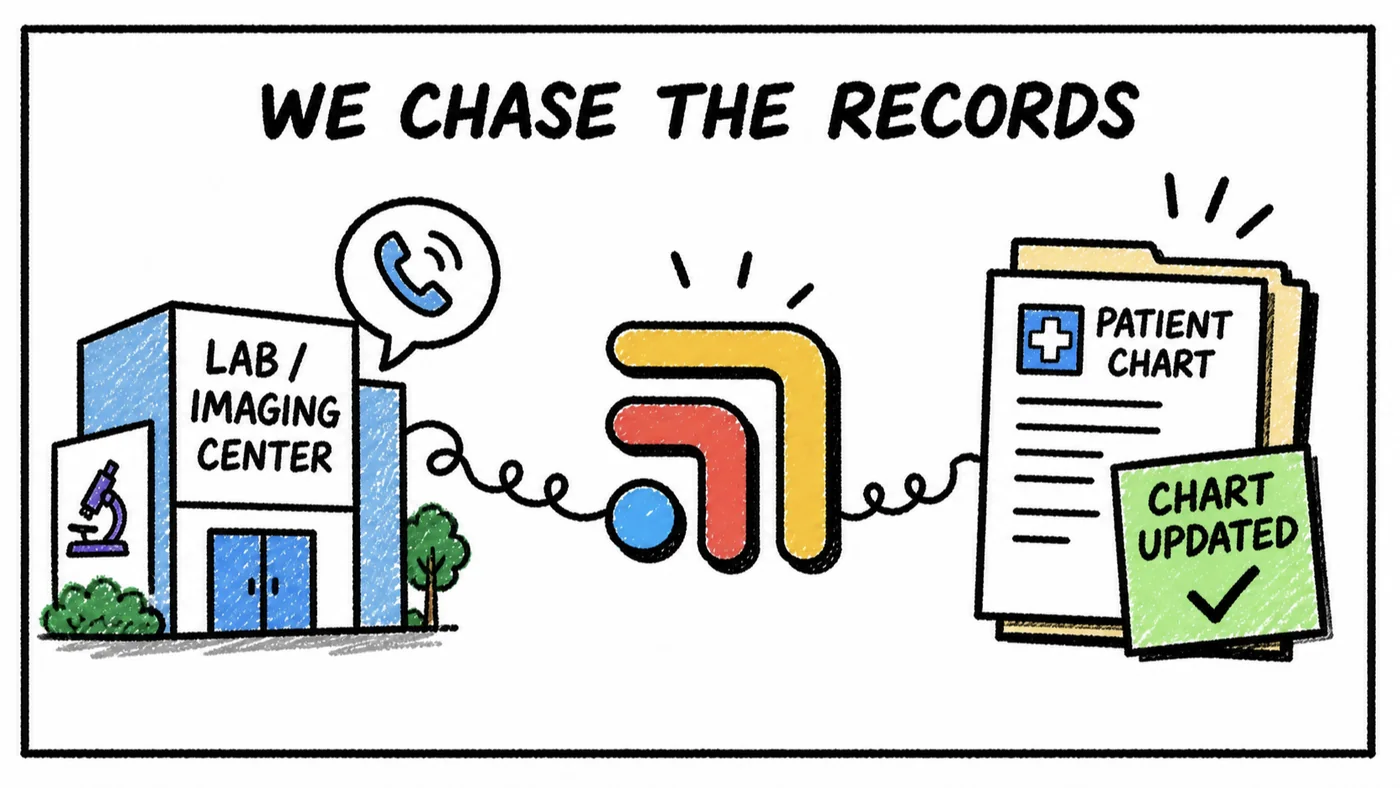
What a Working Offboarding Workflow Looks Like
A transfer or departure triggers an explicit checklist, not an informal, memory-dependent process. Records request, open clinical items, billing status, all need their own line item, checked off deliberately rather than assumed to be handled.
Records requests get the same urgency and deadline tracking as any other request. The fact that the patient is leaving doesn't change the legal timeline, and treating it as lower priority creates real risk.
Open clinical items get an explicit resolution, not just abandonment. A pending referral either gets completed, gets summarized for the new provider, or gets a documented decision that it's closing unresolved with the patient informed.
Billing changes get confirmed, not just noted. If a membership is ending, the actual stop needs verification in the billing platform, not just a mental note that the patient said they're leaving.
The full offboarding gets logged as complete, with a record of what was done and when, so there's a clean answer if anyone asks about it later.
Where This Actually Breaks
The pattern here mirrors other gaps in this series: real work that has no natural trigger to resurface once the usual signal, active patient engagement, disappears. A departing patient's open items don't announce themselves. They just sit, quietly, in a chart nobody has a reason to open again unless something specifically prompts a review.
This is where Tabflows fits into patient offboarding. A departure triggers a checklist of explicit tasks, records request, open clinical items, billing confirmation, each with its own owner and status, so nothing depends on someone remembering to circle back to a chart that's stopped generating its own visibility. The offboarding gets a clear, trackable finish line instead of fading into an ambiguous, unresolved state.
The Standard Worth Setting
Every departure gets an explicit checklist: records sent within deadline, clinical items resolved or documented, billing confirmed stopped, and the whole process logged as complete. That standard is what keeps a patient's exit from the practice as clean and well-handled as their time as an active member was.
FAQs
What does a clinic need to do when a patient transfers care elsewhere?
Confirm the transfer request, send records to the new provider within the legally required timeframe, close out any open clinical loops like pending labs or referrals, and formally end the membership or billing relationship if applicable, rather than letting the account linger in an ambiguous state.
Why do patient offboarding tasks get missed?
Because a departing patient generates less day-to-day visibility than an active one. Once someone stops booking visits, their open tasks, a pending referral, an unresolved lab follow-up, can sit indefinitely, especially if nobody has explicitly closed out the relationship.
How quickly should records be sent when a patient transfers care?
As with any records request, this is typically bound by a state-specific legal deadline, often 15 to 30 days, and should be treated with the same urgency as any other records request rather than being deprioritized because the patient is no longer active.
Should membership billing stop immediately when a patient wants to leave?
It should stop according to whatever the membership agreement specifies, but the key operational point is that the stop needs to actually happen and get confirmed, not just be verbally agreed to and then forgotten while a charge continues to process the following month.