
Hire for the stack you actually run
A DPC clinic using Elation, Hint, and Spruce may already have three strong tools. Elation can anchor the chart, Hint can handle membership billing, and Spruce can manage patient communication. None of those tools is the enemy, because the challenge is that a patient request does not respect product boundaries.
One message may require chart context from Elation, membership context from Hint, a reply in Spruce, a task for staff, and a follow-up next week. When a medical VA enters that workflow, the clinic has to decide how that work moves without forcing the VA to reconstruct the same patient story in every system.
What the VA needs to see
The VA does not need unlimited access to everything. They need the right context for the work the clinic has assigned.
For scheduling, they may need the calendar and the patient thread. For billing questions, they may need membership context and an escalation path. For refills or lab questions, they may need to prepare the work and route it back for provider review before anything clinical is decided.
That means the workflow should tell the VA what kind of request it is, which system holds the source, what they are allowed to do, and where the next step belongs. If the answer is always "ask the doctor," the provider stays overloaded. If the answer is always "figure it out," the clinic takes on risk.
A cleaner multi-tool workflow
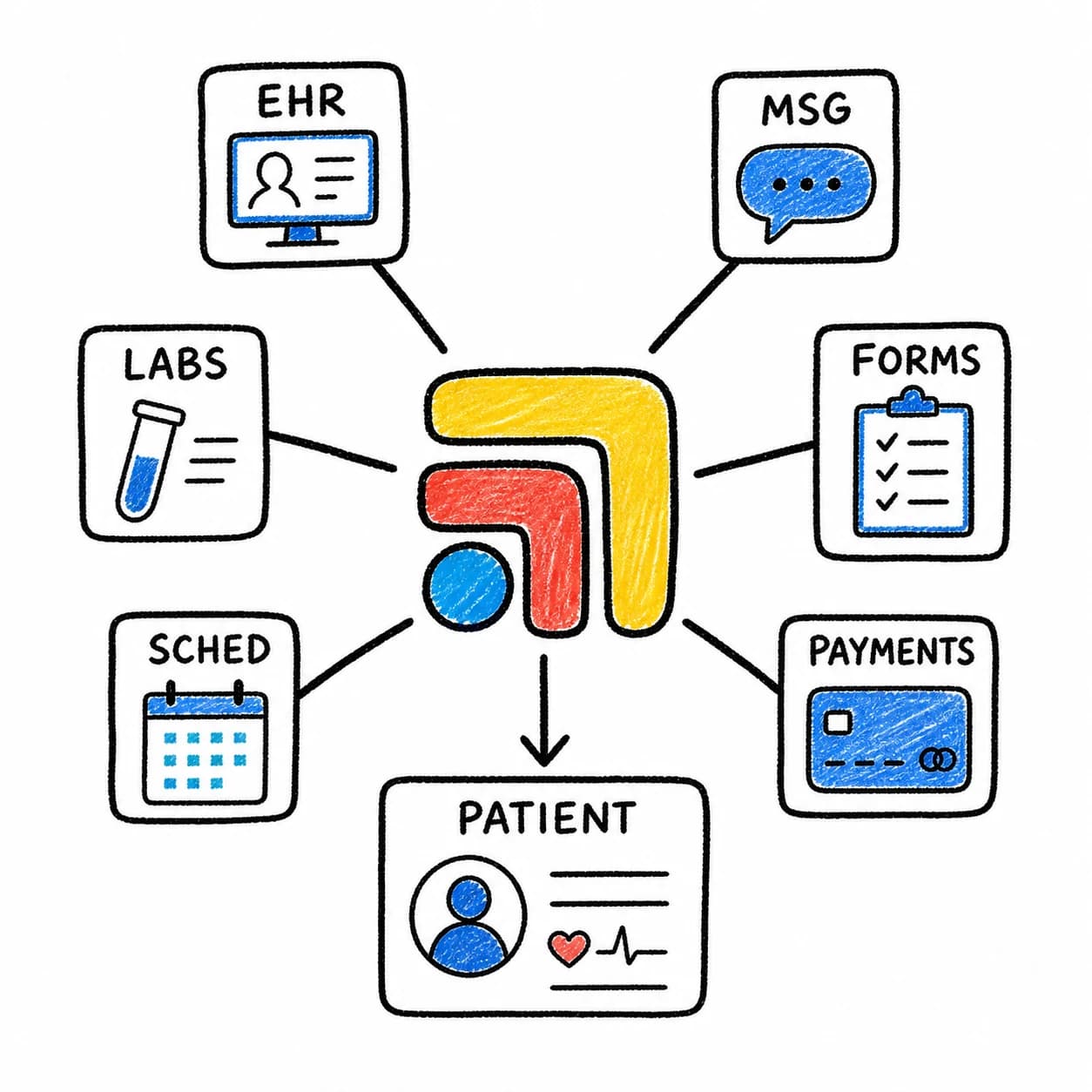
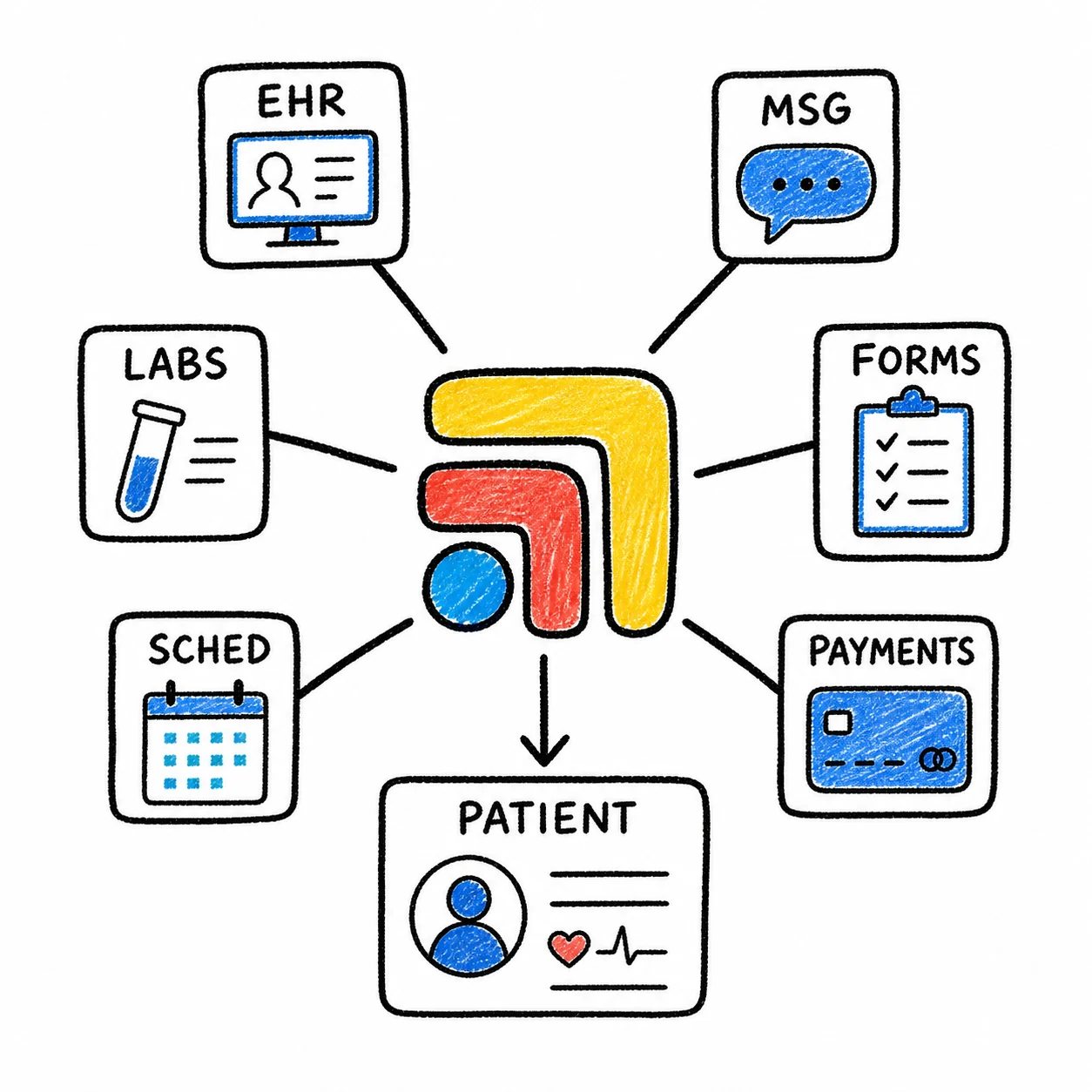
Here is the practical pattern: the patient message starts in Spruce, then the VA connects it to the patient context and determines whether it is scheduling, billing, refill, lab, form, onboarding, or another repeatable workflow. If the request needs chart review in Elation or billing context in Hint, the task captures that source and the next step. If provider review is needed, the draft or question routes back before the patient gets the final response.
Once the action is complete, the follow-up status should be visible to the team. The important thing is not that every tool becomes one giant database; the important thing is that the patient work does not vanish between them.
Where Tabflows fits
Tabflows is built for clinics that want to keep their current tools but need the work to move through one shared workflow.
It can help the team keep patient context, tasks, owners, due dates, provider review, and follow-up status close to the systems already in use: Elation, Hint, Spruce, labs, prescriptions, and whatever else supports the clinic day.
For the VA, this means fewer repeated searches and fewer unclear handoffs. For the provider, it means less time answering "where is this?" and more time reviewing the things that actually require judgment.
For a deeper stack-level view, read DPC workflow software: what your clinic actually needs and The DPC workflow layer: why the work lives between the apps.
The best workflow makes hiring easier
If you are hiring a VA into an Elation, Hint, and Spruce stack, do not make them learn the clinic by tab archaeology.
Give them repeatable workflows, clear boundaries, and one place to see what is assigned, waiting, blocked, and done. The tools can stay, but the handoffs need a home. That is the difference between adding help and adding another layer of coordination.
FAQ
Can a medical VA work across Elation, Hint, and Spruce?
A medical VA can support administrative work across a multi-tool stack when the clinic defines access, role boundaries, review paths, and a shared way to track patient follow-up.
Why is the Elation, Hint, and Spruce stack hard for VA workflows?
Each tool may do its job well, but patient work often moves between charting, billing, messaging, scheduling, and follow-up. The VA needs a workflow layer that keeps those handoffs visible.
How does Tabflows help with an Elation, Hint, and Spruce workflow?
Tabflows gives the team one shared layer for patient context, tasks, ownership, follow-ups, and AI-assisted draft work around Elation, Hint, Spruce, and other clinic tools.
Try Tabflows free and let your stack work like one clinic day.
FAQs
Can a medical VA work across Elation, Hint, and Spruce?
A medical VA can support administrative work across a multi-tool stack when the clinic defines access, role boundaries, review paths, and a shared way to track patient follow-up.
Why is the Elation, Hint, and Spruce stack hard for VA workflows?
Each tool may do its job well, but patient work often moves between charting, billing, messaging, scheduling, and follow-up. The VA needs a workflow layer that keeps those handoffs visible.
How does Tabflows help with an Elation, Hint, and Spruce workflow?
Tabflows gives the team one shared layer for patient context, tasks, ownership, follow-ups, and AI-assisted draft work around Elation, Hint, Spruce, and other clinic tools.