The Short Version
A 90-day DPC launch plan has four tracks running at the same time:
- Define the offer.
- Build the legal and financial base.
- Create the first-member pipeline.
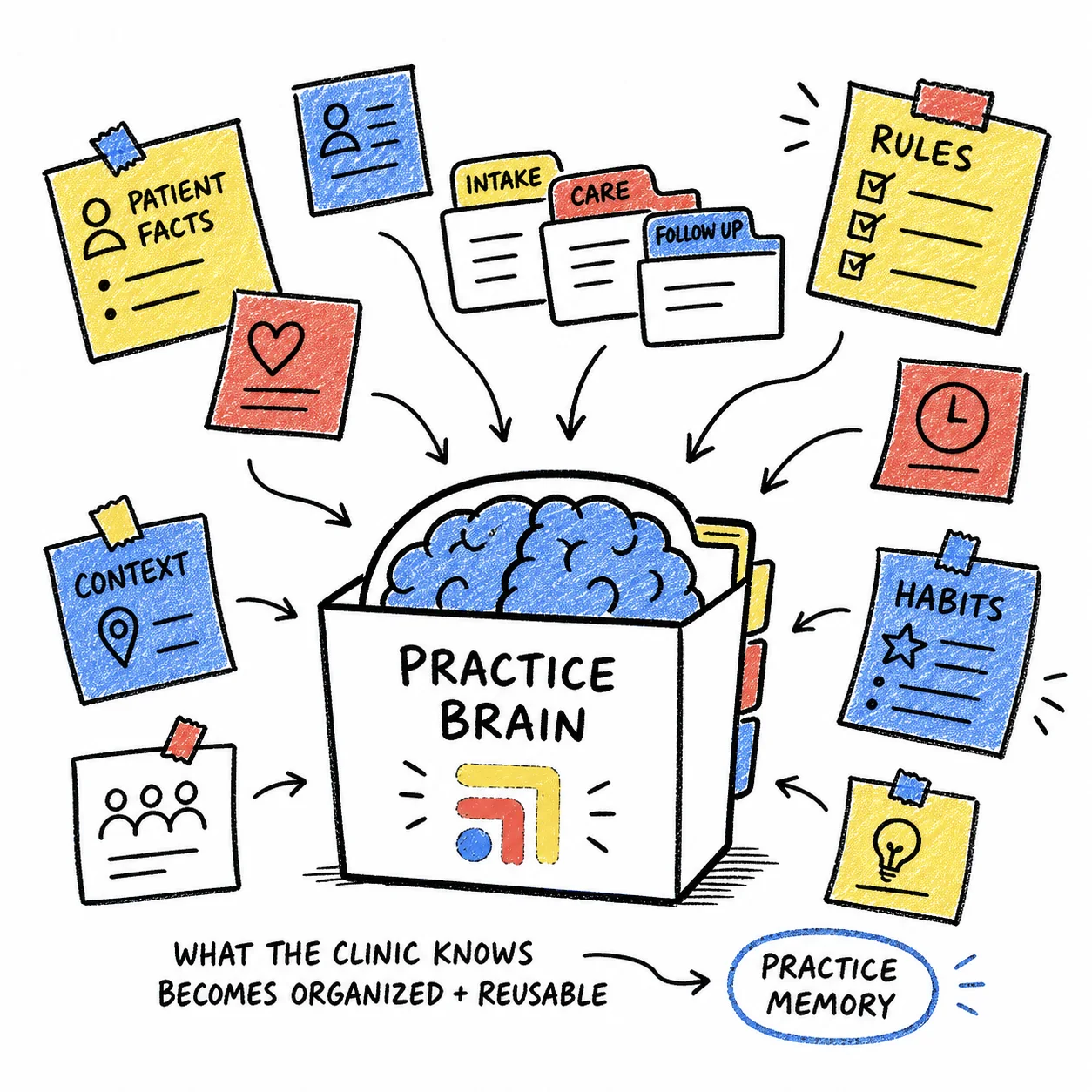
- Set up the clinic workflow before demand arrives.
The fourth one is the piece most plans skip.
That is a mistake.
New members do not just create revenue. They create messages, records, labs, refills, onboarding tasks, follow-ups, employer questions, and tiny promises the clinic now has to keep.
This plan gives you the week-by-week shape.
Use it with the DPC startup cost calculator, the DPC break-even calculator, and the first 100 DPC members worksheet.
One note: this is not legal advice. Entity setup, Medicare decisions, membership agreements, and state rules need a health attorney who knows DPC.
Weeks 1-2: Pick the Practice You Are Actually Building
The first two weeks are for decisions.
Not logo decisions.
Business decisions.
By the end of week two, you should know:
- Who the practice is for
- What problem the membership solves
- Whether you are pure DPC or hybrid
- Whether Medicare patients are part of the plan
- Your rough monthly membership price
- Your target first-year panel
- Whether you are starting from home visits, shared space, or an office
- Whether employers are part of the launch strategy
Write the one-sentence promise.
Example:
"Primary care for busy families who want direct access, longer visits, and clear pricing without the insurance maze."
This sentence does not need to be perfect.
It needs to be clear enough that someone else can repeat it.
Weeks 3-4: Start the Legal and Money Work
This is the slow lane, so start early.
Work through:
- Business entity formation
- Business bank account
- Bookkeeping setup
- Membership agreement draft or review
- State DPC statute review
- Medicare opt-out decision, if relevant
- Malpractice coverage quotes
- HIPAA basics
- CLIA/OSHA questions if your model requires them
- Startup budget
- Break-even member count
Do not let this part live in your head.
Put every item on a launch board with an owner, status, and next step. Even if the owner is only you, write it down.
The point is momentum.
If you are waiting on an attorney, you should still be moving the website, outreach, stack, and member map forward.
Weeks 5-6: Build the Offer and Enrollment Path
Now make the practice easy to understand.
Create:
- Membership pricing
- Family pricing
- Employer option, if relevant
- Included services list
- Not-included services list
- "What insurance is still for" explanation
- Join page
- Interest form
- Consult scheduling
- Welcome email
- New-member onboarding steps
If the website is the piece slowing you down, keep it simple: one clear promise, pricing, how DPC works, real team presence, FAQs, and a consult path that is visible on mobile. The DPC website guide and the direct primary care website build guide are the deeper version.
The standard is simple:
A patient should understand the offer without a phone call.
That does not mean nobody will call. It means the page is doing enough work that calls are warmer, shorter, and less repetitive.
If you need copy, use the DPC patient explanation templates.
Weeks 7-8: Choose the Stack and Design the Day
Pick the tools.
Then design the work around them.
The basic stack usually includes:
- EHR or membership billing platform
- Secure patient messaging
- Labs
- E-prescribing
- AI scribe
- Payment system
- Website and email
- Workflow layer
For the stage-by-stage version, read the DPC software stack by stage.
The workflow questions matter more than the logo on each tool:
- Where do patient messages become tasks?
- How are lab follow-ups tracked?
- Where do refill requests live?
- Who owns onboarding?
- What happens after a consult books?
- Where does employer work go?
- What does the clinic review every morning?
This is where Tabflows belongs in a new DPC launch. It gives the clinic one shared layer for patient context, tasks, follow-ups, and ownership around the tools you already picked.
You do not need more tabs.
You need the work to have a home.
Weeks 9-10: Build the First-Member Pipeline
Now the launch gets real.
Make a list of people and channels that could plausibly produce the first 100 members:
- Existing trust and personal network
- Pre-launch email list
- Local employers
- Referral partners
- Community groups
- Local press
- Founder-led education
- Search and social
Then put numbers next to each.
Not because the numbers will be right.
Because the plan needs to be wrong in a useful way.
If you say "marketing," nothing happens.
If you say "10 members from three local physical therapy offices," you can test that.
Use the first 100 DPC members worksheet for the map and the DPC employer pitch kit for the small-business angle.
Week 11: Rehearse the First Patient Experience
Before you announce widely, run the whole patient journey.
Pretend someone just found you.
Can they:
- Understand the offer?
- See the price?
- Ask a question?
- Book a consult?
- Join?
- Pay?
- Get a welcome email?
- Know what happens next?
Then rehearse the clinic side:
- Who sees the enrollment?
- Where does the onboarding task go?
- How are records requested?
- Where is the first-visit prep?
- What happens after the first visit?
- How does follow-up get assigned?
This is boring.
Good.
Boring is what you want before patients arrive.
Week 12: Open the Founding-Member Window
Open with a real reason, not fake scarcity.
Example:
"We are opening with a limited founding-member panel so we can onboard carefully and build the practice around the community's needs."
Then do the work:
- Email the pre-launch list
- Call the warmest people
- Contact referral partners
- Send the employer pitch
- Post the clearest explanation
- Ask early believers to share
- Track every question people ask
Questions are not objections.
They are future copy.
If ten people ask whether they can keep insurance, your website needs a better insurance explanation.
If five people ask whether kids can join, your family pricing is not clear enough.
The market will edit your launch.
Let it.
Days 85-90: Tighten Before You Scale
Before pushing harder, check the system:
- Are new members getting onboarded cleanly?
- Are messages owned?
- Are labs and refills tracked?
- Are follow-ups visible?
- Is the founder still the only router?
- Are people getting stuck at the same step?
- Are the same questions showing up repeatedly?
Fix the friction before adding more volume.
A DPC practice does not need to look huge on day 90.
It needs to feel trustworthy.
The Weekly Rhythm
During the 90 days, run this every week:
- Talk to 10 local people
- Contact 3 referral partners
- Contact 2 employers
- Publish 1 clear explanation
- Email the list once
- Improve 1 enrollment step
- Review 1 workflow that could drop work
That is not glamorous.
It is how the market learns you exist.
What Success Looks Like at Day 90
By day 90, you want:
- A clear offer
- A legal and financial base in motion
- A website that explains the model
- A stack you can actually use
- A workflow for messages, labs, refills, onboarding, and follow-ups
- A first-100-member map
- A founding-member launch window
- A list of real questions from real people
That is a launch.
Not the perfect brand.
Not the perfect tool stack.
Not a giant waitlist built from people who will never join.
A real practice begins when the offer is clear, the first members can join, and the clinic is ready to keep the promises the website makes.
That is the 90-day job.
FAQs
Can you launch a DPC practice in 90 days?
Many DPC founders can do the practical launch work in 90 days, but legal setup, Medicare opt-out decisions, space, and state-specific requirements may take longer. A 90-day plan works best as an operating sequence, not a promise that every practice opens in exactly three months.
What should a DPC founder do first?
A DPC founder should first define the patient promise, choose the practice model, start legal and entity setup, and build the initial financial model. The software and website matter, but they are easier once the offer and model are clear.
What should happen in the last month before opening a DPC?
The last month should focus on enrollment, onboarding, local outreach, referral partners, employer conversations, daily workflow, and practice readiness. By then, the clinic should know where patient messages, labs, refills, and follow-ups will live.
What is the biggest mistake in a DPC launch?
The biggest mistake is creating demand before the clinic has a workflow. New members immediately create messages, records, labs, refills, onboarding tasks, and follow-ups. If that work has no home, the launch feels successful and chaotic at the same time.