The Short Version
Your first 100 DPC members will probably not come from a brilliant ad campaign.
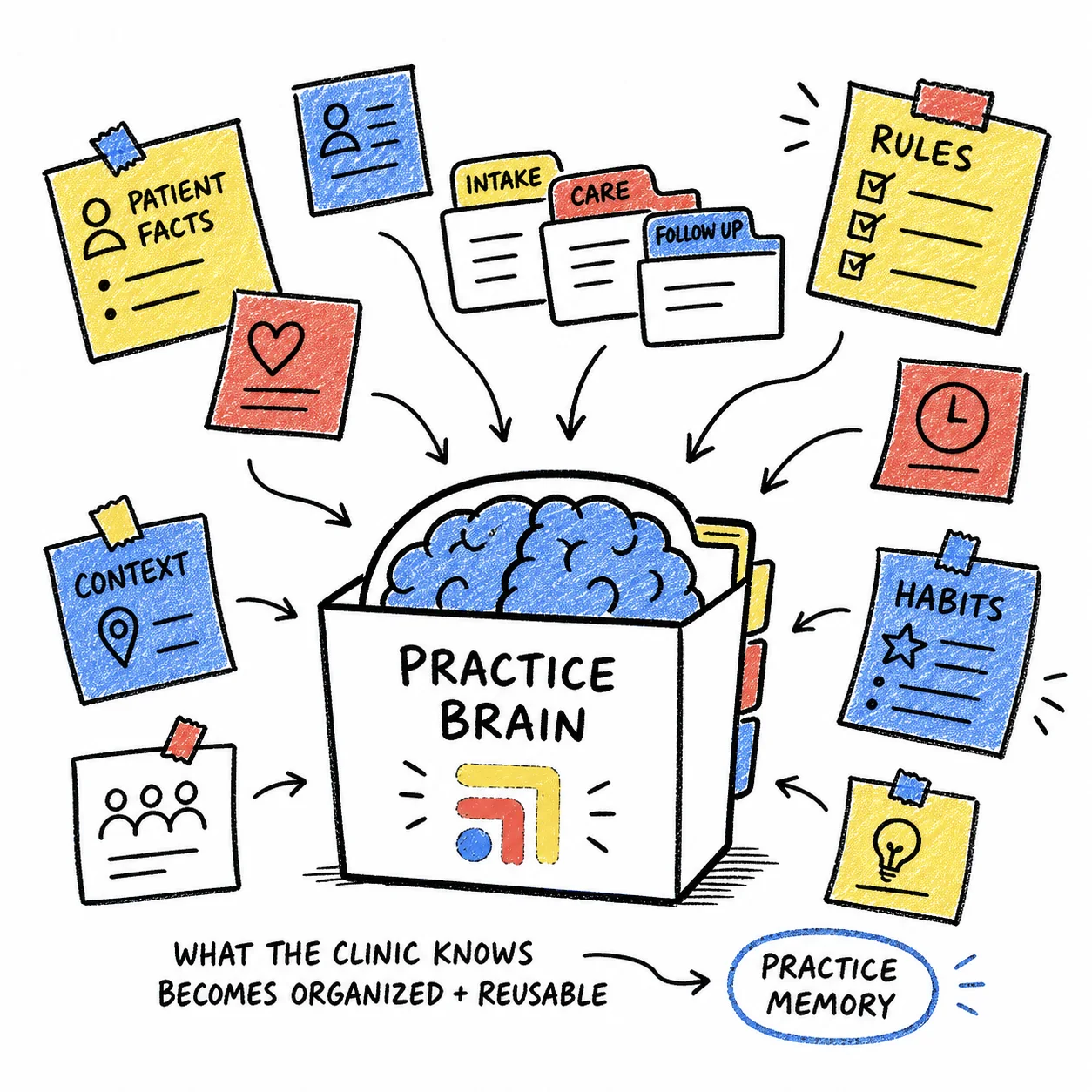
They will come from trust.
Former patients. Local employers. A physical therapist who gets it. A church group. A school community. A small business owner tired of the insurance treadmill. A spouse who tells three other families. A patient who finally understands what DPC is and says, "Wait, why doesn't everyone do this?"
That is the game.
The first 100 members are not a marketing funnel as much as a trust transfer.
This playbook gives you the sequence. If you want the worksheet version, open the first 100 DPC members template. If you need patient-facing copy, use the DPC patient explanation templates. If employers are part of the plan, use the DPC employer pitch kit.
- Make the offer easy to repeat.
- Build a local list before you open.
- Talk to referral partners.
- Test employer conversations early.
- Create a founding-member window.
- Make enrollment simple.
- Turn early members into the second wave.
If you are still mapping the whole launch, read the proven DPC launch roadmap first.
First, Make the Offer Repeatable
Before you ask anyone to join, write the one-sentence version of the practice.
Not the mission statement.
The sentence a patient can repeat to their spouse.
Examples:
- "It is primary care where you pay monthly and can actually reach your doctor."
- "It is a family doctor membership with longer visits, direct messaging, and clear pricing."
- "It is healthcare for people with high deductibles who are tired of paying more and getting less."
- "It is direct access to a doctor without insurance billing in the middle."
Your exact sentence will vary.
But if people cannot repeat it, they cannot refer it.
The first 100 members depend on simple language because most people still do not wake up knowing what DPC means.
You are not just launching a clinic.
You are teaching a local market a new buying category.
Build a Pre-Launch List That Is Actually Local
An email list is useful only if it contains people who might realistically join.
Do not chase vanity subscribers.
Build a local list:
- Former patients who can legally and ethically be contacted
- Friends and family in the service area
- Parents at schools and sports groups
- Local small business owners
- Fitness, PT, chiro, nutrition, therapy, and wellness partners
- Cash-pay specialist offices
- Local civic and faith communities
- People who have already asked, "When are you opening?"
Your goal before launch is not 10,000 emails.
Your goal is 200 to 500 local people who understand the offer enough to consider it or pass it on.
Every email should do one job: make the model clearer.
Useful early topics:
- Why you are leaving the old model
- What membership includes
- What insurance is still for
- How family pricing works
- What kinds of visits fit DPC
- How direct messaging works
- How to join before opening
If a reader finishes your pre-launch emails and still cannot explain DPC, the emails are too vague.
Map the First 100 Before You Need Them
Do not write "marketing."
Write a member map.
Here is a sample:
- 30 from existing trust and personal network
- 20 from pre-launch list
- 15 from community talks or local groups
- 15 from referral partners
- 10 from small employers
- 5 from local press
- 5 from paid local experiments
Will the map be wrong?
Of course.
But now you have a target to test.
If the employer line is producing nothing, change the pitch or change the business type. If referral partners send traffic but nobody joins, your enrollment page is unclear. If local Facebook groups create questions but not consults, your explanation may be too abstract.
Specific plans create useful failure.
Vague plans create anxiety.
Referral Partners: Go Where Trust Already Lives
The best early referral partners are not always other doctors.
They are people who already hear the pain DPC solves.
Think:
- Physical therapists
- Chiropractors
- Therapists
- Nutritionists
- Personal trainers
- Cash-pay specialists
- Health coaches
- Midwives
- Employer benefits advisors
- Local pharmacists
- Community organizers
The pitch should not be "send me patients."
That is needy.
The pitch is:
"I am opening a primary care practice for people who want longer visits, direct access, and transparent pricing. If you ever hear someone frustrated by rushed care or high-deductible confusion, I would be happy to be a resource."
Then make it easy:
- One-page explainer
- Clear pricing
- Simple referral link
- Founder intro video
- A few patient-fit examples
- No pressure
Referral partners do not need your entire philosophy.
They need to know who should be sent your way.
Employers: Start Smaller Than You Think
Employer DPC can fill a panel quickly, but the wrong employer pitch wastes months.
Start with small local businesses where the decision maker is reachable:
- 5 to 50 employees
- Owner-led
- Feeling premium increases
- Frustrated by absenteeism or poor access
- Too small for fancy benefits strategy
- Local enough to care about a nearby doctor
Do not lead with "revolutionizing healthcare."
Lead with the owner problem:
"Your team has insurance, but they still cannot get primary care quickly. DPC gives them direct access to a doctor for everyday care at a predictable monthly cost."
For small employers, keep the first offer simple:
- Employee membership price
- Family add-on option
- What is included
- What insurance still covers
- How employees enroll
- What reporting the employer gets, if any
The goal of the first employer conversation is not a 50-page benefits proposal.
It is finding out whether the owner feels the pain.
For copyable scripts, cold emails, proposal structure, and objection handling, use the DPC employer pitch kit.
Create a Founding-Member Window
A founding-member offer works when it is real.
Not fake urgency.
Real reason:
"We are opening with a limited founding panel so we can onboard members carefully and build the practice around the community's needs."
Useful founding-member angles:
- First-month priority onboarding
- Locked founding rate for a period
- Family enrollment window
- Direct founder call before launch
- Early access to opening schedule
- Referral credit
Avoid making the discount the whole story.
You are not selling a coupon.
You are inviting people into a different kind of clinic.
Make Enrollment Stupid Simple
Interest dies in friction.
Before you launch outreach, make sure the next step is obvious.
Your website should answer:
- What is DPC?
- Who is this for?
- What does it cost?
- What is included?
- What is not included?
- Can I keep insurance?
- How do I join?
- What happens after I join?
Then give one obvious button:
"Join the founding list" before opening.
"Become a member" after opening.
If you require a consult first, explain why and make scheduling painless.
The fastest way to waste demand is to make interested people email you for basic facts.
If your enrollment page is doing too much work in one long scroll, split it into the pieces patients are already looking for: how DPC works, pricing, who it is for, FAQs, and the next step. The direct primary care website build guide walks through that structure, and the free DPC website redesign is there if the page needs a second set of eyes.
Build the Workflow Before Members Arrive
This is the part nobody wants to talk about in a marketing playbook.
Getting the first 100 members creates work immediately.
Not later.
Immediately.
New patient onboarding. Records requests. Medication lists. Lab questions. Portal setup. Family memberships. Employer questions. Welcome messages. Refill requests. Visit prep. Follow-ups.
If all of that lives in separate tools, the founder becomes the glue.
That might work for a few weeks.
It is not a strategy.
Set up the operating layer before the push:
- One place for new-member onboarding tasks
- One place for patient-linked follow-ups
- Clear ownership for messages, labs, and refills
- A daily view of what is waiting
- A way to turn conversations into tasks
- A system that does not depend on one person's memory
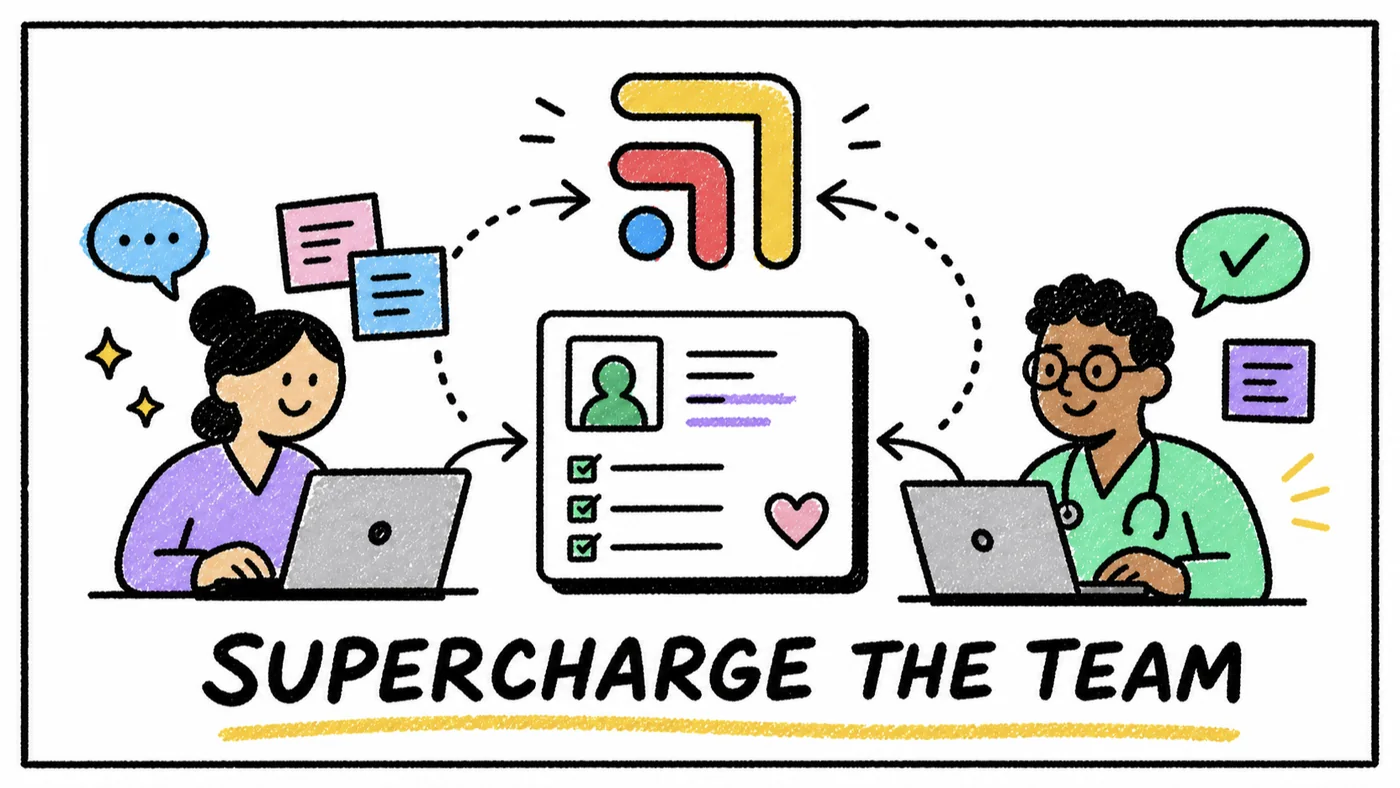
Tabflows is built for exactly this moment. It gives the clinic one shared workflow layer around the EHR, messaging, labs, tasks, and patient context, so the demand you worked hard to create does not turn into tab chaos.
Marketing gets people in.
Workflow keeps the promise.
Turn Early Members Into the Second Wave
The first 100 members should make the next 100 easier.
Build that loop on purpose.
After a member has a good first experience, ask:
- "Who else do you know who would love this kind of care?"
- "Would your employer want to learn about this?"
- "Can we use a short testimonial?"
- "Would you share this founding-member page with one family?"
Make it normal, not awkward.
People who join DPC early are often believers. They like explaining it. Give them language. The DPC patient explanation templates give you copy for the homepage, FAQ, founding-member email, and referral ask.
You can also turn real questions into content:
- "Can I still use insurance?"
- "Is this concierge medicine?"
- "What happens if I need a specialist?"
- "Can my kids join?"
- "What if I rarely go to the doctor?"
Every question is a future page, post, email, or community talk.
That is how the market learns.
A Simple Weekly Launch Rhythm
If you want this in operating cadence form:
Every week before launch:
- Talk to 10 local people about the practice
- Contact 3 referral partners
- Contact 2 small employers
- Publish 1 clear explanation
- Email the pre-launch list once
- Improve 1 part of enrollment
- Review where potential members got stuck
That rhythm is not glamorous.
It works because it forces the founder to keep bringing the model into the real world.
The market will tell you what is confusing.
Listen and tighten.
The Biggest Mistake: Getting Attention Before You Can Handle It
This sounds like a nice problem.
It is not.
If people start joining and the clinic immediately feels disorganized, you train the market to doubt the model.
The first 100 members are not just revenue.
They are the first proof that the practice works.
So build the promise, the acquisition loop, and the operating system together.
That is the real playbook.
Get people to understand the model.
Give them a clean way to join.
Then make sure the clinic is ready to deliver the kind of care that made them join in the first place.
FAQs
How do DPC practices get their first 100 members?
Most DPC practices get their first 100 members through existing trust: former patients, local employers, community groups, referral partners, direct conversations, and simple education about how DPC works. The first 100 rarely come from one marketing channel. They come from repeated local explanation.
What is the best marketing channel for a new DPC practice?
The best early marketing channel is usually founder-led local outreach. Existing patient relationships, small employers, local partners, and community education tend to outperform generic ads because DPC is a trust purchase. Paid ads can help later, but they rarely replace the founder explaining the model clearly.
Should a new DPC practice target employers or individual patients first?
Most practices should test both. Individuals are often faster to enroll, while employers can add multiple members at once. The best early employer targets are small local businesses that feel insurance pain and can make decisions without a long benefits committee.
What should a DPC practice have ready before asking people to join?
Before asking people to join, a DPC practice should have clear pricing, a simple explanation of what membership includes, an enrollment flow, a welcome process, and a system for handling the work that starts after sign-up. Getting members before the workflow exists creates avoidable chaos.