The Short Version
A no-show list is easy to generate and easy to ignore. The gap isn't knowing who missed their appointment, most scheduling systems show you that. The gap is what happens next: whether someone actually reaches out the same day, whether the outreach is different for a routine physical versus a follow-up on an abnormal result, and whether any of it gets tracked well enough to know it happened.
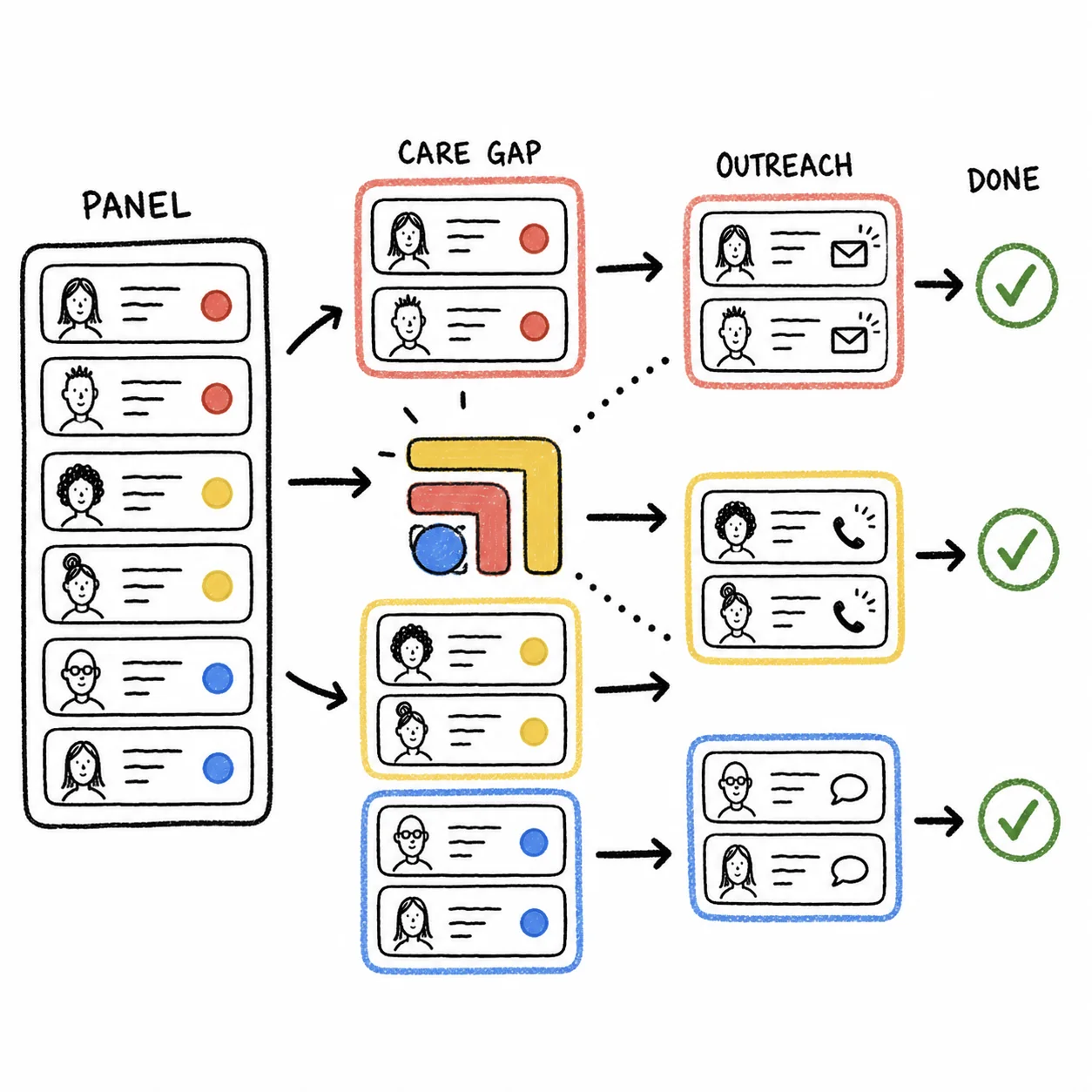
Why No-Shows Slip Through Even With a List
Most practices already have a report or a dashboard view showing yesterday's no-shows. The problem isn't visibility of the list. It's that the list is a static report, not a task. Someone has to remember to open it, remember to work through it, and remember which patients they already called versus which ones are still sitting untouched.
On a busy day, that report gets glanced at and set aside. By the time anyone circles back, it's two days later, the urgency of same-day outreach is gone, and the patient has either rebooked somewhere else or is still sitting on whatever brought them in originally.
Not All No-Shows Are Equal
The other failure is treating every missed appointment the same way. A routine annual physical that gets missed is a scheduling inconvenience. A missed follow-up for a new medication, an abnormal lab, or a post-hospitalization check is a different category entirely, and needs same-day outreach, not a form letter three days later.
Most no-show workflows don't distinguish between these, because distinguishing them requires someone to look at the reason for the visit, not just the fact that it was missed. Without that distinction, the clinically urgent no-shows get buried in the same list as the routine ones, and often get the same generic reminder call, if they get one at all.
What a Working No-Show Workflow Looks Like
The list generates automatically, every day, without anyone requesting it. If pulling the no-show list is a manual step someone has to remember to do, some days it won't happen.
Each entry gets a clear owner and a same-day deadline for first contact. Not "someone from the front desk will get to it." A specific person, responsible for working through the full list before the day closes.
High-urgency no-shows get flagged separately. If the visit reason involves a new symptom, a medication follow-up, an abnormal result, or anything time-sensitive, that no-show should stand out from the routine ones, not blend into a flat list sorted by appointment time.
Every entry gets marked as contacted, rebooked, or escalated before it's considered closed. A no-show that was "called, no answer, left voicemail" is not the same as one that was never touched. If the tracking doesn't distinguish these, you can't tell the difference between a system working and a system that just looks like it's working.
Repeat no-shows get a different conversation, not just another rebooking attempt. A patient who misses three visits in a row usually has a real barrier, transportation, cost, scheduling conflict, that a fourth reminder call won't solve.
The Real Failure Mode
The clinics that struggle with this usually aren't missing the no-show report. They're missing the accountability loop that turns a report into completed follow-up. The list exists. Whether it gets worked, and worked consistently across every day and every staff member, is the part that depends entirely on whether someone remembers.
This is the same pattern behind lost referrals and stalled prior auths: the information exists somewhere in the system, but converting it into action requires a human to notice it, remember it, and act on it without anything forcing that to happen.
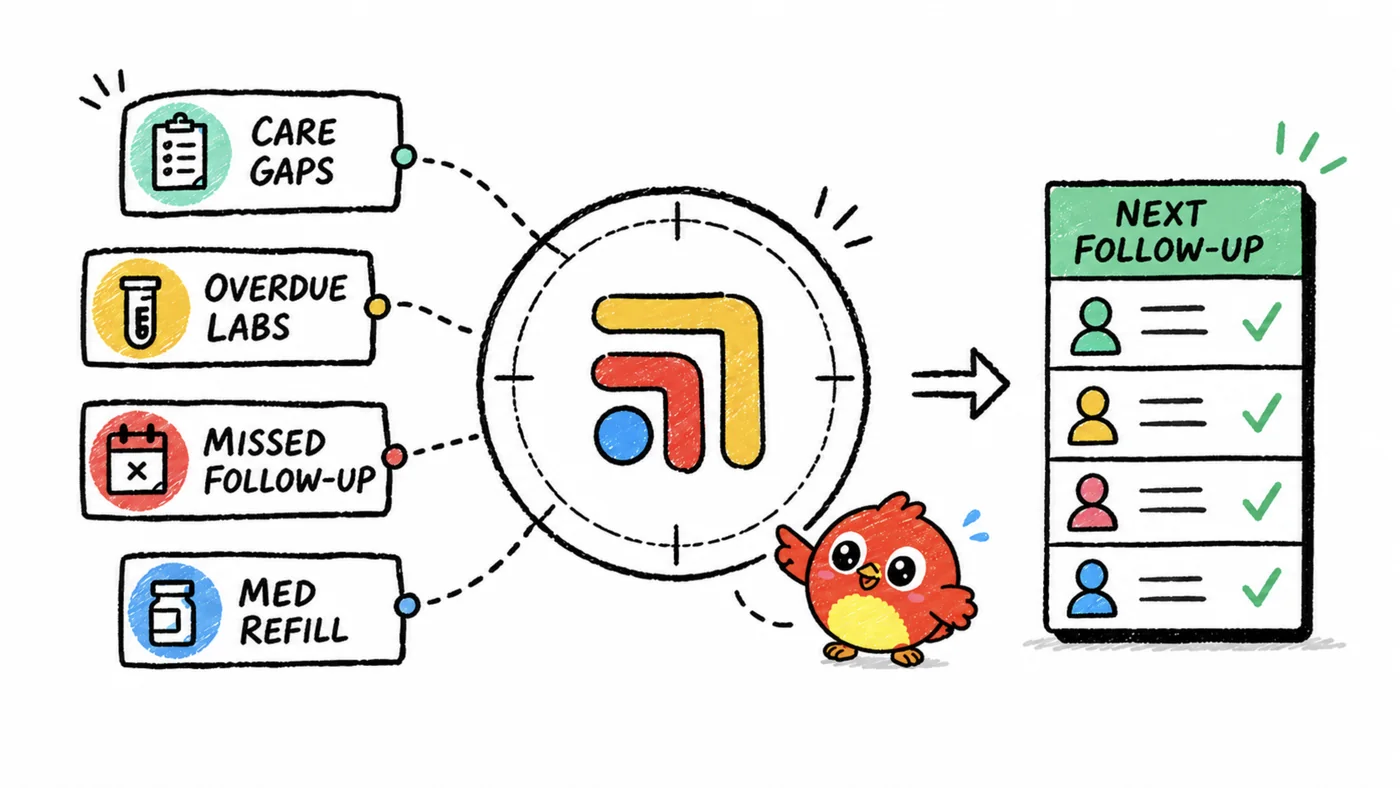
This is where Tabflows fits into a no-show workflow. Instead of a static report someone has to remember to open, each no-show becomes a task with an owner and a same-day due date, attached to the patient, visible to whoever's covering the front desk that day. High-urgency no-shows can be flagged the same way any other clinical task gets flagged, so they don't get lost in a flat list of routine missed visits.
What Consistent Follow-Up Actually Buys You
The value here isn't just recovered revenue from rebooked visits, though that matters. It's catching the patient whose missed follow-up was actually a sign something was going wrong, before it becomes an ER visit or a bigger problem. Same-day outreach is the difference between "we noticed you missed your visit" and "we noticed, and we're checking that everything is okay."
That distinction only holds if the follow-up actually happens the same day, every day, regardless of who's working the front desk or how busy the schedule got.
FAQs
How should a clinic follow up after a patient no-shows?
Follow up the same day with outreach that finds out why the patient missed the visit, not just a rebooking reminder. Same-day contact catches urgent situations early and rebooks routine ones before the patient forgets the appointment existed.
Who should be responsible for no-show follow-up?
Front desk or office admin should own the daily no-show list, with a clear escalation path for patients whose missed visit might indicate something clinically urgent, like a new symptom follow-up or a medication check.
Should every no-show get the same follow-up?
No. A missed annual physical and a missed follow-up for an abnormal lab result need different urgency. Treating every no-show identically means the clinically important ones get the same low-priority reminder call as the routine ones.
How do you stop no-show follow-up from being inconsistent?
Generate the no-show list automatically at the end of each day, assign it to a specific person, and require every entry to be marked contacted or escalated before the day is closed out. Inconsistency usually comes from the list existing but nobody being accountable for clearing it.