The Short Version
A small clinic typically runs more separate tools than people realize until someone actually tries to list them: an EHR, a messaging platform, a lab portal, a billing system, maybe a scheduling tool and a few more specialty logins on top. Each one has its own access controls, and nowhere does a single list show, at a glance, who currently has access to what. That gap is invisible until someone leaves the practice and nobody's sure whether their access was fully revoked, or a new hire starts and takes days to get set up because nobody has a checklist of what they actually need.
Why Access Sprawls Without Anyone Deciding It Should
Every individual access grant makes sense in the moment. A new CMA gets EHR and messaging access on day one, lab portal access added a week later once she starts handling results. None of that feels like sprawl as it happens. But six months and a couple of staff changes later, reconstructing exactly who has access to what, across every tool, often requires logging into each system individually and checking, because no single place ever held that full picture.
This becomes a real problem specifically at two moments: onboarding a new hire, where nobody's quite sure what access they still need, and offboarding a departing one, where the risk of leaving something un-revoked is genuinely higher than most people assume.
What Gets Missed Without a Central List
Inconsistent onboarding. Without a checklist, new hire access setup depends on whoever's handling it remembering everything from memory, which tends to produce a slower, less consistent start, with some tools granted immediately and others added piecemeal over the following weeks as gaps get noticed.
Incomplete offboarding. This is the higher-stakes version of the same problem. A departing staff member's access needs to be revoked from every single tool, not just the obvious one. Without a master list, it's easy to remember the EHR and messaging platform and forget a lab portal or billing system login that was set up months earlier and rarely comes up.
No visibility into current access at a glance. If a question comes up, does this specific person still have access to the billing system, answering it shouldn't require logging into that system specifically to check. A central list should answer it immediately.
What a Working Access Tracking System Looks Like
Every tool the practice uses gets listed once, as the foundation. This alone is often eye-opening, since most practices are running more separate logins than anyone had consciously counted.
Access grants get logged the moment they happen, tied to the specific hire or role change that prompted them, not reconstructed later from memory.
Onboarding follows a consistent checklist based on role, so a new CMA gets the same access setup every time, rather than however much a given staff member remembers to grant in the moment.
Offboarding triggers a full review against the master list, checked off tool by tool, rather than trusting memory to catch everything a departing staff member had access to.
The list gets a periodic audit, even just twice a year, to catch anything that's drifted, access nobody remembers granting, or access that should have been revoked and wasn't.
Where This Actually Breaks
The common failure isn't carelessness about security. It's that access tracking has no natural home, it's not part of the EHR, not part of the messaging tool, not part of anything else the practice uses day to day, so it depends entirely on someone maintaining a separate list proactively, which is easy to let slide when nothing's gone wrong yet.
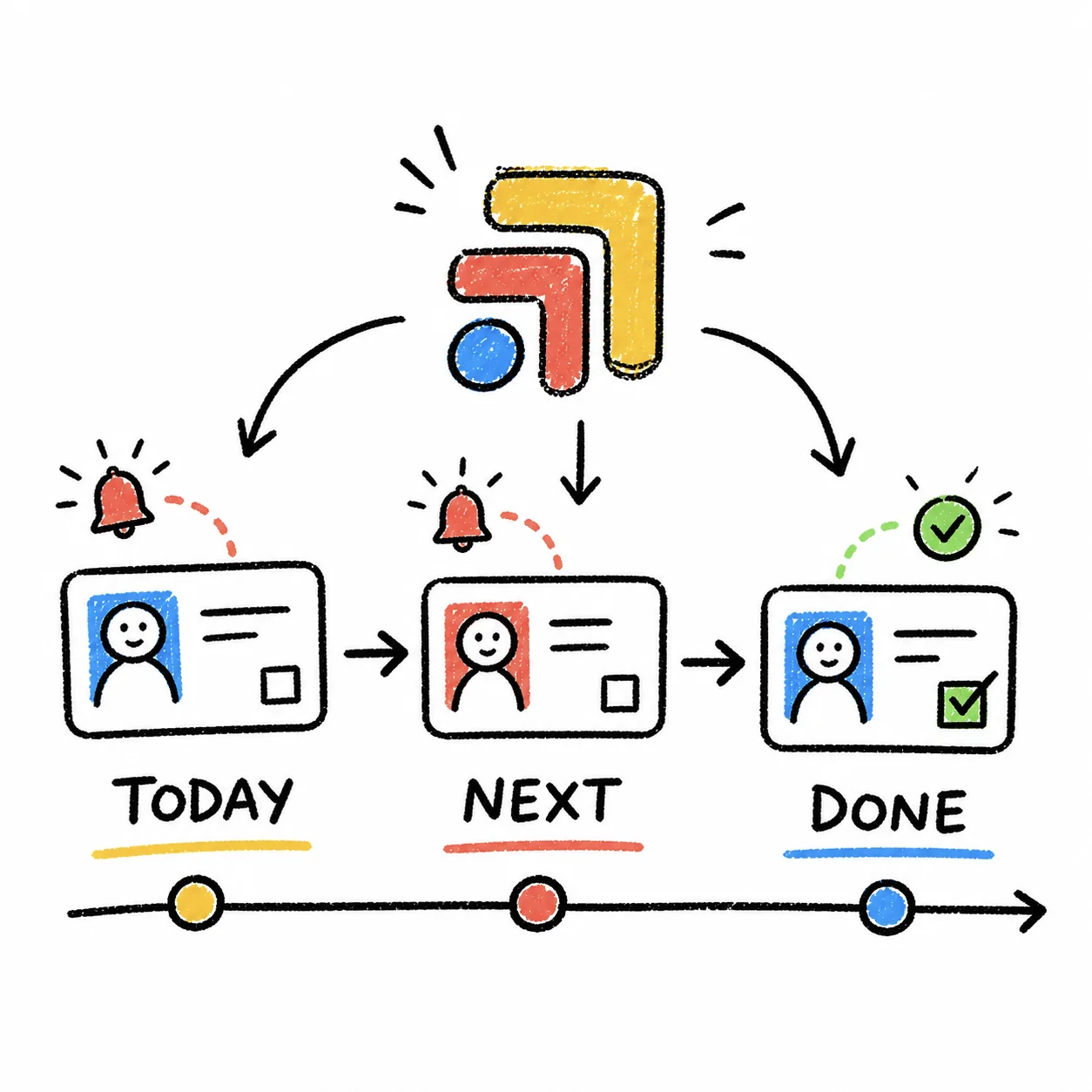
This is where Tabflows fits into access management. Onboarding and offboarding checklists become tracked tasks tied to each staff member, so granting and revoking access across every tool the practice uses is a visible, checkable list rather than something reconstructed from memory at the exact moments, new hire, departure, when getting it right matters most.
The Standard Worth Setting
List every tool once, log every access change as it happens, and run offboarding as a full checklist against that list rather than from memory. That standard closes the single biggest gap in most small practices' operational security: not malicious access, just access nobody remembered to revoke.
FAQs
How should a small clinic track staff software access?
With a simple master list of every tool the practice uses and who currently has access to each one, updated at the moment access is granted or revoked, rather than reconstructed from memory whenever the question comes up.
Why is tracking software access harder than it sounds?
Because a small clinic often runs six, eight, or more separate tools, an EHR, messaging platform, lab portal, billing system, each with its own login and admin panel, and no single place shows who has access to all of them at once.
What happens if access isn't revoked when someone leaves?
A departed staff member can retain login access to systems containing patient information indefinitely if nobody proactively goes through every tool to revoke it, which is both a security risk and, depending on the systems involved, a compliance one.
Who should own software access tracking in a small practice?
One person, often a practice manager or office admin, should maintain the master list and be responsible for updating it at every hire and departure, since access sprawl tends to happen exactly when this isn't anyone's explicit, ongoing responsibility.